
Is Cider as Bad as Shein? An Honest Look
September 30, 2023
Is Dolls Kill Fast Fashion in 2026? Our Verdict
December 26, 2023
Our intimate apparel is in 24/7 contact with our bare skin. Yet many underwear options today are made from polyester and other synthetics. These fabrics may seem convenient, but are they suitable for something worn so close to the body? In the following guide, we dive into the question, ‘is polyester good for underwear?’, exploring the fabric through the lens of comfort, intimate health, and hygiene.
Is Polyester Good for Underwear?
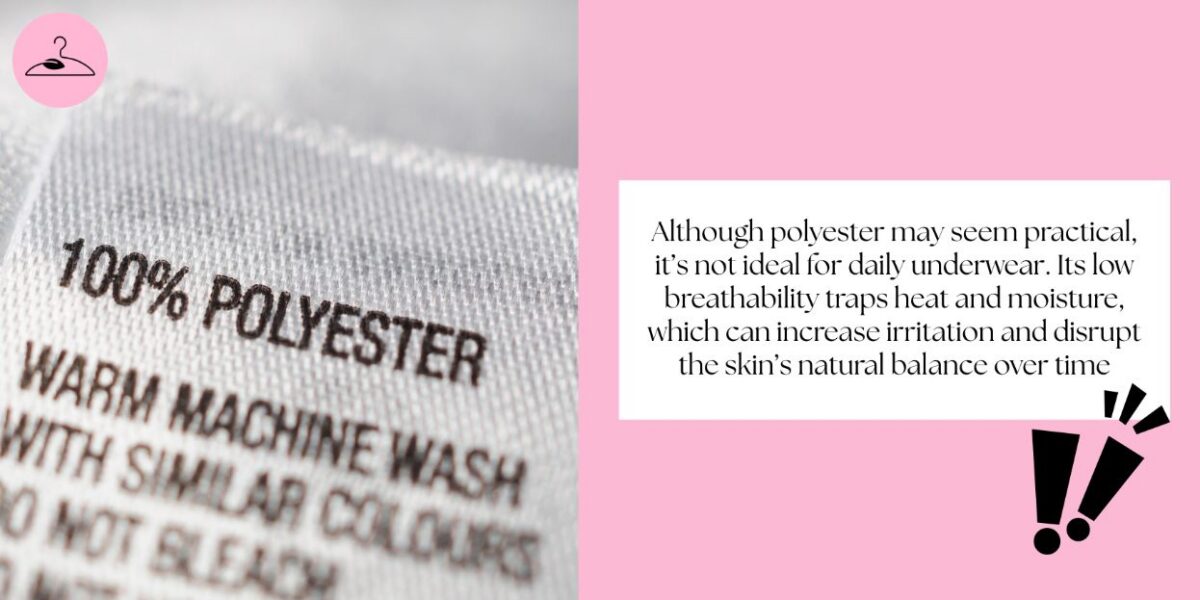
Polyester underwear can be durable and quick-drying, but it’s generally less breathable than natural fabrics like cotton or linen. Because polyester tends to trap heat and moisture, some people find it less comfortable for everyday wear, especially in sensitive areas. Those who prefer cooler, more breathable underwear may benefit from natural fibers instead.
Polyester vs Nylon vs Viscose for Underwear
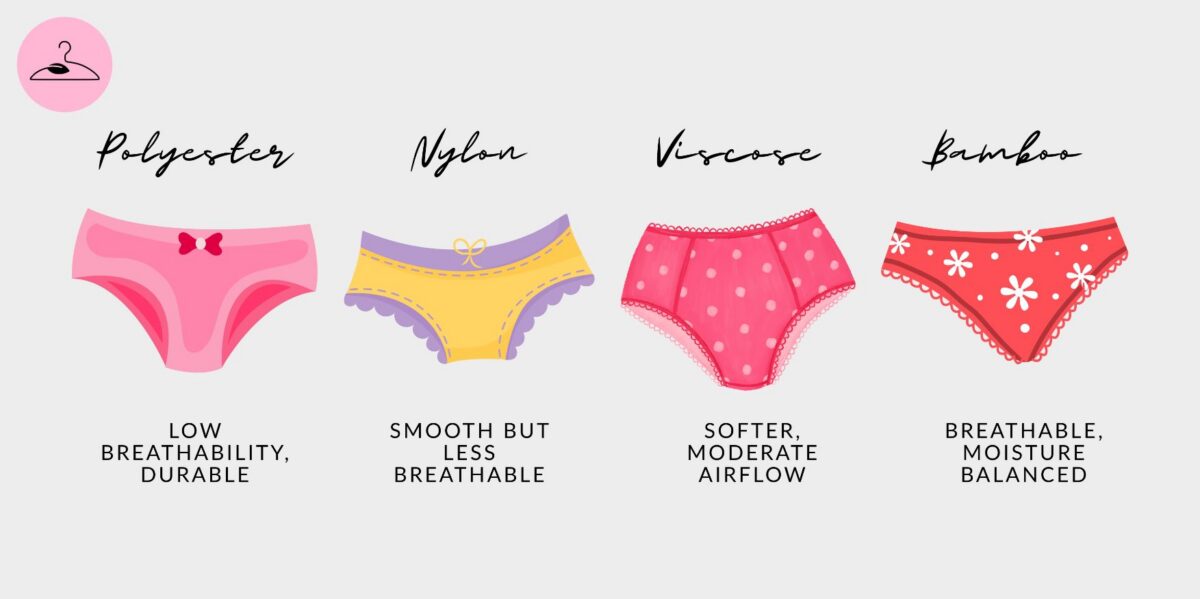
Let’s compare polyester with other commonly used synthetic fabrics to understand how each one performs in terms of breathability, moisture management, comfort, and overall feel. While polyester and nylon are fully synthetic fibers, viscose and bamboo -based fabrics offer a more natural, breathable alternative. Here’s how they stack up:
| Feature | Polyester | Nylon | Viscose (Rayon) | Bamboo |
|---|---|---|---|---|
| Breathability | Low | Low–Moderate | Moderate–High | Moderate–High |
| Moisture Absorption | Very low | Low | High | High |
| Softness | Moderate | Smooth, silky | Very soft | Very soft |
| Drying Speed | Very fast | Very fast | Moderate | Moderate |
| Best For | Durability + activewear | Stretch + seamless styles | Soft, breathable everyday wear | Soft everyday wear; similar performance to rayon |
How Polyester Behaves in Underwear
Polyester has several performance characteristics that influence how it feels when worn close to the skin. These qualities aren’t necessarily “good” or “bad,” but they can shape your experience depending on your activity level, climate, and personal sensitivity.
1. Breathability
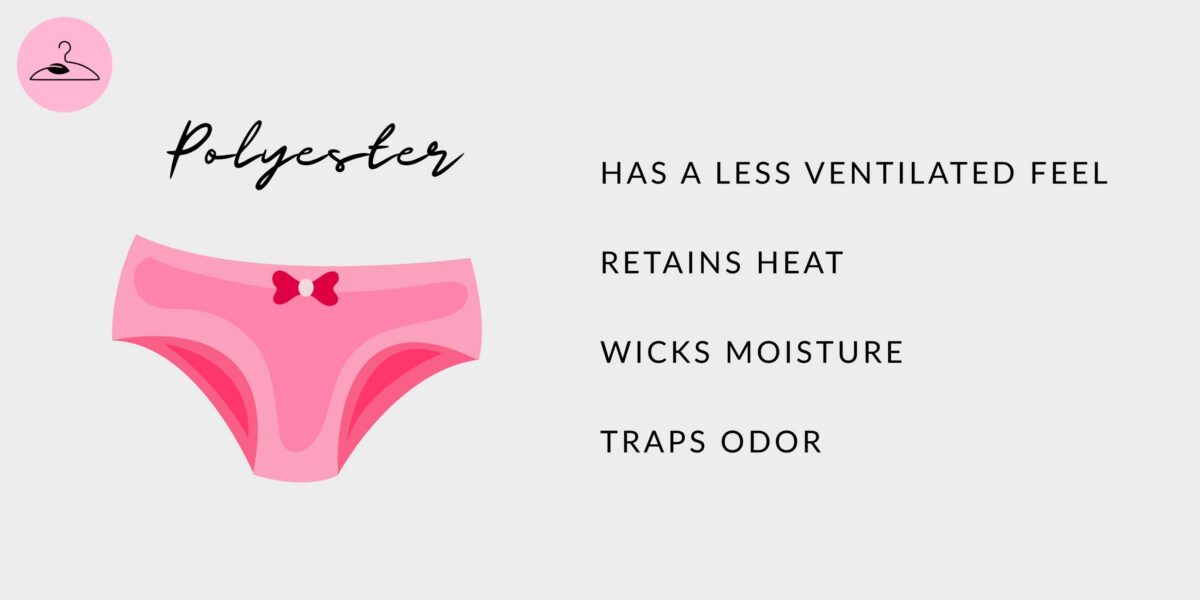
Polyester has low air permeability compared to natural fibers. Standard polyester fabric often shows air permeability rates of under 50 mm/s, whereas cotton and certain knits can exceed 300 mm/s. This means polyester allows less air to pass through, resulting in a less ventilated feel for the wearer.
2. Heat Retention
Polyester tends to trap heat, which can make it feel warmer during everyday wear — especially in humid environments.
3. Moisture Management
Polyester wicks moisture along the surface of the fiber but doesn’t absorb it. This can create: a fast-drying effect during exercise, and a slightly damp or warm feel during daily use.
4. Odor Retention
Because polyester does not release moisture easily, it can hold onto odor more than natural fibers, carrying it both before and after washing. The issue is linked to VOCs (volatile organic compounds) remaining on the fiber surface, as polyester lacks the ability to absorb or trap them below the surface.
5. Skin Sensitivity
Research among textile workers shows that about 51.7% experienced some dermatological symptoms with long-term polyester contact, with 26% reporting itching. Those with more than five years of exposure had roughly double the risk compared with newer workers.
While this data comes from an industrial rather than everyday-wear context, it highlights how garments made from synthetic fabrics — especially in warm, humid conditions or when tightly fitted — may provoke skin irritation in people with sensitive skin. Your best bet: if you’ve got reactive skin, opt for fabrics described as “untreated,” “open weave,” or “organic,” and limit prolonged wearing under high heat or humidity.
Can Polyester Underwear Increase the Risk of Yeast Infections?
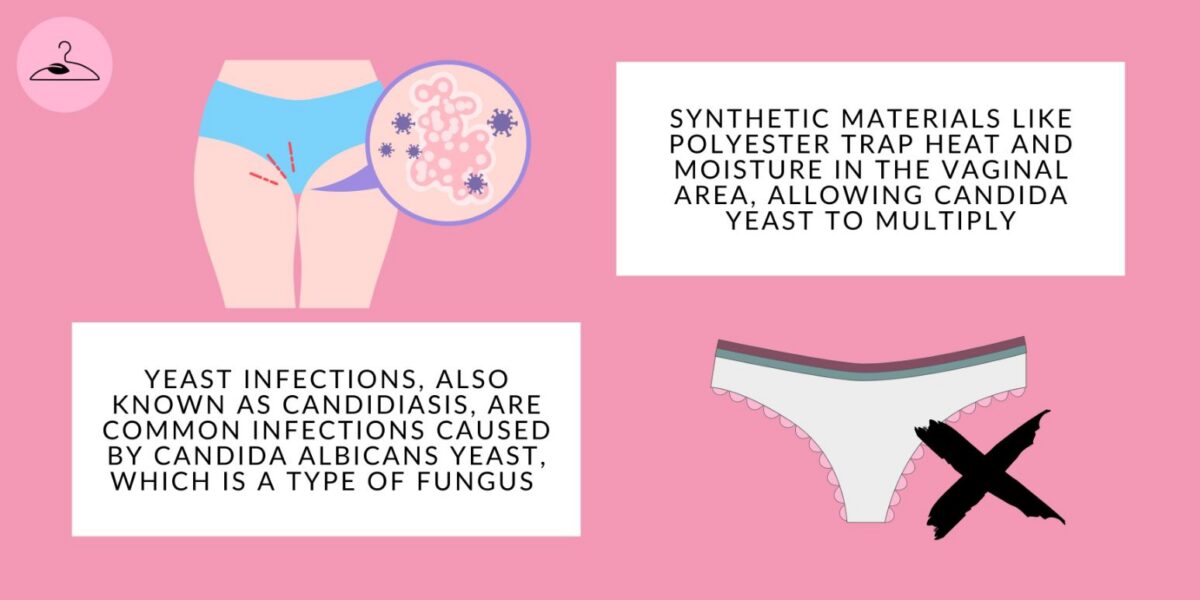
Polyester underwear does not directly cause yeast infections, but it may contribute to conditions that make them more likely — especially for those prone to irritation or fungal imbalance.
Because polyester is less breathable and traps heat and moisture, it can create a warm, damp microclimate where yeast thrives, particularly when underwear is tight, worn for long periods, or used in humid conditions.
To illustrate this, a 2021 study on post-bariatric surgery patients found that breathable cotton garments reduced skin infections in moisture-prone areas, supporting the broader principle that better airflow helps limit fungal overgrowth.
PRO Tip: If you’re prone to irritation or recurrent discomfort, choosing loose-fitting, breathable underwear can support better intimate comfort and hygiene.
Tight polyester underwear may cause intimate discomfort
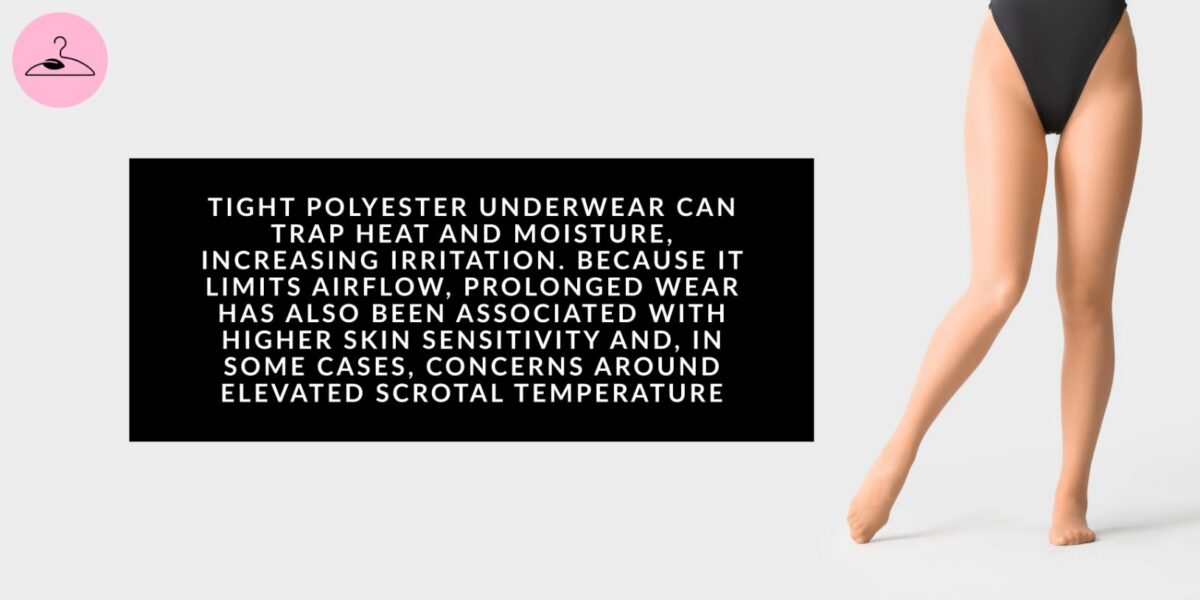
Tight polyester underwear brings together two factors that often lead to discomfort: limited breathability and increased friction. When fabric presses closely against the intimate area, it can trap heat and moisture while rubbing against delicate vulvar skin, which may result in irritation, redness, or a lingering damp feeling.
Warm and humid conditions are known to encourage microbial imbalance. While tight synthetic underwear does not directly cause infections, it can create an environment that feels less comfortable — particularly when worn for long periods, during physical activity, or in hot weather.
For better everyday comfort, it helps to:
- choose looser fits that allow airflow
- avoid prolonged wear when damp
- opt for breathable materials when possible
Is Recycled Polyester Underwear Any Different?
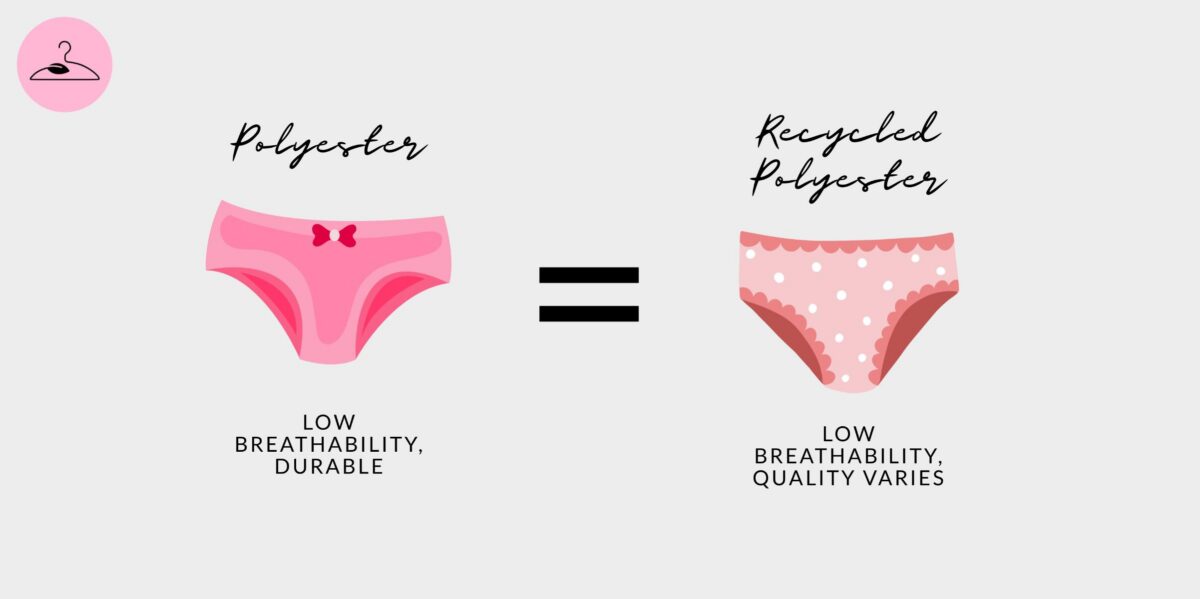
When comparing recycled polyester vs polyester for underwear, the main difference lies in the material’s origin — not in how it behaves on the body. Recycled polyester (rPET) is made from post-consumer plastics, and some studies have noted that certain recycled plastics can contain trace residues such as BPA or antimony, depending on processing quality. However, this varies widely by manufacturer and does not automatically make rPET better for intimate wear.
In practice, recycled polyester underwear still tends to:
- trap more heat than natural fibers
- retain moisture close to the skin
- feel less breathable in warm conditions
- shed microplastics during washing
In other words, “recycled” refers to the origin of the material, not necessarily its performance or skin compatibility. For underwear specifically, this means rPET may still feel less breathable and less comfortable than natural fibers worn close to sensitive areas.
When Polyester Underwear Can Work Well
While polyester is often less breathable than natural fibers, it does offer some practical benefits. It is durable, holds its shape well, and dries much faster than fabrics like cotton or linen. This makes it useful in situations where underwear is exposed to sweat, frequent washing, or needs to dry quickly between wears.
Polyester underwear can work well when:
- Fast-drying fabric is needed during physical activity or travel.
- Durability and shape retention matter for frequent wear and washing.
- Low-maintenance care is a priority due to resistance to wrinkles and shrinking.
- Performance features are built in, such as moisture-wicking or seamless construction.
- Wear is short-term or activity-specific rather than continuous daily use.
In these scenarios, polyester can serve as an efficient, performance-driven option: particularly, when blended with breathable fibers that enhance comfort without compromising its functional strengths.
Conclusion
In the vast sea of undergarment options, it’s natural to question the safety, comfort, and overall impact of polyester underwear. While it is often marketed as “moisture-wicking,” “high-performance,” and “long-lasting,” these benefits don’t always translate to everyday comfort — especially for garments worn in such a sensitive area.
So, is polyester underwear good for you? For occasional or activity-based wear, it can be practical. However, for daily use, its limited breathability and tendency to trap heat and moisture may contribute to discomfort and irritation. For long-term comfort and skin health, prioritizing natural, breathable options like organic cotton, linen, or bamboo is generally a more supportive choice.

Frequently Asked Questions
If you have sensitive skin, the most suitable underwear fabrics are natural, breathable, organic fibers that minimize friction and chemical exposure. Organic cotton is widely recommended because it is soft, hypoallergenic, and allows consistent airflow. Linen is another excellent option, valued for its exceptional breathability, natural antibacterial properties, and ability to keep the skin cool and dry.
Polyester manages moisture differently than natural fibers. It moves sweat across the surface of the fabric rather than absorbing it, which can make it feel damp during prolonged wear. Because moisture remains closer to the skin, bacteria can multiply more easily, contributing to stronger odor retention. While polyester dries quickly, it often traps heat and smells, especially in warm or humid conditions, making it less ideal for all-day comfort.
Wearing polyester underwear daily isn’t inherently dangerous for everyone, but it may pose issues for certain individuals. Reduced breathability and moisture buildup can increase the risk of irritation, yeast overgrowth, and discomfort, especially for those prone to infections or sensitive skin. Continuous exposure to trapped heat and sweat may disrupt the natural balance of the intimate area, making natural alternatives a safer long-term choice.
To maintain polyester underwear and minimize odor, wash garments promptly after wearing using mild detergent and cool water. Avoid fabric softeners, as they coat fibers and worsen odor retention. Adding white vinegar or baking soda to the wash cycle can help neutralize lingering smells. Air-drying instead of machine drying also preserves elasticity and reduces fiber breakdown, extending the lifespan of the fabric.
Works Cited
Eva Sanchez Armengol, Flavia Laffleur, et al. (2022). [Check authors and full title on ScienceDirect]. International Immunopharmacology, S1567576922005276.
Iconic Elements (Dr. Francis Wu). Synthetic clothing and itching complaints: An analysis. 2023.
Paste V, Tiwari RR, Kamath R. Dermatological Symptoms among Polyester Dyeing and Printing Workers in Mumbai. Indian J Dermatol. 2023 May-Jun;68(3):268–273. doi: 10.4103/ijd.ijd_545_22. PMCID: PMC10389126.
Paste V, Tiwari RR, Kamath R. Dermatological Symptoms among Polyester Dyeing and Printing Workers in Mumbai. Indian Journal of Dermatology. 2023 May-Jun;68(3):268-273. doi:10.4103/ijd.ijd_545_22.