True Autumn vs Deep Autumn: How to Tell Them Apart
April 2, 2026
Facts About Sustainability in Fashion: A 2026 Round-Up
June 20, 2026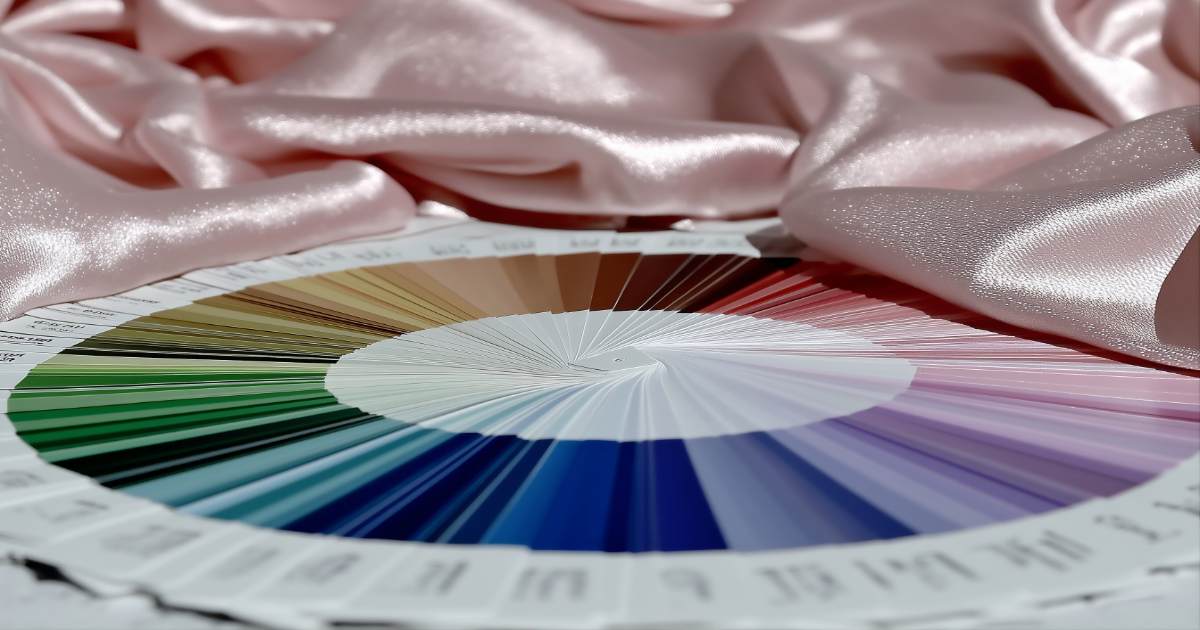
Not every color flatters every person and color analysis explains exactly why. The 16-season system builds on the iconic four-season method from the 1970s, pairing your skin undertone, hair, and eye color with one of sixteen tailored palettes. It’s a sharper, more personal tool than its predecessor, and it takes the guesswork out of building a wardrobe that actually works for you. Here’s what you need to know:
How to Use This Guide
This guide serves as your precise navigation tool through the 16-season color system, rooted in Carole Jackson’s foundational framework but refined for accuracy. Begin by identifying your core undertone (warm golden/peach vs. cool rose/blue), then layer value (light/delicate vs. deep/rich) and chroma (bright/clear vs. soft/muted).
PRO Tip: Position yourself on the seasonal wheel where each sub-season bridges its two sister influences – e.g., Soft Summer blending Summer’s coolness with Autumn’s earthiness, or Bright Spring carrying some of Winter’s crisp clarity – always referencing the color wheel for these subtle transitions.
Once you’ve found your season, test fabrics near your face in natural daylight. Use your tailored palette to curate wardrobe, makeup, and hair that harmonize with your unique coloring, creating effortless radiance.
Why the 16 Season System Matters
Universally flattering colors don’t really exist: while certain adaptable shades can come close when chosen correctly, this requires thorough color analysis using the 16-season system. This system replaces vague “one-size-fits-all” color advice with a precise, personalized palette that truly harmonizes with your individual undertone, value, and chroma, offering far greater nuance and accuracy.
3 Technical Dimensions
Every color analysis session starts with these non-negotiable elements.
3 Technical Dimensions: Undertone, Value, Chroma
Every color analysis session starts with the following non-negotiable elements:
| Dimension | What it means | Why you should pay attention |
|---|---|---|
| Undertone | Warm (golden, peach, or honey) vs Cool (pink, rose, or blue-based) | The foundational filter that determines your overall temperature |
| Value & Contrast | Light (delicate, low contrast) vs Deep (rich, high contrast against your skin) | Controls lightness/darkness and needed contrast |
| Chroma | Bright/Clear (vivid, high-intensity) vs Soft/Muted (dusty, blended, lower-intensity) | Determines saturation, that is, whether you look better in clear vs gentle colors |
4 Color Families Constitute 16 Seasons
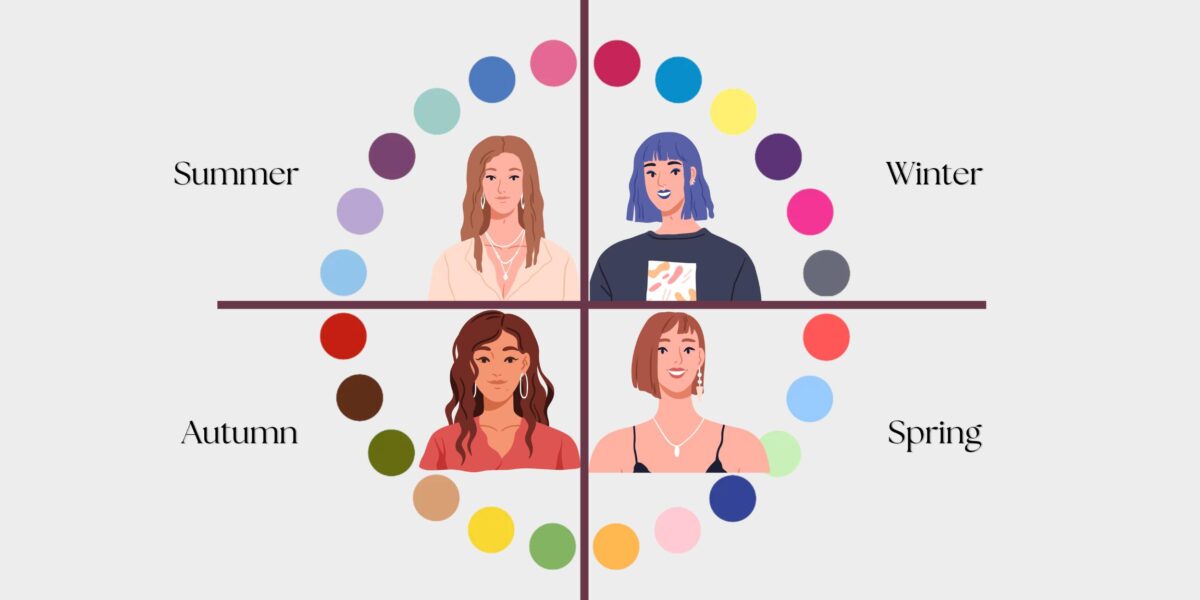
In the Color Me Beautiful framework established by Carole Jackson, the original four seasons (a.k.a. color families) offer a beautiful starting point. Summer, Autumn, Winter, and Spring categorize people in 4 natural interplays of undertone, natural value (lightness vs darkness), overall coloring, and temperature.
However, real human coloring exists on a spectrum. The 16-season system provides the precision needed for truly custom advice, especially valuable when curating timeless style. This system still honors the foundational warm/cool undertone divide but layers in four nuanced variations for each main season.
The result is 16 distinct sub-seasons (4 per main family), each with its own palette of ~30-40 colors. This level of detail prevents the common frustration of wearing “season-adjacent” colors that subtly drain you.
Understanding the 16-Season Modifiers
In the original four color families, Summer, Autumn, Winter, and Spring, specific modifiers identify separate sub-seasons within each. These modifiers are Light, True, Soft, Deep, Bright, Warm, and Cool.
These terms are not casual labels. They describe precise technical adjustments in value (lightness/darkness), chroma (intensity/softness), and subtle shifts in undertone. Understanding them is essential for accurate typing.
| Modifier | Meaning | How It Affects Your Colors |
|---|---|---|
| Light | Delicate, high-value coloring with fair skin, lighter hair, and low overall contrast. | Best in the palest, clearest, and softest versions within your season |
| Deep | Richer, lower-value coloring with stronger contrast between skin, hair, and eyes. | Can wear darker, richer, and more saturated shades. Pastels and light colors make you look faded or tired. |
| Soft (Muted) | Lower chroma - gentle, dusty, blended, or “powdered” tones | Thrives in grayed-down, diffused colors. Bright or clear shades can look too harsh |
| Bright (Clear) | High chroma with vivid, intense, and pure color | Radiates in bold, saturated, jewel-like colors. Muted or dusty tones make you look dull |
| True | The balanced, central “classic” version of the color family | Represents the most typical combination of that particular color family’s undertone, value, and chroma |
| Warm | Adds a stronger golden or peach influence while staying in the main family | Brings slightly richer, golden-leaning shades within your color family’s palette |
| Cool | Emphasizes stronger pink, rose, or blue undertones | Strengthens cooler, pink/blue-based shades within the family |
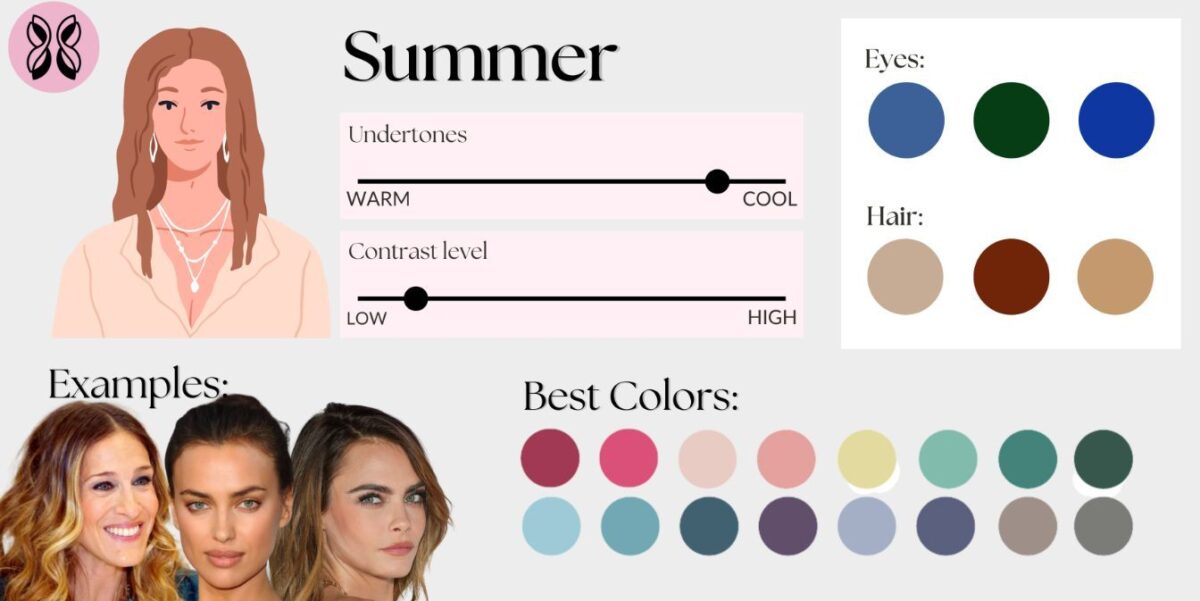
The Summer Family (Cool + Soft)
Individuals in the summer color family have a cool, blue-based or rose-based undertone. Their coloring is generally soft and muted rather than high-contrast or vivid. They look harmonious in powdered, diffused colors rather than warm or high-contrast ones. Key characteristics include:
| Dimension | Description | Visual Indicators |
|---|---|---|
| Undertone | Cool (pink, rose, or blue-based) | Visible pink or rosy-beige tint in the skin, especially under the eyes or cheeks. Skin looks clearer next to silver than gold |
| Value | Typically light to medium, with lower contrast | Fair to medium skin tone with soft, blended contrast between skin, hair, and eyes |
| Chroma | Soft/Muted | Colors appear gently diffused, powdered, or grayed-down. Natural coloring looks delicate and harmonious rather than vivid or high-contrast |
The Four Summer Sub-Seasons
Light Summer
Light Summer is the most delicate and ethereal of the Summer family. Cate Blanchett, Naomi Watts, and January Jones, and other famous Light Summers showcase very fair, translucent rosy-beige skin, light ash-blonde or light ash-brown hair, and soft blue, gray, or green eyes.
As a sub-season, Light Summer is low-contrast and gentle, carrying a certain luminous quality. It features the palest, airiest, and cool tones within the Summer palette.
True Summer
True Summer represents the purest, most classic expression of the Summer family. They have rosy-beige or cool pink skin and balanced, muted coloring, looking best in diffused, powdered colors.
Famous True Summers like Angelina Jolie, Allison Williams, and Odeya Rush illustrate this palette perfectly. They possess medium contrast and a cool undertone, with hair colors ranging from soft ash blonde to medium ash brown, paired with blue, blue-green, or soft hazel eyes.
Soft Summer
Soft Summer is a quieter, more muted expression within the cool family. Their skin often shows a dusty rose or taupe cast, paired with medium ash-brown hair and softer hazel or gray-blue eyes. The Soft Summer palette features a beautifully blended, sophisticated softness, with a slight neutral-to-warm influence, as it sits closest to the Soft Autumn border.
Deep Summer
Deep Summer is the richest and most elegant of the Summers. They feature deeper rosy-beige or cool olive skin, darker ash-brown hair, and deeper blue or hazel eyes. While remaining cool and soft, their coloring carries more depth and presence, with slight influence from the Deep Winter family (in terms of depth and contrast).
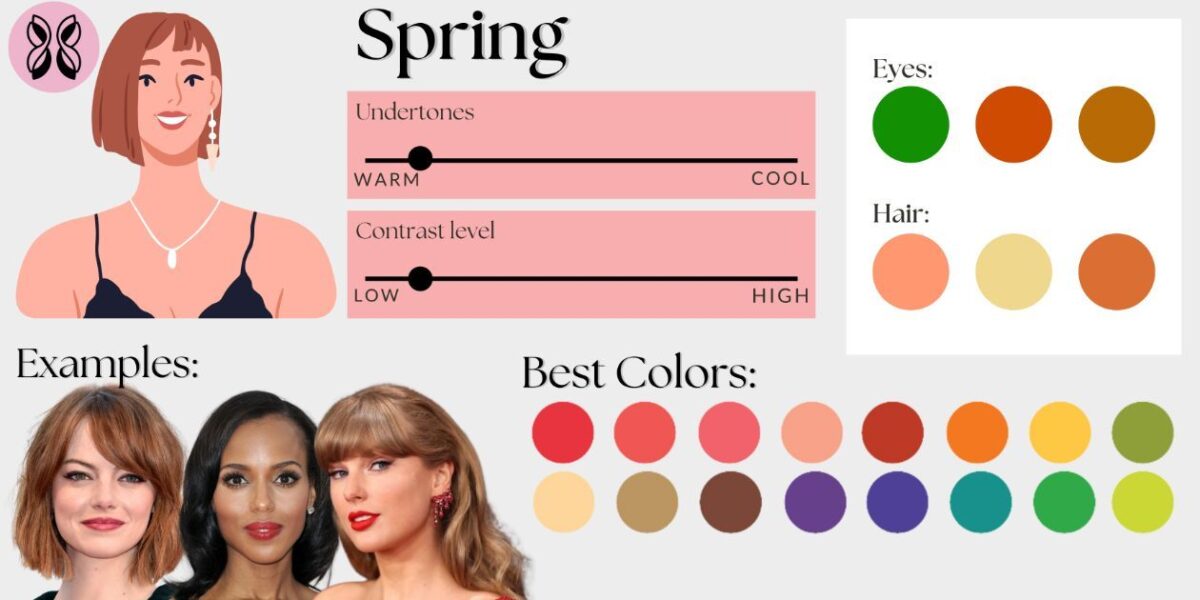
The Spring Family (Warm + Clear/Light)
In 16 season color analysis, Spring differs from Summer in its warmth and clarity: while Spring is warm with golden or peachy tones that give a fresh, sunny look, Summer is cool with ashy, rosy tones and powdery colors. This warmth makes Springs look vibrant and healthy in golden-based hues, whereas Summer’s cool or grayed tones can make them appear dull.
Key characteristics of Springs include:
| Dimension | Description | Visual Indicators |
|---|---|---|
| Undertone | Warm (yellow, golden, or peachy-based) | Golden or peachy tint in the skin, especially along the jawline or cheeks. Skin looks clearer next to gold than silver |
| Value | Typically light to medium, with moderate contrast | Fair to medium skin tone with warm, golden-toned blending between skin, hair, and eyes |
| Chroma | Clear/Bright to Soft | Natural coloring looks delicate and alive rather than muted or cool |
The Four Spring Sub-Seasons
Light Spring
The Light Spring palette is the softest, most delicate across all Spring sub-seasons. Individuals in this sub-season possess fair peachy-ivory skin, light golden or strawberry-blonde hair, and soft aqua or blue-green eyes, with low contrast and an airy glow.
Individuals in this sub-season complement the palest warm tones, such as delicate peach, warm ivory, fresh aqua, and soft coral. Light Spring celebrities like Taylor Swift, Elle Fanning, Amanda Seyfried, Lili Reinhart, and Sadie Sink embody the palette's gentle, luminous quality.
True Spring
True Spring perfectly captures the pure golden vitality and fresh clarity of the Spring family. Individuals in this sub-season have peachy-golden skin, golden blonde to warm strawberry hair, and bright green or teal eyes.
These individuals radiate sunny warmth and thrive in vivid warm colors like coral, apricot, clear turquoise, and golden yellow. True Spring celebrities such as Blake Lively, Jamie Chung, and Jennifer Hudson perfectly represent this bright, glowing essence.
Warm Spring
Warm Spring brings richer golden depth to the Spring family, bridging Spring toward Warm Autumn. They typically have honeyed peachy skin, golden honey or warm chestnut hair, and golden-green or hazel eyes, as seen in Warm Spring celebrities like Amy Adams, Kylie Minogue, and Jessica Chastain. This sub-season complements saturated golden tones the best, such as terracotta, mustard, and warm coral.
Bright Spring
Bright Spring is the most vivid Spring palette, carrying subtle Bright Winter clarity and contrast while staying firmly warm and golden. It incorporates bold warm-clear colors: vivid coral, bright apricot, golden chartreuse, and fresh turquoise.
Individuals in this season possess clear peachy or warm ivory skin, medium-to-dark golden or warm brown hair, and strikingly bright eyes (vivid green, teal, or warm blue). Bright Spring celebrities such as Demi Lovato, Kerry Washington, and Rose McGowan capture this vibrance perfectly.
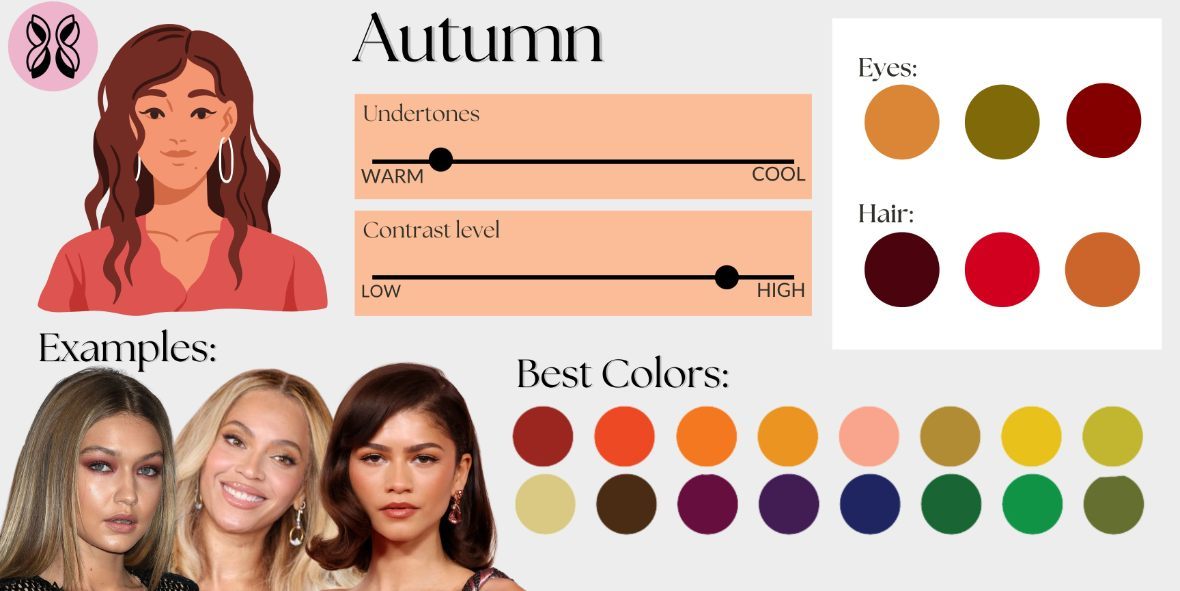
The Autumn Family (Warm + Muted/Deep)
Individuals in the Autumn color family have a warm, golden or earthy undertone. Their coloring is rich, warm, and muted rather than cool or bright, looking harmonious in earthy, rather than cool, vivid, or grayed tones. Their key characteristics include:
| Dimension | Description | Visual Indicators |
|---|---|---|
| Undertone | Warm (golden, peachy, or earthy-based) | Golden or warm beige tint along jawline/cheeks. Skin looks vibrant next to gold, dull next to silver |
| Value | Medium to deep, with lower contrast | Medium to rich skin tone with warm, blended harmony between skin, hair, and eyes |
| Chroma | Muted/Soft to Rich | Natural coloring looks velvety, earthy, and substantial rather than clear or icy |
The Four Autumn Sub-Seasons
Soft Autumn
Soft Autumn is the gentlest Autumn palette, bridging toward Soft Summer with neutral-warm softness. They have warm beige or peachy skin, golden-blonde to light auburn hair, and soft hazel or green eyes with low contrast. They bloom in muted, dusty warm tones: soft camel, warm taupe, moss green, and gentle terracotta. Bright or cool colors can look harsh on them.
True Autumn
The True Autumn color palette is the richest, most classic heart the Autumn family. With golden-peach or warm beige skin, coppery red to warm chestnut hair, and golden-green or hazel eyes, individuals in this sub-season radiate earthy depth. They thrive in rich, muted warm colors like pumpkin, mustard, olive, and warm rust.
Capturing the palette's rich essence, True Autumn celebrities like Halle Bailey, Shailene Woodley, Jennifer Lopez, Ana de Armas, Sofia Vergara, and Beyoncé often feature earthy colors in their red carpet looks.
Warm Autumn
Warm Autumn brings extra golden richness, positioned between True Autumn and Deep Autumn. They feature honeyed or deeper peachy skin, warm auburn or chestnut hair, and rich hazel or amber eyes. They shine in saturated, velvety warm tones: deep terracotta, golden mustard, warm brick, and forest olive.
Deep Autumn
Deep Autumn is the darkest Autumn palette, carrying some Deep Winter richness and depth while staying warmly golden. Deep Autumn individuals have rich golden or warm olive skin, deep auburn or dark chestnut hair, and intense hazel or dark green eyes. They dazzle in deep, warm earthy colors: rich burgundy, warm chocolate, deep teal, and golden olive, carrying dramatic yet warm presence.
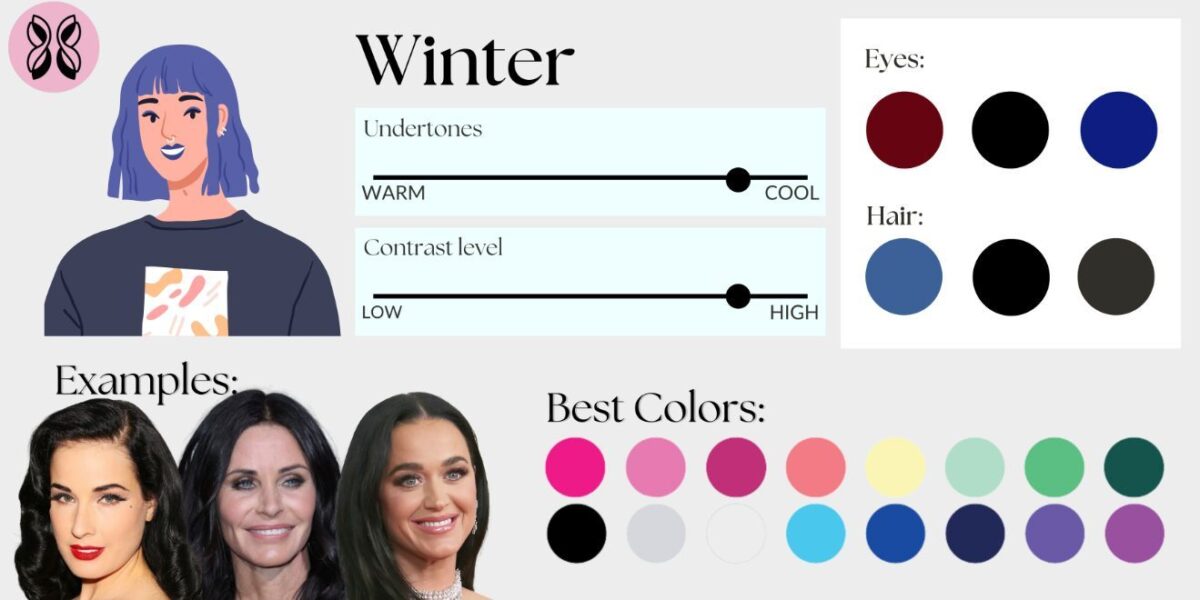
The Winter Family (Cool + Clear/Deep)
Individuals in the Winter color family have a cool, blue-based or pink undertone. Their coloring is striking, clear, and high-contrast rather than warm or muted. They look most harmonious in cool, clear, bright, or deep colors rather than warm, golden, or soft tones. Winters often appear elegant, dramatic, and refined in their palette.
| Dimension | Description | Visual Indicators |
|---|---|---|
| Undertone | Cool (blue, rose, or pink-based) | Pink, rosy, or bluish tint along jawline/cheeks. Skin looks clearer and brighter next to silver than gold. |
| Value | Medium to deep, with high contrast | Fair to deep skin tone with strong, defined contrast between skin, hair, and eyes. |
| Chroma | Clear/Bright to Rich | Natural coloring looks crisp, vivid, and icy rather than soft or earthy. |
The Four Winter Sub-Seasons
Bright Winter
Bright Winter is the most vivid and high-contrast Winter, carrying subtle Bright Spring clarity while staying cool and icy. Individuals in this sub-season feature clear porcelain or olive skin, medium-to-dark ash or dark brown hair with cool highlights, and striking bright blue, green, or violet eyes. They complement bold cool-clear colors: icy turquoise, hot pink, emerald, and vivid magenta.
True Winter
True Winter represents the purest, most classic Winter essence. With cool porcelain or neutral skin, black or dark ash-brown hair, and bright blue, green, or dark eyes, they radiate dramatic clarity. They thrive in pure, cool, high-contrast colors like true red, royal blue, icy pink, and stark white. These hues enhance their elegant, high-definition beauty.
Cool Winter
Cool Winter leans into cooler, more delicate tones, bridging True Winter toward Soft Summer. Individuals in this season have fair rosy or neutral skin, ash brown or dark hair with cool undertones, and soft but bright blue or gray eyes. Cool Winter celebrities like Zooey Deschanel, Hilary Rhoda, Jamie Lee Curtis, Audrey Tautou, and Marion Cotillard embody this refined, delicate cool essence.
Deep Winter
Deep Winter is the darkest and richest of the Winters, carrying subtle Deep Autumn depth and richness while remaining fundamentally cool. They feature deep olive, neutral, or cool beige skin, dark chestnut to true black hair, and intense deep hazel, green, or blue eyes. They dazzle in deep, cool, jewel-toned colors: rich burgundy, deep teal, emerald, and icy black.
Soft Winter
Soft Winter is the gentlest of the Winter seasons. It blends True Winter’s cool depth with Soft Summer’s muted softness. Individuals in this sub-season have fair to medium cool-rosy or neutral skin, ash brown or dark blonde hair, and soft bright gray-blue, hazel, or green eyes. Soft Winters look best in refined, smoky, cool-toned colors, such as soft white, dusty purple, muted plum, and soft fuchsia.
How to Tell Two Seasons Apart
In the 16 season color analysis framework, seasons flow continuously around the wheel. Sister-season influences create the most common confusions, with cool Summers bordering icy Winters, warm Springs overlapping bright edges, and muted Autumns blending into Springs. Understanding these positional relationships and bridging qualities prevents misdiagnosis and helps you determine your most harmonious palette.
True Summer vs True Winter
On the color wheel, True Summer sits between Soft and Light Summer on the cool, muted side. True Winter, on the other hand, bridges Deep and Clear Winter with high-contrast cool clarity. In terms of colors, this is how True Summer vs True Winter differ: Summer’s dusty, blended rose-blues and periwinkle complement softer complexions, while Winter demands crisp, intense jewel tones like pure black, icy white, and emerald.
Bright Winter vs Deep Winter
Bright Winter sits between Clear Winter and Bright Spring, mixing coolness with a bright, sparkling lift. Deep Winter flows from True Winter toward Deep Autumn with rich, dark depth. When comparing Bright Winter vs Deep Winter palettes, the former shines in vivid icy brights and sharp contrast, while Deep Winter looks rich and powerful in deep jewel tones and dramatic dark colors.
Light Spring vs Bright Spring
Unlike Bright Spring, Light Spring brings airy freshness and gentle contrast. On the color wheel, Bright Spring sits between Warm Spring and Bright Winter, which means it carries Winter’s sharp edge, alongside the Spring family's golden warmth. Light Spring flourishes in gentle pastels and fresh tints, while Bright Spring handles some saturated, electric hues.
Warm Spring vs Bright Spring
Warm Spring anchors the purely warm, golden sector between True Spring and Warm Autumn, bringing harmonious sunny shades. In contrast, Bright Spring transitions toward the cool side via its subtle Winter influence, adding neutral brightness and intensity. To compare Bright Spring vs Warm Spring palettes, the latter glows in soft peach, coral, and golden greens, whereas Bright Spring requires bolder, cleaner clears like turquoise and hot pink.
Soft Autumn vs Light Spring
Soft Autumn and Light Spring are both warm-leaning but very different in feel. Soft Autumn sits comfortably between Warm Autumn and Soft Summer with muted, earthy softness, while Light Spring shifts from True Spring toward lighter Summer influences. The latter carries clearer, brighter warmth. In terms of best colors, Soft Autumn embraces subdued moss greens and camel, while Light Spring complements airy corals and sky blues.
Clear Winter vs Cool Winter
Unlike Cool Winter, Clear Winter brings brighter drama and sharpness. Clear Winter sits between Bright Winter and True Winter with high-contrast coolness, while Cool Winter softens toward Summer influences. Clear Winter excels in vivid, glass-like colors; Cool Winter prefers calmer, elegant cool shades. One feels like a diamond, the other like polished sapphire.
Cool Winter vs Cool Summer
Both Cool Winter vs Cool Summer reside on the cool axis, but Cool Winter bridges toward Deep/Clear Winter with darker, higher-contrast intensity, while Cool Summer leans into Soft Summer’s muted gentleness. In terms of best colors, Cool Winter wears crisp, clean cools like royal blue and magenta with power, whereas Cool Summer harmonizes with dusty lavenders, soft grays, and blended roses.
Cool Winter vs Soft Summer
Cool Winter holds strong cool clarity near the Winter core, demanding clean intensity. Soft Summer, on the other hand, bridges Cool Summer and Soft Autumn. It introduces neutral-warm muted softness: so, in terms of Cool Winter vs Cool summer chroma, Winter brings brighter, more saturated cools, while Summer favors muted, smoky, low-chroma taupes, mauves, and sage with blended harmony.
True Autumn vs Deep Autumn
When comparing True Autumn to Deep Autumn, the biggest difference lies in depth. True Autumn individuals possess a warm, golden-peach glow, with coppery hair and balanced medium depth. They complement vibrant earthy tones like pumpkin, mustard, and terracotta. In contrast, Deep Autumn is darker and more intense with golden-olive skin, rich chestnut hair, and stronger contrast, demanding deeper, velvety shades.
Warm Spring vs True Spring
The main difference between Warm Spring and True Spring lies in temperature. Warm Spring is richer and more golden with honeyed skin and saturated tones like mustard and terracotta. True Spring is fresher and brighter with peachy-golden yet slightly more neutral skin, favoring clear coral, apricot, and turquoise.
Warm Spring vs Light Spring
Warm Spring differs from Light Spring by delivering deeper golden warmth and intensity. Light Spring remains the softest and airiest with fair peachy skin and low contrast, blooming in delicate pastels like pale peach and warm ivory. Warm Spring, however, has medium-high contrast and handles warmer, deeper colors.
Light Spring vs Soft Summer
In the comparison between Light Spring and Soft Summer, Light Spring is visibly fresher, warmer and slightly higher in contrast with peachy tones. Soft Summer stays cool and strictly muted with dusty rose skin, excelling in soft taupes, mauves, and sage.
Light Spring vs Light Summer
Light Spring stands apart from Light Summer by simply being warmer and more golden with sunny peachy undertones. Light Summer is of the same contrast yet cool and ethereal with rosy-beige skin and ash tones, preferring soft pink, powder blue, and cool lavender.
Conclusion
Knowing your season is just the starting point; the real transformation comes when you use it to guide what you actually buy and wear. If you’d like a preliminary, low-pressure starting point before seeking a more accurate diagnosis, you can take the quick seasonal color analysis quiz and then return to this guide to confirm your true match and translate it into outfits that genuinely feel like you.