
16 Season Color Analysis Guide: Find Your Exact Season
May 31, 2026
Capsule Wardrobe Black And White: How to Style It
September 1, 2026
Did you know the fashion industry is one of the biggest contributors to waste, but it’s also where some of the most exciting sustainability breakthroughs are happening? Ethical, eco-friendly brands are redefining style with conscious production and consumption. Ready to learn more? Here are must-know sustainability in fashion facts that every eco-conscious fashionista will love!
Most Important Sustainability Facts in Fashion
| Sustainability Aspect | The Fact |
|---|---|
| Resale Market | Secondhand fashion is now mainstream and growing fast. – $257 billion market in 2025 – 9% of all apparel spending – 33% of Gen Z/Millennials bought resale recently |
| EU Laws | New EU rules ban throwing away unsold clothes and force transparency. – July 2026: Large companies can’t destroy unsold items; medium-sized companies follow in 2030 – Digital passport tracks every item’s materials – Brands must pay for recycling |
| New Materials | Algae, mushrooms, and seaweed are becoming real clothing materials. – Biological dyeing cuts carbon by 31% – Mushroom leather now commercially available – Much less water and pollution than regular dyes |
| Regenerative Farming | Cotton grown in ways that actually heal the soil and trap carbon. – Pulls carbon into the ground – Improves soil health – Top trend for 2026 fashion |
| Recycling Old Clothes | Old mixed-fiber clothes can now become new clothes again. – 114,000kg+ polycotton recycled by Circ – First polyester-cotton system launched 2023 – Levi’s saved 3 billion liters of water |
| Ethics & Waste | Many workers face forced labor, and synthetic clothes pollute oceans. – 50 million people in modern slavery globally – 86% of garment workers in forced labor risk – 200,000–500,000 tons of microplastics dumped in oceans yearly |
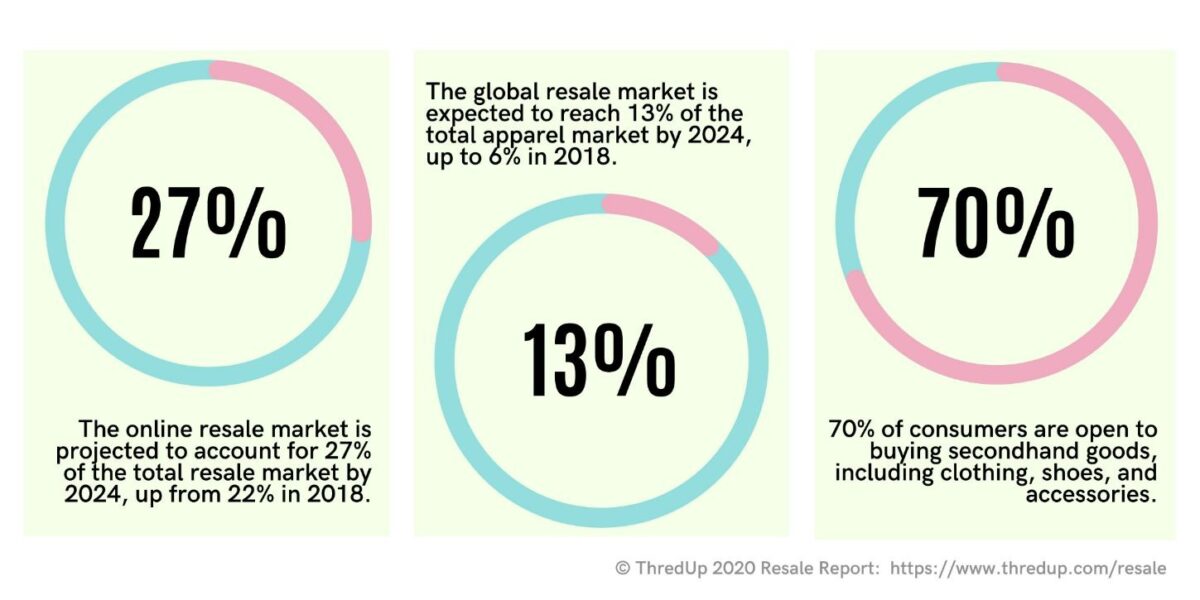
1. The Resale Market Is Projected to Reach $367 Billion by 2029
The resale market has exploded, now valued at $393 billion globally in 2026, up from $197 billion in 2023. Once a niche trend, secondhand fashion now accounts for 9% of global apparel spending and is a core pillar of the circular economy.
♻️ Retailers Are Adapting
Major brands are integrating resale directly into their business models. Zara expanded its Pre-Owned platform to the U.S. in October 2024 (its first market outside Europe), while H&M launched its Pre-Loved resale service in the U.S. in 2023 and opened a secondhand shop-in-shop in NYC’s SoHo in 2024.
Peer-to-peer resale platforms like Depop combat overconsumption, now with over 35 million users across 150 countries, are normalizing secondhand shopping for younger consumers, with the majority of its sellers and buyers under 26. Truly, Gen Z makes up approximately 90% of Depop’s active user base, and 54% of Gen Z shoppers prefer secondhand options when available, viewing used items as more sustainable, affordable, and unique compared to mass-produced fast fashion.
🌱 Sustainability Impact of Resale
Keeping an item for just 9 extra months can cut its carbon footprint by 20-30%. But lasting impact requires rejecting throwaway culture in favor of quality, craftsmanship, and resale value.
🛍️ The Future of Fashion
With the global secondhand market on track to reach $367 billion by 2029, and 33% of Millennials and Gen Z having made a resale or rental purchase in the past year, the shift away from fast fashion is accelerating, and it’s being led by consumers.

2. The EU Launches Ecodesign for Sustainable Products Regulation (ESPR) in July 2026
The EU has taken fashion sustainability to the next level with bold new eco-design laws. Through the Ecodesign for Sustainable Products Regulation (ESPR), these rules focus on durability, repairability, and recyclability, pushing the industry toward a circular future. The legislation spans:
Stronger Product Standards
The ESPR steers fashion toward longer-lasting, easier-to-repair, and more recyclable products, with textiles designated as a priority category though requirements are being rolled out in phases
Ban on Destroying Unsold Goods
Starting 19 July 2026, large companies will be prohibited from destroying unsold apparel, accessories, and footwear; medium-sized companies follow in 2030
Digital Product Passport
The ESPR establishes a DPP framework to improve supply chain transparency by detailing each item’s sustainability credentials, materials, and repairability with exact market-obligation timing still evolving
Extended Producer Responsibility (EPR)
Brands must fund collection, sorting, and recycling, tied into the broader European Green Deal push to move the fashion industry toward carbon neutrality by 2050.
3. Bio-based Materials Are Commercially Available and Scaling
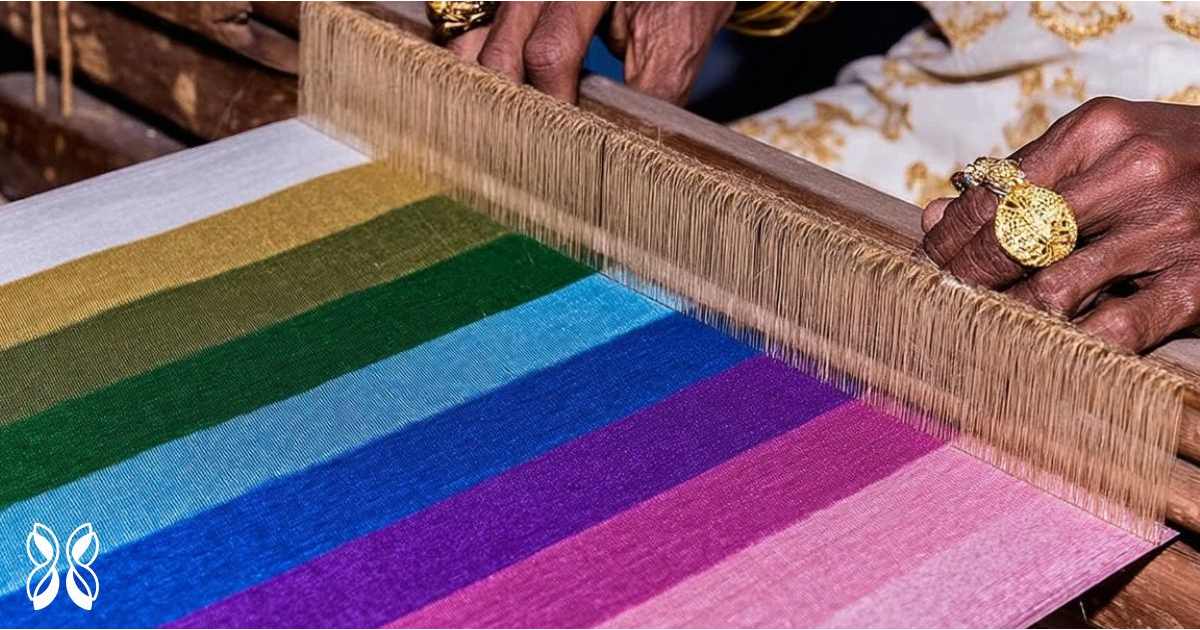
Algae, mushrooms, and seaweed are no longer experimental, but rather mass-produced clothing materials that are reshaping sustainable fashion in 2026. The global bio-based materials market is valued at $57.83 billion in 2026 and projected to reach $126.12 billion by 2030, growing at a 21.5% CAGR. This isn’t niche experimentation anymore, as select major brands have fully integrated these materials into mainstream collections.
Key breakthroughs
| Material | What It Is | 2026 Status |
|---|---|---|
| Mushroom Mycelium | Leather made from fungal roots | Mass-produced; used by major brands like Lululemon and Adidas |
| Algae/Seaweed Fibers | Textiles from ocean plants (e.g., Kelsun) | Industrial scale; biodegradable and soft like cotton |
| Fruit-Waste Textiles | Leather from apple peels, grape skins, pineapple | Commercial products available; fewer chemicals than synthetic leather |
| Salmon Skin Leather | Leather from fish industry waste | Scaling up; cruelty-free alternative to animal leather |
4. Less Than 1% of Clothing is Recycled
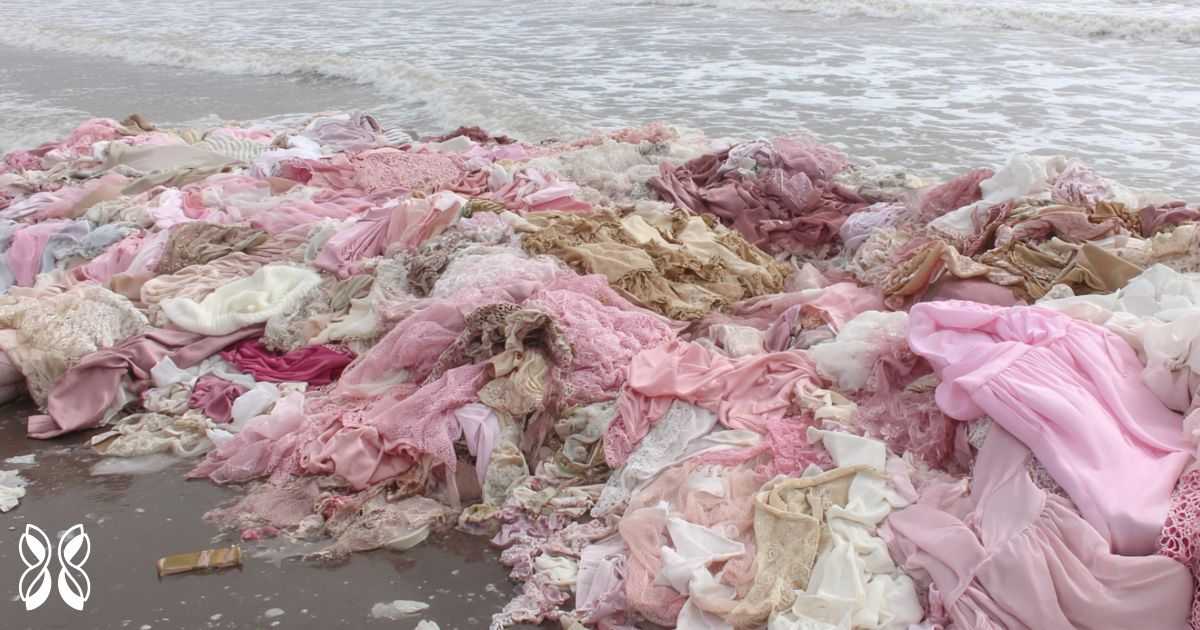
Less than 1% of used clothing is recycled into new textiles globally, while the industry generates 92 million tonnes of textile waste annually, projected to reach 134 million tonnes by 2030.
Why Recycling Is So Difficult
| Challenge | Impact |
|---|---|
| Mixed materials | Most clothes contain multiple fibers (e.g., cotton-polyester blends), making fiber separation nearly impossible |
| Contamination | Dirt, zippers, and dyes disqualify large volumes from recycling streams |
| Downcycling dominates | 99% of “recycled” fast fashion becomes low-value outputs like rags, insulation, or mattress stuffing |
| Capacity gap | Global mechanical recycling capacity is only 2.5 million tonnes vs. 92 million tonnes of annual waste |
What Actually Happens to Discarded Clothes
- 73% of discarded textiles end up in landfills or incinerators
- Only 12% is reused through secondhand channels
- Retailer take-back programs effectively recycle just 10% of returned items
The 2026 Breakthrough: Fiber-to-Fiber Recycling
The industry is beginning to crack true textile-to-textile recycling. Advanced spinning techniques now produce High-Tenacity Recycled Cotton that retains 90% of virgin cotton’s strength. They also incorporate AI-powered Near-Infrared (NIR) spectroscopy, which can identify fabric compositions at 50 garments per second, which enables the precision sorting that high-quality chemical recycling requires.
Companies like Circ are already proving the model at scale, having recycled over 114,000kg of polycotton waste by 2023 and avoiding 194,500kg of CO₂ emissions in the process – one of the most compelling fashion sustainability facts to emerge from the recycling space in recent years.
Reuse Beats Recycling, For Now
A reused cotton t-shirt saves 8–16x more carbon than recycling it, yet over 87% of fast fashion fabric is never recycled at all. Norwegian researchers modelling garment manufacturing in Bangladesh found that around 44% of the cotton used to make a standard t-shirt is lost before the garment ever reaches the consumer – waste that recycling infrastructure cannot currently recover.
With 60% of shoppers expected to buy secondhand in 2026, the behavioral shift is already underway. Until recycling technology catches up with the scale of the problem, the highest-impact actions remain straightforward:
- Buy less to begin with – prevention beats cure
- Buy secondhand before buying new
- Mend damaged items rather than replacing them
- Upcycle worn-out pieces where possible
5. The Fashion Industry Fuels Modern Slavery and Ocean Microplastic Pollution
Behind the industry’s $1.53 trillion in annual revenue lies a largely invisible human rights crisis: 50 million people are trapped in modern slavery worldwide. The fashion sector is disproportionately exposed, with Oxfam’s What She Makes report finding that 86% of garment workers in the informal industry meet the criteria for forced labor.
👷 The Human Cost of Cheap Clothing
| Scale | Detail |
|---|---|
| 50 million people | Trapped in modern slavery globally |
| 86% of garment workers | Meet forced labor criteria (Oxfam) |
| Every supply chain stage | Cotton, sewing, leather, dyeing — all implicated |
| $1.53 trillion | Annual industry revenue generated on exploited labor |
Most people think this is only a fast fashion problem, but luxury brands also perpetuates modern slavery. Workers across the entire industry face wage theft, dangerous conditions, and excessive hours regardless of the price tag on the final product.
🌊 The Microplastics Crisis
| Stat | What It Means |
|---|---|
| 200,000–500,000 tonnes/year | Microplastics released into oceans from garment washing |
| 35% | Share of all primary ocean microplastics from synthetic clothing |
| 700,000+ fibers | Released per single laundry load |
| Food chain impact | Microplastics accumulate in fish and ultimately reach human bodies |
⚖️ What’s Changing, and What You Can Do
The EU’s ESPR regulations (July 2026) will require Digital Product Passports, forcing real supply chain transparency for the first time. Until then, the most effective consumer actions are to:
- 🛍️ Buy less – lower demand is the most direct lever
- 🌿 Choose natural fibers (cotton, linen, wool) over synthetics
- 🧺 Use a Guppyfriend laundry bag to capture microplastic fibers
- ✅ Support brands with verified fair-wage certifications and transparent supply chains
6. Regenerative agriculture allows fashion to heal the soil, trap carbon, and restore ecosystems
Unlike organic certification, which primarily limits chemical inputs, regenerative agriculture actively rebuilds what industrial farming has degraded: soil structure, biodiversity, and the land’s ability to hold water and sequester carbon.
| Aspects | Traditional Farming | Regenerative Farming |
|---|---|---|
| Soil impact | Depletes over time | Builds organic matter over time |
| Carbon | Releases into atmosphere | Pulls carbon into the ground |
| Water | Requires heavy irrigation | Improves water retention in soil |
| Inputs | Synthetic fertilizers and pesticides | Compost, crop rotation, no-till methods |
Cotton, in particular, is one of fashion’s most resource-intensive crops, which is one of the most well-known facts about sustainable fashion. Regenerative methods change that calculus significantly:
Carbon sequestration
Regenerative cotton fields can capture 0.5–2 tonnes of CO₂ per hectare annually, turning farmland from a carbon source into a carbon sink.
Soil health
Increased organic matter supports greater biodiversity and makes soil more resistant to erosion, which is a problem accelerating globally as topsoil degrades.
Water efficiency
Healthier soil retains moisture more effectively, reducing irrigation needs by an estimated 20–30%.
Farmer economics
Lower input costs and more resilient yields over time make regenerative farming more viable long-term than it might appear upfront.
Who’s Investing in Regenerative Faming in Fashion
Several major brands and industry bodies have made concrete commitments. Patagonia committed to 100% Regenerative Organic Certified cotton, with sourcing scaling through 2026. Eileen Fisher partners with regenerative farms in the U.S. Midwest.
An industry giant, Kering (Gucci, Bottega Veneta) is investing in regenerative agriculture across its supply chains. The conglomerate launched a 3-year, €10 million regenerative agriculture program in 2024 that covers cotton, leather, wool, and silk sourcing. The group partners with the Regenerative Organic Alliance and has committed to sourcing 30% of its key raw materials from regenerative systems by 2027.
7. Online Fashion Returns Generate as Much CO₂ as Millions of Extra Deliveries
Most sustainability conversations focus on what we buy, not what we send back. Yet returns hide a massive footprint. Online shoppers return around 20-30% of what they order, roughly 2-3 times the rate of in-store purchases, and in fashion that figure can climb to 40%. Processing those packages generates an estimated 16-24 million metric tonnes of CO₂ annually, with reverse logistics adding roughly 25-30% extra emissions on top of the original delivery.
That “free, easy returns” label also hides an uncomfortable truth: not everything sent back gets a second life. For ultra-fast fashion, inspecting, steaming, repackaging, and re-listing an item can cost more than making a new one, so most returned garments end up landfilled or incinerated. In the US alone, returned goods across all categories sent an estimated 9.5 billion pounds of usable products to landfill in a single year.
How to return less:
- Know your measurements and compare them to size charts rather than ordering multiple sizes to try at home
- Read reviews, check fabric composition and fit notes (stretch, drape, weight), and use retailer sizing tools before purchasing
- Favor brands that show garments on multiple body types and provide detailed product photography
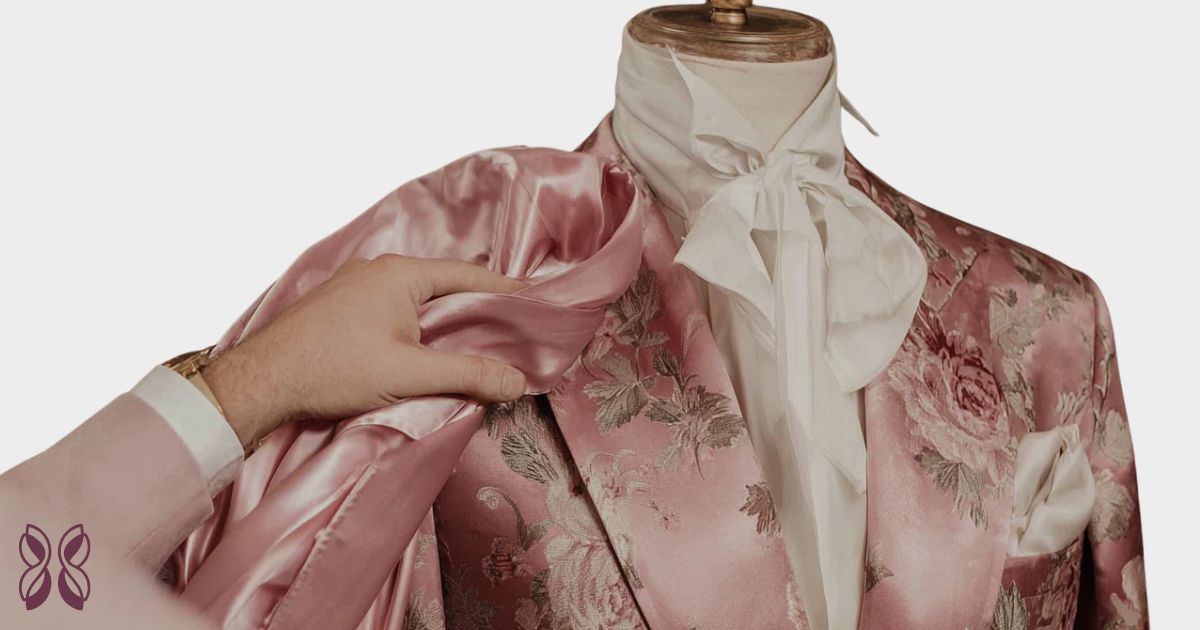
8. Wearing Each Garment More Often Cuts Its Environmental Impact by Up to 70%
Cost per wear is one of the most useful reframes in sustainable fashion: divide what you paid by how many times you’ll actually wear it. The same math applies to environmental impact: every garment has an embedded footprint from raw material to finished product, and that footprint gets spread across every wear.
The research is clear on this point. A Norwegian lifecycle study on a merino wool sweater found that increasing total wears from 109 to 400 reduced environmental impacts by 60-68% across all categories measured. Adding best-practice care brought that reduction to around 75%.
A separate wool clothing LCA confirmed the same pattern: extending garment life from roughly 15 wears to 400 wears reduced impacts by 49-68%. A broader multi-indicator study concluded that maximizing actual wear life consistently reduces environmental impact more than simply switching to a “better” fiber.
In short: how long you keep something and how often you wear it matters more than what it’s made of
| Wears per garment | Approximate impact reduction per wear |
|---|---|
| ~15 (fast fashion average) | Baseline |
| ~100 | Significant reduction |
| ~400 (best-practice use) | 50–70% lower than baseline |
Cost Per Wear: The Numbers
| Item | Price | Wears | Cost per wear |
|---|---|---|---|
| Trend top | €15 | 2 | €7.50 |
| Fast fashion dress | €40 | 10 | €4.00 |
| Quality jacket | €90 | 200 | €0.45 |
One important nuance: price is not a reliable proxy for longevity. Research by WRAP and the University of Leeds found that some sub-£15 T-shirts outperformed much more expensive options in durability testing. The math favors buying fewer pieces you’ll actually wear on repeat, not necessarily the most expensive ones.
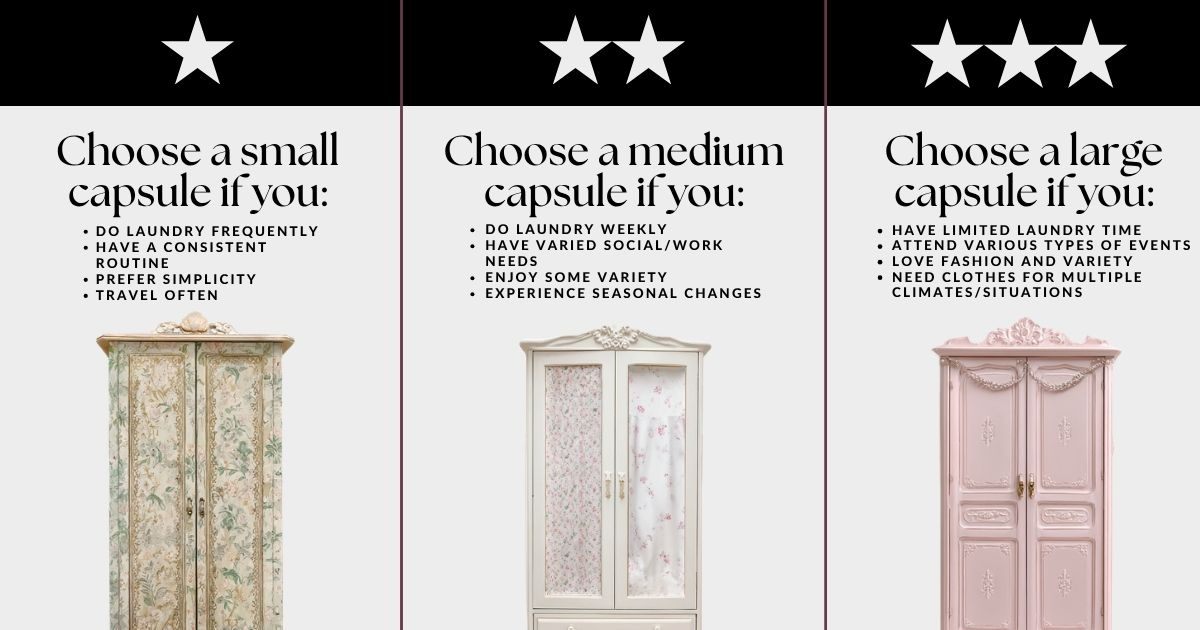
9. Capsule Wardrobes Structurally Increase Wear Counts, and Reduce Consumption
A capsule wardrobe, built around a small set of pieces that genuinely work together, reframes how often to buy new clothes, making high wear counts structural rather than aspirational. Research backs this up: an ITAA study found that capsule wardrobe practices help consumers reduce overconsumption and extend garment life as part of everyday dressing, without requiring a shift to slow fashion brands.
A separate paper confirmed that selecting durable, combinable pieces decreases purchase frequency and extends the lifetime value of each garment. Capsule market analysis puts the difference in concrete terms: investment pieces in capsule wardrobes are typically worn 100-300+ times, versus 10-15 times for fast fashion items.
Color Analysis Reduces the “Maybe” Purchases That Drive Returns and Waste
Knowing your unique color season transforms the way you shop, especially online. Shoppers who understand their palette and fit preferences order fewer speculative pieces, return less, and keep what they buy longer, as color analysis removes all the guesswork largely before checkout.
When you choose every piece against a unified capsule wardrobe color palette, you anchor items in your personal undertones, seasonal color type, and contrast level. This way, items combine more readily, get worn more often, and are far less likely to sit unused. Fewer orders, fewer returns, and fewer unworn items all compound into a meaningfully smaller wardrobe footprint, without sacrificing style.
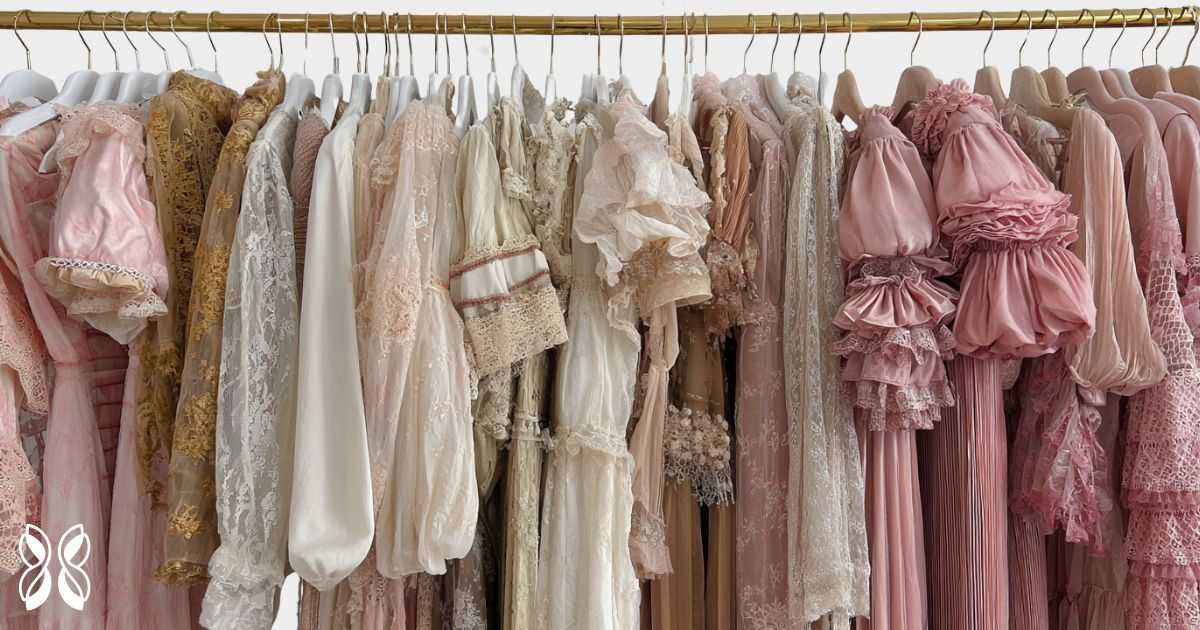
This is the approach at the core of My Eco Closet, as we help you build a capsule wardrobe through the lens of color analysis, so that buying less and wearing more isn’t a discipline, but just the natural result of knowing what works for you.
10. Fashion Rental Is Becoming a Core Business Model, Not a Niche Service
Fashion rental has moved past the “Airbnb for your wardrobe” phase. According to Bain & Company, rental could account for up to 10% of luxury brand revenues by 2030, with the global online clothing rental market projected to exceed $2-3 billion on steady double-digit growth.
Rental Reflects a Generational Shift in How People Relate to Clothes
Gen Z and younger millennials are less attached to ownership and more motivated by utility, variety, and environmental impact. Research shows 55% of Gen Z has rented clothing for sustainability reasons, and over 82% of wardrobes in the U.S. remain unworn annually, highlighting the waste-reduction potential of rental.
Rental Has Expanded Well Beyond Occasionwear
| Category | Why It Works for Rental |
|---|---|
| Workwear & hybrid office | High frequency, low emotional attachment |
| Maternity & kidswear | Short product lifecycles, high turnover; Circos operates across 20 countries |
| Seasonal capsules | Variety without accumulation |
| Formal/occasion wear | Still dominates: 48% of rental demand, 58% of the market overall |
| Women’s fashion | Largest segment at 58% of the rental market |
40% of Rent the Runway subscribers remain active for over two years, and Nuuly now averages 400,000 active monthly subscribers, signaling strong retention beyond the “try-once” phase.
Final Thoughts: Consumers Now Hold Brands Accountable, and the Data Proves It
Sustainability in fashion is no longer a brand differentiator. For a growing share of consumers, it’s a baseline expectation, and the tolerance for inaction is shrinking.
According to Edelman’s 2025 Brand Trust report, 64% of global consumers buy, choose, or avoid brands based on their beliefs about what’s happening in society. In the US, 51% of adults believe companies should speak out on current events, up 13 percentage points from 2024.
Consumers Are Taking Specific Stances on Specific Issues
| Issue | Stat | Source / Year |
|---|---|---|
| Climate change | 58% of US adults want businesses to take a stance | eMarketer, 2025 |
| Social issues (general) | 54% more likely to buy from brands that take a stand | 2026 data |
| Anti-racism | 49% of Americans favor companies that oppose racism | Stable since 2020 |
| DEI commitment | 72% of LGBTQ+ consumers reduced spending at companies retreating from DEI | HRC survey, 2026 |
| Brand boycotts | 57% will change or boycott a brand based on its societal stance | 2026 data |
The top issues consumers want brands to address are climate change (54%), mental health (53%), and diversity, equity, and inclusion (53%).
Authentic Action Outperforms Messaging Alone
Research from NYU Stern’s Center for Sustainable Business found that when brands pair clear social commitments with functional excellence, consumer preference rises from 42% to 70%. The most effective brand responses address access, economic disparities, and crisis support, that is, issues that resonate across demographics and political lines.
All the latest fashion sustainability facts point in the same direction: consumers are moving toward intentionality in what they buy, how often they buy it, and who they buy it from. The brands that will lead by 2030 are the ones treating sustainability, ethics, and transparency as operational commitments rather than marketing positions.
Sources
- Ellen MacArthur Foundation. A New Textiles Economy: Redesigning Fashion’s Future. 2017.
- European Commission. Ecodesign for Sustainable Products Regulation (ESPR). European Union, 2024.
- European Environment Agency. Textiles and the Environment. EEA, 2022.
- Edelman. 2025 Edelman Trust Barometer. Edelman, 2025.
- eMarketer. “Consumers Expect Brands to Take a Stand.” eMarketer, 2025.
- Fashion for Good. Innovation in Textiles and Materials Report. Fashion for Good, 2023.
- Global Fashion Agenda and McKinsey & Company. Fashion on Climate Report. 2020.
- Grand View Research. Bio-Based Materials Market Size Report, 2023–2030. Grand View Research, 2024.
- Human Rights Campaign. Corporate Equality Index. HRC, 2026.
- International Labour Organization. Global Estimates of Modern Slavery: Forced Labour and Forced Marriage. ILO, 2022.
- International Union for Conservation of Nature (IUCN). Primary Microplastics in the Oceans. 2017.
- Joy, Annamma, et al. “Fast Fashion, Sustainability, and the Ethical Appeal of Luxury Brands.” Fashion Theory, 2012.
- Kering. Environmental Profit & Loss Report. Kering Group, 2024.
- Laitala, Kirsi, et al. “Clothing Lifespans: What Should Be Measured and How.” Sustainability, 2018.
- McKinsey & Company. State of Fashion 2024. McKinsey & Company, 2024.
- McNeill, Lisa, and Rebecca Moore. “Sustainable Fashion Consumption and the Capsule Wardrobe.” International Textile and Apparel Association Proceedings, 2015.
- Napper, Imogen E., and Richard C. Thompson. “Release of Synthetic Microplastic Fibres from Domestic Washing Machines.” Marine Pollution Bulletin, 2016.
- NYU Stern Center for Sustainable Business. Sustainable Market Share Index. NYU Stern, 2023.
- Optoro. The Environmental Impact of Returns. Optoro, 2023.
- Oxfam. What She Makes Report. Oxfam, 2023.
- Regenerative Organic Alliance. Regenerative Organic Certification Framework. 2023.
- Rodale Institute. Regenerative Organic Agriculture and Climate Change. 2020.
- Sandin, Gustav, et al. Environmental Assessment of Swedish Clothing Consumption. Mistra Future Fashion, 2019.
- Statista. “Secondhand Apparel Market Value Worldwide 2023–2029.” Statista, 2025.
- Statista. “Online Clothing Rental Market Size Worldwide.” Statista, 2025.
- Textile Exchange. Preferred Fiber and Materials Market Report 2023. Textile Exchange, 2023.
- Textile Exchange. Regenerative Agriculture Landscape Analysis. 2022.
- ThredUp. 2024 Resale Report. ThredUp, 2024.
- UNEP. Sustainability and Circularity in the Textile Value Chain. United Nations Environment Programme, 2023.
- World Resources Institute. The Apparel Industry’s Environmental Impact. WRI, 2020.
- WRAP. Extending Clothing Life Could Reduce Carbon, Water and Waste Footprints. WRAP, 2017.
- WRAP. Valuing Our Clothes: The Cost of UK Fashion. 2017.
- Circ. “Technology and Impact Reports.” Circ, 2023.
- National Retail Federation. Consumer Returns in the Retail Industry Report. NRF, 2024.
- Bain & Company. Luxury Goods Worldwide Market Study. 2023.
- Clean Clothes Campaign. Fashioning Justice Report. 2022.
- Ellen MacArthur Foundation. The New Plastics Economy. 2016.
- European Parliament. “New EU Rules on Ecodesign and Sustainable Products.” European Parliament, 2024.
- European Commission. EU Strategy for Sustainable and Circular Textiles. European Union, 2022.