
Cool (True) Winter Celebrities: Best Vs Worst Looks, Advice, And More
March 21, 2024
Clear Winter VS Cool Winter: How to Tell Them Apart
April 2, 2024
A continuation of the brand, Ann Taylor, LOFT offers minimalistic pieces with an approachable charm. But behind the polished styling lies a more complicated story. In this guide, we unpack the question “Is LOFT fast fashion?”, exploring its labor practices, greenwashing tactics, heavy use of synthetics, and overall sustainability claims. Let’s dive right into it!
Is Loft Fast Fashion?
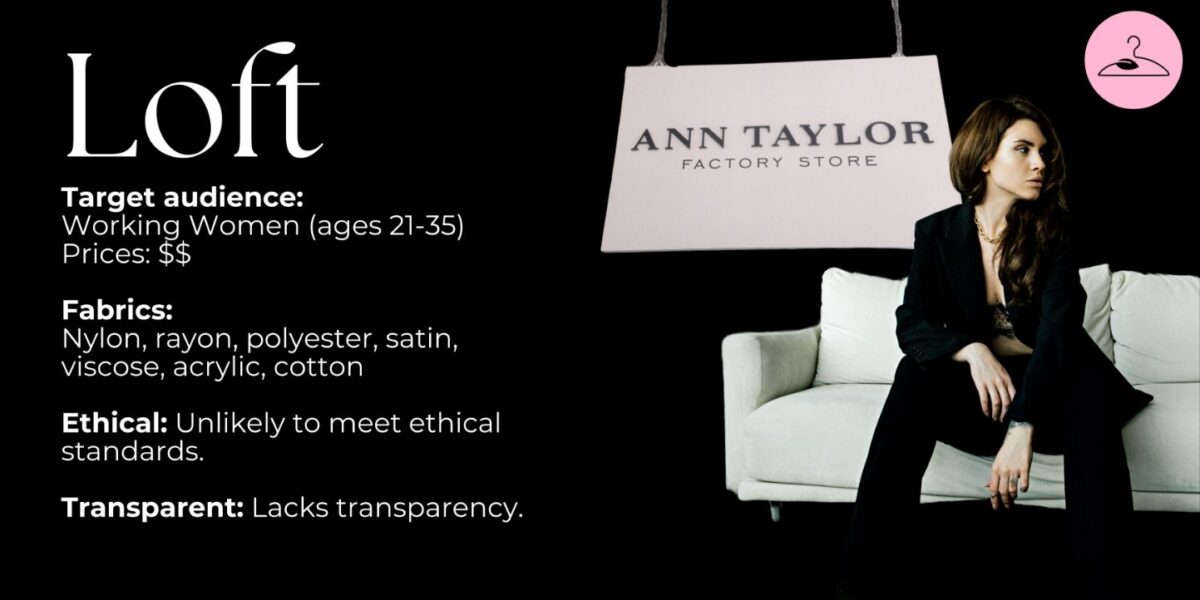
Yes, LOFT can be considered a fast fashion brand due to its heavy reliance on synthetic fabrics like polyester, lack of transparency about its supply chain, and business model aimed at driving overconsumption through aspirational marketing tactics.
| Factor | Verdict | Why It Matters |
|---|---|---|
| Materials | Mostly synthetic | Heavy use of polyester, rayon, and acrylic — low sustainability. |
| Transparency | Low | No detailed public information about factories or audits. |
| Labor Ethics | High-risk | No third-party verification of worker conditions; minimal accountability. |
| Business Model | Fast fashion | Trend turnover + aspirational “shop by occasion” marketing encourage overconsumption. |
Is LOFT Ethical? What We Know So Far
In 2013, Ann Inc., the conglomerate behind LOFT and Ann Taylor, announced its decision to join the Sustainable Apparel Coalition, with the goal to boost the ethicality of its supply chain. In fact, Ann Inc. was the first women’s specialty retailer to join the coalition, alongside brands, such as Target, JC Penney, Levi’s, and more.
While this appeared to be a positive milestone, many critics have debunked the greenwashing tactics behind the SAC, as well as the Higg Index – an indicator-based tool that the coalition introduced.
Criticisms of the Higg Index
1. Synthetic Fiber Bias
The Higg Index has been widely criticized for rating synthetic fibers (like polyester and elastane) as more sustainable than natural materials such as cotton, wool, or leather — a scoring approach many experts call misleading.
2. Greenwashing Through Scoring
Fast fashion brands have been accused of using the Higg Index to market their synthetic-heavy clothing as “eco-friendly,” despite polyester’s significant environmental impact.
3. Lack of Independent Verification
The Higg Index relies heavily on self-reported brand data, without sufficient third-party auditing — raising serious concerns about accuracy and credibility.
4. Opaque and Industry-Influenced Data
Much of the index’s methodology isn’t publicly transparent and may rely on data provided by chemical and plastics industry groups — which can skew results in favor of synthetics.
Lack of Transparency at LOFT
In 2023, Ann Taylor reached 66% on the Fashion Transparency Index. Unfortunately, the score is not available for LOFT, but we assume that it would be similar to the one of its parent brand. What’s noting is that neither Ann Inc., nor LOFT disclose information about their supply chain or environmental initiatives.
Ascena Retail Group, Inc., which encompasses Lane Bryant, Justice, Lou & Grey, alongside Ann Taylor and LOFT, has an ESG ranking of 46%. The retail group published its sustainability report in 2019, and as of today, there’s no up-to-date information available about its practices.
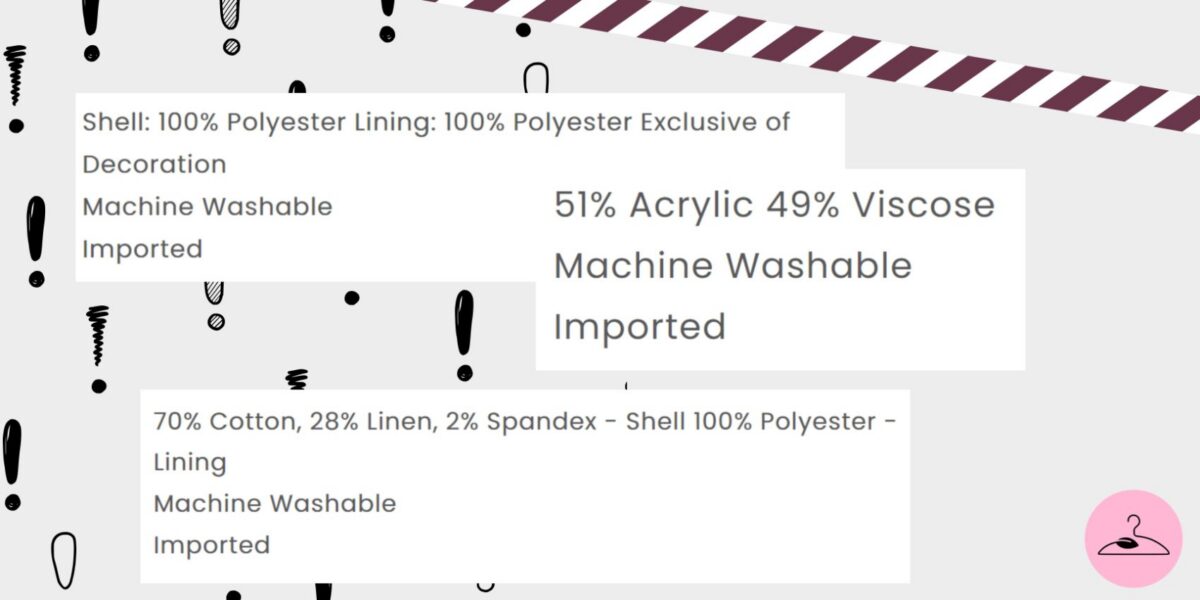
Sourcing “Sustainable” Raw Materials: The Greenwashing
In its 2019 sustainability report, Ascena Retail Group, which is the parent company of LOFT, highlighted several initiatives related to “sourcing sustainable raw materials.” However, the report lacked clarity, measurable targets, and verifiable data, making many of these claims difficult to evaluate.
What LOFT Reports as Progress
- Better Cotton Initiative participation, though the report does not disclose what percentage of cotton meets this standard.
- A “sustainable materials strategy” that continues to prioritize synthetic fibers such as polyester and rayon over natural alternatives.
- A shift toward recycled polyester (rPET) in some collections.
Problems with Recycled Polyester
While LOFT’s parent company highlights its shift toward recycled polyester as a sustainability milestone, this claim raises more questions than answers. Most fashion brands adopt bottle-to-fiber recycling, which relies on converting plastic bottles into polyester rather than addressing the industry’s massive textile waste problem. This practice undermines true circularity by diverting materials away from closed-loop bottle recycling and does little to reduce the environmental impact of synthetic clothing.
Recycled polyester also falls short from an ecological standpoint. Some experts note that rPET can retain residues from post-consumer plastics, including substances such as BPA and processing byproducts. Because brands rarely disclose how these materials are handled or tested, this raises questions about fiber quality and transparency. Ultimately, LOFT’s use of rPET seems to function more as a sustainability marketing claim than a meaningful step toward reducing environmental harm.
Is LOFT Perpetuating Modern Slavery?
LOFT may not be as inexpensive as ultra-fast fashion brands like Shein or Temu, but its price point is still too low to reliably support ethical labor. The brand’s business model — centered on trend-driven, affordable clothing aimed at younger consumers — aligns with the broader fast fashion industry, where cost-cutting often translates into poor working conditions.
Supporters sometimes point to Ann Inc.’s “AT CONNECT” capacity-building program as evidence of progress. The initiative involves supplier engagement through meetings and bilingual webinars designed to encourage better factory conditions. However, these efforts remain surface-level and lack measurable outcomes. More importantly, there is no independent third-party verification to confirm whether AT CONNECT leads to meaningful improvements in worker welfare.
Female Empowerment at LOFT: The HERProject Program
LOFT deserves praise for its participation in the HERProject initiative, which serves as a positive milestone amidst the brand’s lackluster sustainability efforts. While the brand may falter in most aspects of environmental and social responsibility, its commitment to empowering over 100,000 women across its global supply chain is admirable.
This visionary program, which LOFT has championed since 2014, countless women receive helpful resources in areas, such as financial literacy, health education, and workplace empowerment.
Polyester Garments at LOFT
Take a quick look through LOFT’s product lineup and one thing becomes obvious almost immediately: polyester is everywhere. The brand leans heavily on this non-biodegradable synthetic, which sheds microplastics with every wash and relies on energy-intensive production. In the world of mainstream fashion, polyester remains one of the least sustainable fabrics in circulation, and LOFT uses it liberally.
Then there’s the question of how these garments are finished. Polyester often undergoes extensive processing to achieve certain textures, colors, or performance qualities, and some shoppers find that heavily treated synthetics can feel irritating or uncomfortable on the skin. Since brands like LOFT rarely disclose the details of their finishing methods, consumers are left guessing about how these fabrics are made and what additives they may contain.
LOFT Uses Fabric Blends
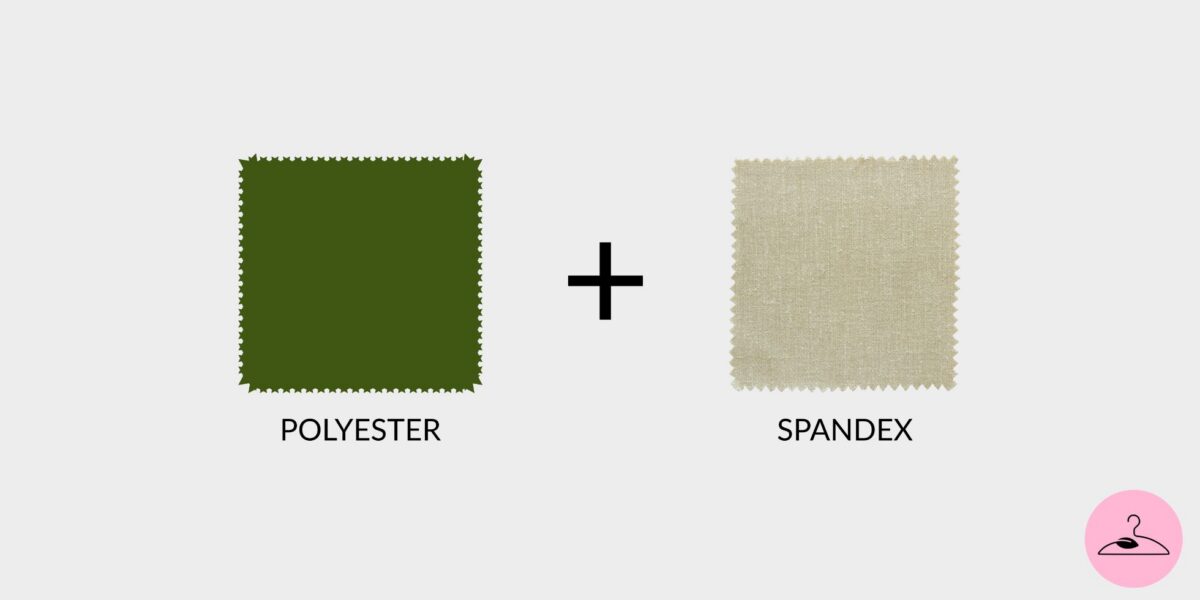
One thing you’ll notice as soon as you start checking LOFT’s product labels is blended fabrics everywhere. The brand rarely commits to a single, straightforward material. Instead, you’ll find pieces like the Marled V-Neck Cardigan, made with 58% cotton and 42% acrylic, or the Tipped Ribbed V-Neck Pocket Cardigan, which pairs 70% rayon with 30% polyester. In other words, LOFT loves mixing natural fibers with synthetics, or layering synthetics on top of more synthetics.
But while fabric blends may feel soft or look appealing, they create a major sustainability problem. Blended textiles can’t be mechanically recycled, because the fibers can’t be separated once they’re spun together. The result? Almost every blended item inevitably becomes landfill waste. And considering the fashion industry produces roughly 92 million tons of textile waste each year, blends only make the problem worse.
Until the industry develops technology to handle blended fabrics responsibly, sticking to single-fiber garments is the more eco-friendly choice. For brands like LOFT — and for shoppers trying to make thoughtful purchases — limiting half-synthetic or synthetic-heavy blends is one of the simplest ways to reduce long-term environmental impact.
Shop By Occasion: Fueling Aspirational Consumption
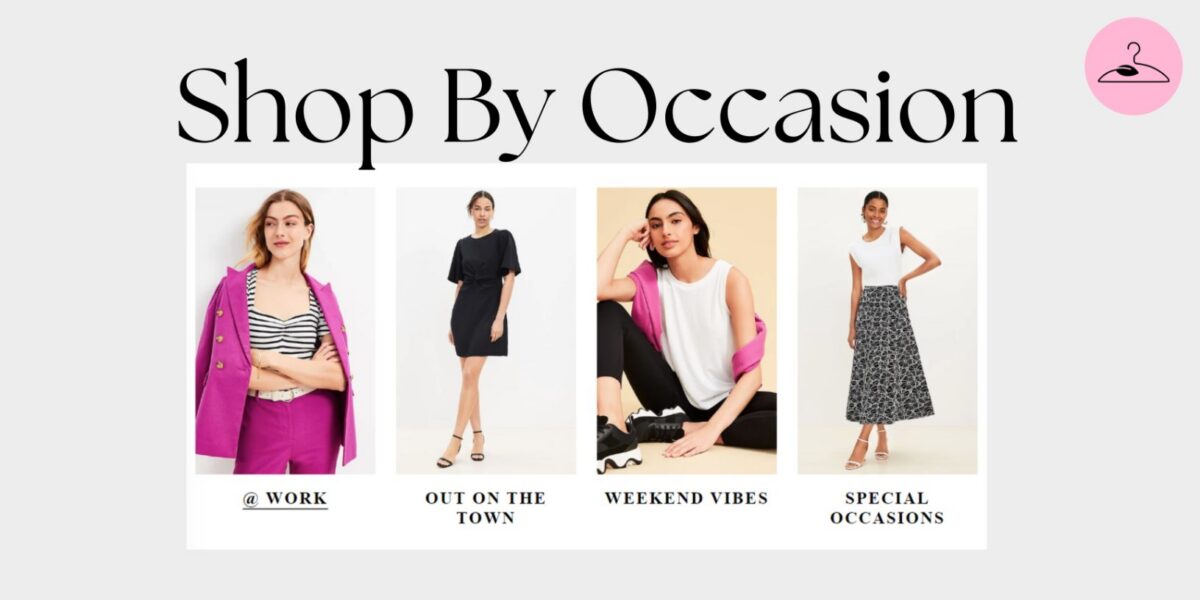
Curating unique moodboards, LOFT encourages the consumer to envision themselves in their products, in different occasions. For instance, the brand provides 4 themes – work, out on the town, weekend vibes, and special occasions – where shoppers can browse different lookbooks, conceptualizing their outfits in advance before making a purchase.
Parallels to Cider’s “Shop by Mood” Approach
This is similar to Cider’s strategy of “shopping by mood”, where the brand encourages shopping by impulses, rather than necessity. This strategy shows different moods that the shopper might resonate with, including “minimalistic”, “free”, and “nostalgic”, generating customized lookbooks for each and every ambiance.
With increased personalization, Cider caters to the shopper’s fantasies, tastes, and personalities – ultimately, tapping into their psyche and cultivating a deep connection between its offerings.
A Fast Fashion Tactic to Drive Overconsumption
Like other fast fashion brands, the ultimate goal for both LOFT and Cider is to occupy a prominent space in the shopper’s mind. By encouraging customers to mentally curate desired looks, these brands forge a strong psychological connection between consumption, emotions, and self-expression — the core motives between fast fashion-induced consumerism.
That is to say, as consumers visualize themselves wearing the outfits, they develop an emotional bond to that fantasy persona – whether professional, glamorous, or laid-back. This fantasy fuels their desire to purchase the mentally curated products, bringing that imagined reality to life – which, most of the time, leads to unnecessary purchases and in turn, contributes to today’s rampant overconsumption problem.
The History Behind Loft
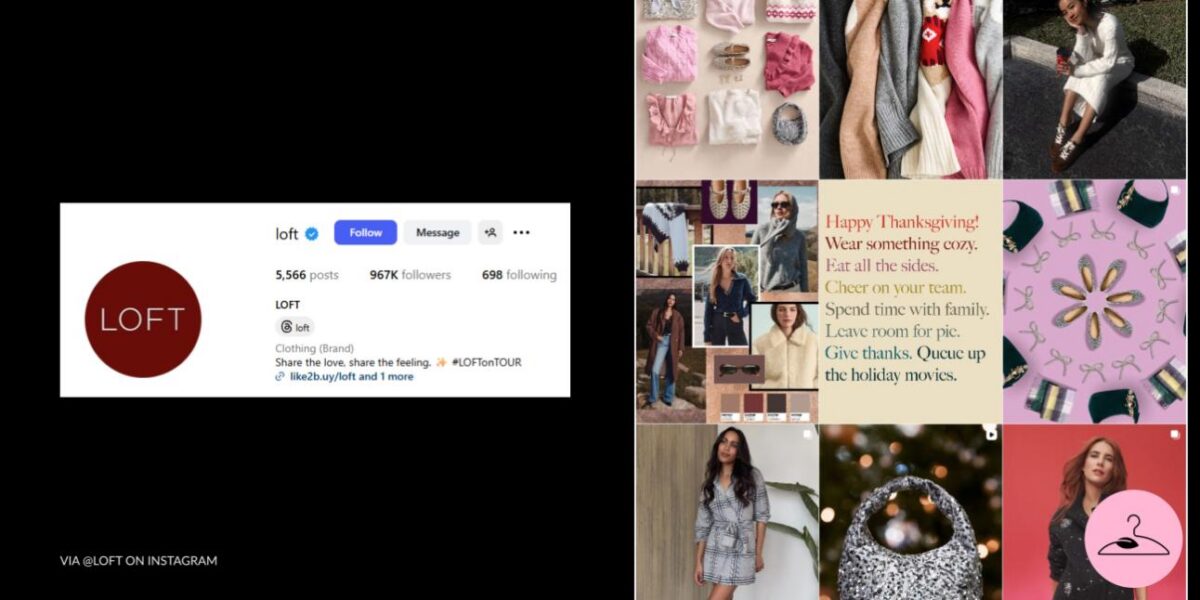
LOFT, born in 1998, emerged as an offshoot of the renowned Ann Taylor brand, establishing its own aesthetic identity. Conceived as a more laid-back and approachable counterpart to its sophisticated sister, LOFT embraced ‘effortless chic’ with simple yet elegant silhouettes.
From humble beginnings as Ann Taylor Loft, the brand quickly outgrew its origins. Diversifying its customer base, the brand managed to cater to the tastes of the modern-day career woman, as well as the younger demographic. With its laid-back aesthetic identity, LOFT features classic button-downs, midi skirts, and sharp suits – to be worn in the workplace and beyond.
Serving Trend-Driven Fast Fashion via LOFT
Unlike Ann Taylor, LOFT provides trendier and more casual styles, which may explain its aspirational marketing tactics, use of synthetic materials, and sub-par quality standards. When wondering, “is Ann Taylor Loft fast fashion?”, it’s important to note that the LOFT segment deliberately focuses on trends, as compared to the higher-quality, premium offerings of Ann Taylor.
As of 2024, the brand has expanded into over 500 locations across North America, boasting nearly two decades of presence on the market.

Frequently Asked Questions
LOFT mainly uses polyester, rayon, cotton, nylon, and spandex blends. These fabrics keep costs low but rely heavily on synthetics, which are non-biodegradable and often shed microplastics. While some natural fibers appear, the brand’s overall material mix leans toward fast-fashion, low-durability textiles.
LOFT was launched as Ann Taylor’s more relaxed, youthful counterpart. While Ann Taylor focuses on polished, professional attire, LOFT offers casual, trend-driven pieces designed for everyday wear. Its aesthetic leans more playful and approachable, catering to modern women who want business-casual or weekend-friendly styles at lower price points.
LOFT is owned by the same parent company as Ann Taylor, but the two brands serve different purposes. Ann Taylor focuses on polished, professional workwear, while LOFT offers more casual, youthful, and trend-driven pieces. They share a similar aesthetic DNA, but LOFT operates as the more relaxed, accessible sister brand.
LOFT offers mid-range quality that aligns with fast-fashion standards. While its pieces are stylish and affordable, they often rely on synthetic blends that may pill, stretch, or lose structure over time. Customers may find certain items durable, but overall quality depends on the fabric mix rather than consistent craftsmanship.
If you like LOFT’s style but want more ethical options, consider brands such as Outerknown, Eileen Fisher, Amour Vert, and Thought Clothing. These labels prioritize fair labor conditions, responsible fabrics like organic cotton or TENCEL, and transparent supply-chain reporting, offering similar everyday styles with far stronger sustainability commitments.
LOFT manufactures most of its clothing in low-cost production hubs such as China, Vietnam, Indonesia, and India, similar to many fast-fashion brands. The company provides limited supply-chain transparency, offering no detailed factory list or audit data, which makes it difficult to assess working conditions or verify ethical labor standards across its manufacturing sites.
Since debuting in 1998 as an offshoot of Ann Taylor, LOFT has expanded significantly. The brand now operates around 500 stores across North America, maintaining a strong retail presence in the United States, Canada, and Mexico. Its sizable footprint reflects its popularity in the accessible, trend-focused fashion market.