

How to Build a Year Round Capsule Wardrobe: 20 Pieces
April 8, 2023
Is Urban Outfitters Fast Fashion in 2026? Our Verdict
July 14, 2023
Fashion has always been about reinvention. But somewhere between the postwar sewing circle and the $4 Shein haul, something went wrong. The industry now churns through water, fibers, and human labor at a pace the planet was never designed to absorb, driving a staggering 400% rise in fast fashion consumption over the last two decades.
But the most insidious damage isn’t in the dyeing vats or the cargo ships. It’s in the idea that clothes should be cheap and disposable. Economists have a name for what happens when individual choices silently destroy shared resources: the tragedy of the commons. Fast fashion is its most wearable expression, and here’s why:
Is Fast Fashion a Tragedy of The Commons?
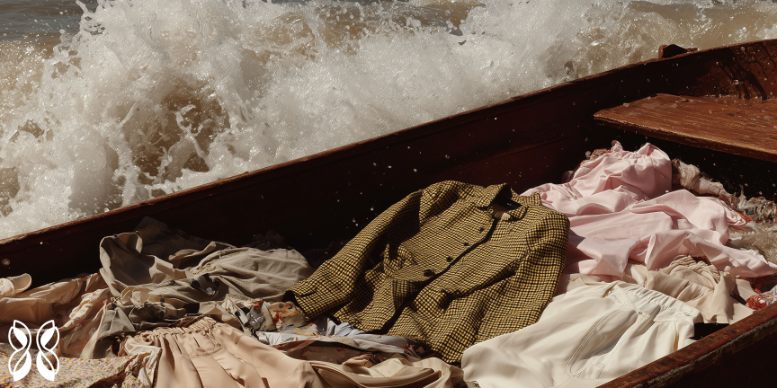
Clothing is cheap, convenient, and everywhere – made possible by corporations that trade labor rights and natural resources for profit. That’s the tragedy of the commons in action: when a shared resource is owned by none, every actor exploits it rationally until there’s nothing left. Each brand races to produce more and price lower. The profits are privatized. The damage is shared by all.
| Statistic | Value | Details |
|---|---|---|
| Market Size (2026) | $172 billion | Projected value, up from $162B in 2025 at 6.6% CAGR |
| Global Carbon Emissions | 10% of the global total | Equivalent to EU emissions; apparel sector up 7.5% recently |
| Annual Textile Waste | 92 million tonnes | 73% landfilled/incinerated; one truck per second |
| Water Consumption | 79-93 billion m³/year | Second-largest consumer; enough for 5 million people earth |
| Overproduction | 100+ billion garments | Fuels waste and resource depletion |
Simply imagine an open market of cheap goods shared by multiple fashion companies – each company exploits more resources (human or physical) to maximize its profits. In an unregulated industry, this becomes a “logical” strategy since the profits gains are private. However, the deleterious consequences are shared by all – both the people and the planet.
Such endless commodification of natural and human resources leads to an oversaturated market, where more and more companies over-use and exhaust available environmental resources, hence, spawning fast fashion as a textbook tragedy of the commons.
The History of Fast Fashion: The Origins of Pre-Made Clothing
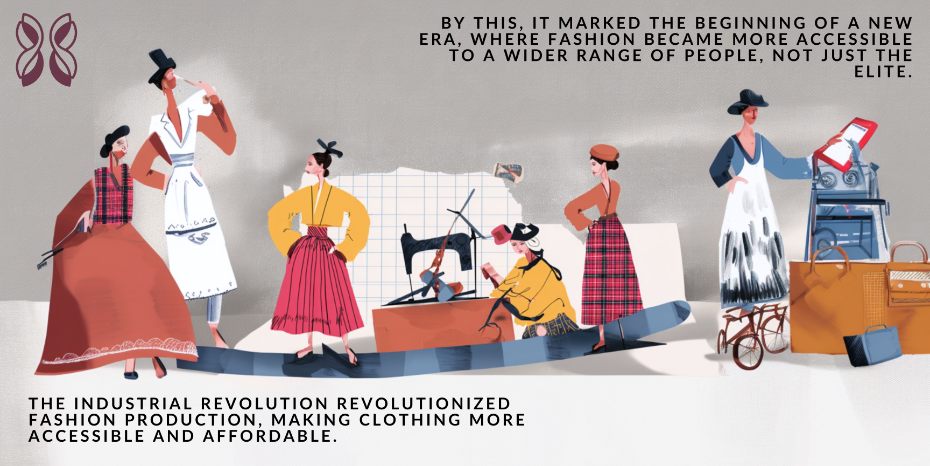
With the mass production of fashion, clothing has become a globalized resource. However, this hasn’t always been the case – just a century ago, most clothing was bespoke and made exclusively for the wealthy.
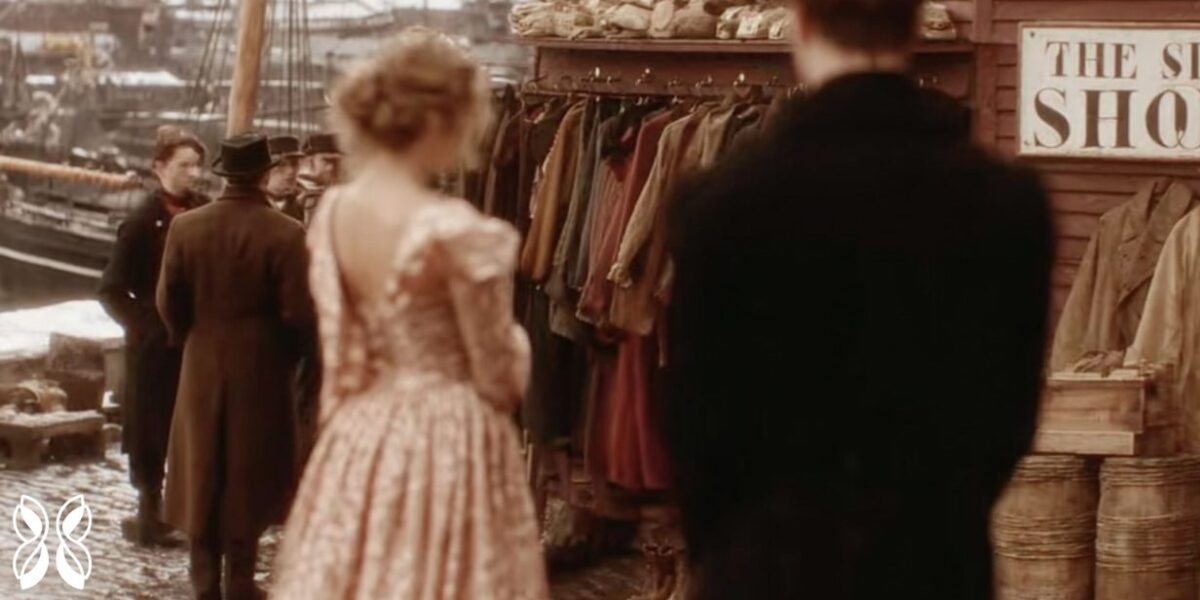
The origins trace back to Britain’s Industrial Revolution and a humble institution: the slop shop. These were stores selling ready-made clothing: secondhand uniforms for seamen, chimney sweeps, and laborers who couldn’t afford tailors. Unglamorous, practical, and quietly revolutionary.
This model was revolutionary, as it reflected the demand for mass production in the 18the century and planted the seed for everything fast fashion would eventually become.
The Slop Shop – First-Ever Ready-Made Clothing Stores
Slop shops targeted workers, peasants, and the middle class, that is, anyone who couldn’t afford a tailor. In doing so, they introduced a radical idea: clothing that was standardized, affordable, and made without a dressmaker ever knowing your name.
That idea demanded infrastructure. The spinning jenny, the power loom, the sewing machine — each invention accelerated production and reshaped how garments moved from factory to body. The machinery has grown more sophisticated since. The exploitation underneath it, less so.

Modern Slavery and the True Cost of Fast Fashion
Fast fashion conglomerates, as “The True Cost” documentary puts it, have “little incentive to do anything other than to make this quarter better than the last.” The most effective way to do that is cheap labor. And cheap labor, taken far enough, becomes modern slavery.
Moving their manufacturing operations abroad, fashion companies conveniently step outside the reach of labor laws. Exploitation seeps into every stage – from harvesting raw cotton to dyeing finished garments – and the workers bearing that cost are largely invisible to the consumer pulling a tag in a fitting room.
Naturally, the numbers are hard to look away from. According to the 2018 Global Slavery Index, $127.7 billion worth of garments involving forced labor are imported annually into G20 nations — the United States, the UK, Canada. High-income countries manufacturing demand for cheap clothing, sewn by hands they’ll never have to account for. The commons, once again, pay the price.
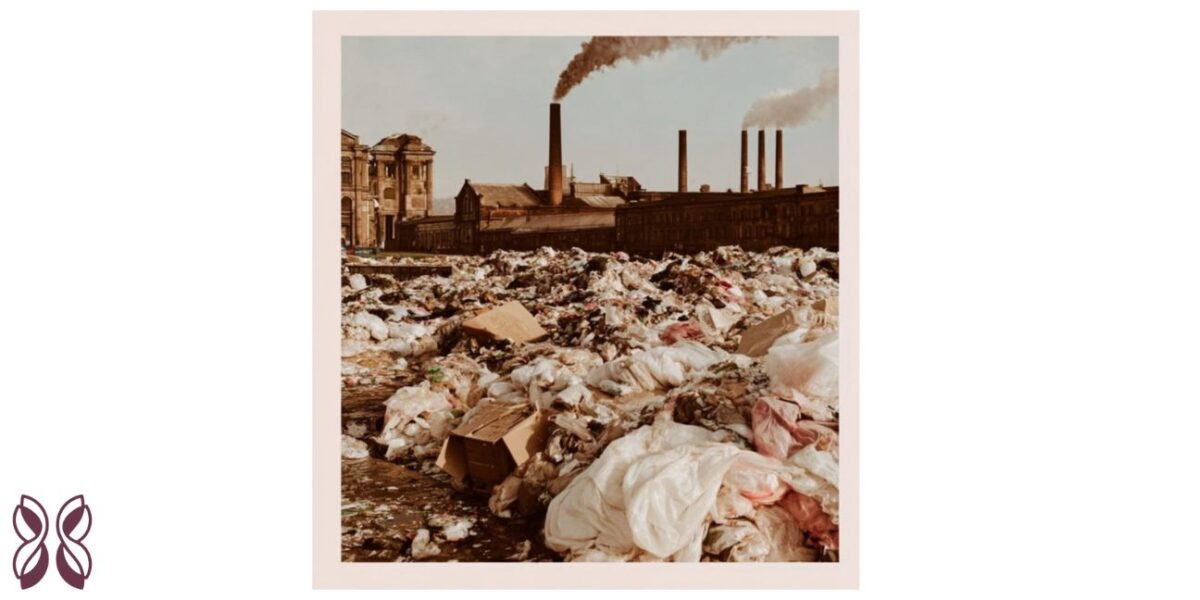
Fast Fashion: For the People, Against the Planet
Be it the 18th-century slop shop or modern fast fashion store, the democratization of fashion has resulted in a snowballing environmental crisis. This is mainly because cheap clothing is ubiquitous, and in the absence of labor or environmental laws, the demand for it can be manufactured indefinitely.
And manufactured it is. Fast fashion runs on artificial desire. Brands forge a sense of artificial scarcity and FOMO to market their products, curating a false sense of urgency via last-minute sales, updating collections weekly, and advertising their products heavily with aspirational content. After all, the goal was never to clothe people – it was to keep them buying.
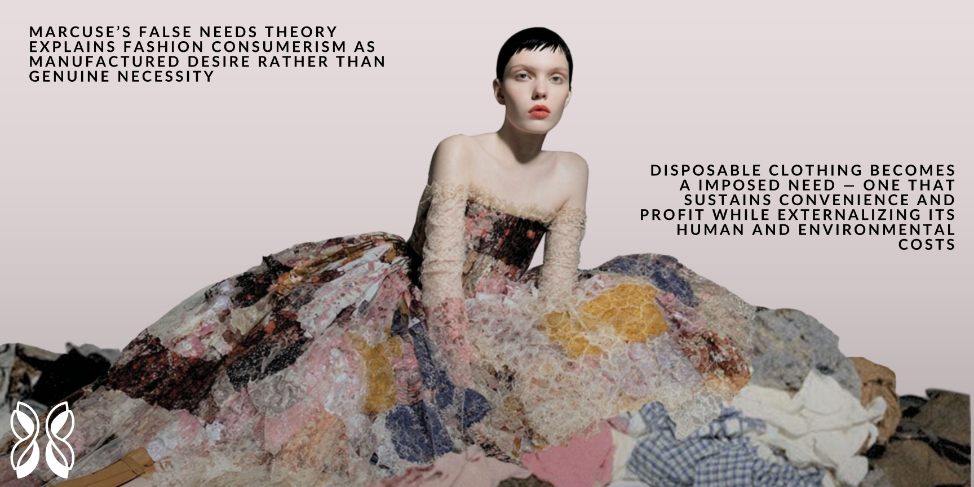
The False Needs Theory
Philosopher Herbert Marcuse argued that corporations don’t just sell products. Rather, they manufacture desire itself, imposing “false needs” that serve profit over human or collective wellbeing. Disposable clothing is perhaps his theory’s most literal proof.
Disposable clothing is the superficial ‘false need’ that pollutes our oceans, exploits underpaid workers, and depletes non-renewable resources – the false need that makes us dig our own graves.
Ultimately, the very ethos of fast fashion, “of the people, for the people, by the people”, is inherently against the planet.
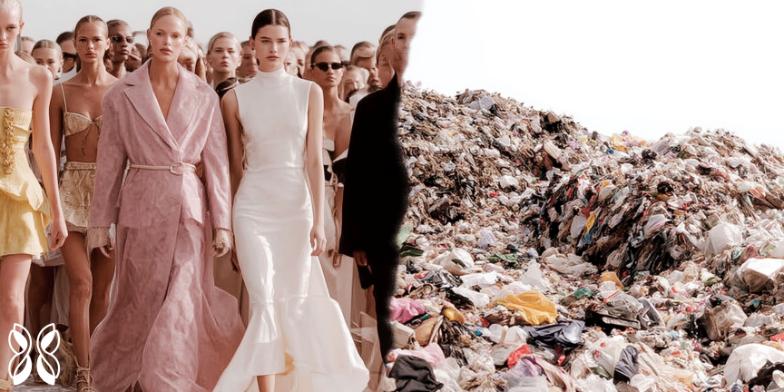
Democratization of Fashion
Fast fashion has granted people a false sense of privilege, due to which the elite no longer holds the key to being fashionable. Nowadays, anyone can buy the latest trends – clothes on Shein or AliExpress can be bought for merely a few dollars. Once a trend appears on the runway, it takes weeks for it to ‘trickle down’ to the masses via fast fashion stores.
This, however, doesn’t necessarily translate into consumers’ access to quality clothing, but rather cheap, disposable trend pieces that go out of style in a matter of months. Ultimately, the democratization of fashion has produced a never-ending stream of poorly made, synthetic clothing that is non-biodegradable.
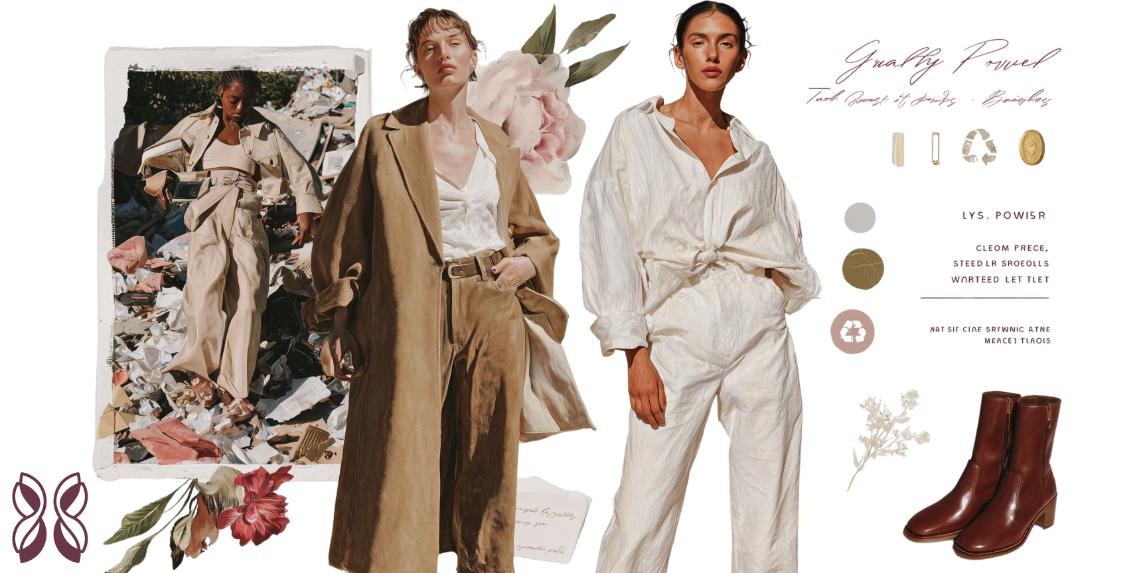
Vote With Your Wardrobe
In a world of disposable clothing, resistance is quieter than you’d think. The fast fashion machine may run on rapid production and manufactured desire, but it runs on your purchases. You have more power than the price tag suggests — and your currency is natural fabrics: wool, linen, and organic cotton, timeless style, and the quiet refusal to buy something you don’t need.
Buy less, but better. Build an intentional, year-round capsule wardrobe – that is, a collection of versatile, lasting pieces. The antithesis of everything fast fashion sells, it encapsulates all that you truly wear, be it a well-cut blazer, a few quality basics, shoes built to last, or fabrics that age gracefully rather than pill after two washes. Every mindful purchase is a small withdrawal from the commons tragedy. A vote, however modest, for a different kind of fashion.
Final Thoughts
Fast fashion is not a single villain. It’s a system, where every actor behaves rationally, and the collective outcome is irrational destruction.
On the supply side, transnational brands exploit labor and natural resources without restraint, offshoring production to avoid accountability and flooding under-resourced countries with toxic, unsold garments laced with phthalates, formaldehyde, and PFAs. On the demand side, artificially low prices, leveraging unfair wages and brutal working conditions, make overconsumption feel innocent, even logical.
That’s the tragedy, as neither consumers nor corporations are incentivized to stop. The commons, namely, clean water, livable climate, dignified labor, erode quietly, distributed across millions of transactions that each feel too small to matter.
Frequently Asked Questions
Economists are split. Some argue fast fashion is a classic tragedy of the commons — shared resources exploited by competing actors with no incentive to stop. Others frame it as a market failure, where environmental and human costs exist as unpriced externalities. In practice, it’s both, operating simultaneously and reinforcing each other.
Meaningful change requires action on both ends. Governments must enforce extended producer responsibility laws, holding brands accountable for their waste. Consumers can build capsule wardrobes and choose natural fabrics. Internationally, binding agreements, similar to climate accords, could set enforceable production limits across the industry’s largest players.
Commercial fishing systematically depletes shared ocean stocks. Fossil fuel extraction exhausts finite resources while externalizing climate costs. Deforestation by competing agricultural interests erodes shared ecosystems. Each follows the same pattern as fast fashion: private profit, collective damage, and a structural absence of incentive to stop.
Regulation varies widely. The EU leads with its Green Deal and textile strategy, mandating durability and recyclability standards. France has banned the destruction of unsold goods. The US remains largely unregulated at the federal level. Most existing frameworks are voluntary, making enforcement inconsistent and corporate commitments easy to abandon.
Slow fashion prioritizes quality, transparency, and longevity. Alternatives include buying secondhand through platforms like Depop or ThredUp, supporting certified ethical brands, renting clothing for occasions, and embracing capsule wardrobes. The underlying principle is simple: own less, choose well, and treat clothing as an investment rather than a disposable commodity.



2 Comments
[…] with an emphasis on sustainability. This sounds quite far-fetched, considering that it is the fashion democratization that bombarded us with textile waste. The utopian vision to mass-produce clothing for globalized consumption never works in the real […]
[…] are now producing clothes much cheaper than before, molding fast fashion into an environmental and social disaster. Employing cheap labor overseas, overusing natural resources, and creating artificial demand for […]