
Is LOFT Fast Fashion in 2026? The Shocking Truth
March 28, 2024
Capsule Wardrobe for Blondes: Finding Colors that Suit You Best
April 2, 2024
On the spectrum of the winter color season, clear winter and cool winter stand next to each other. You may ask, what’s the difference between the two? Well, the answer lies in two things – undertones and the personal contrast level. In this guide, we will delve into the two factors, helping you solve the clear winter vs cool winter dilemma and thereby, get your color season right.
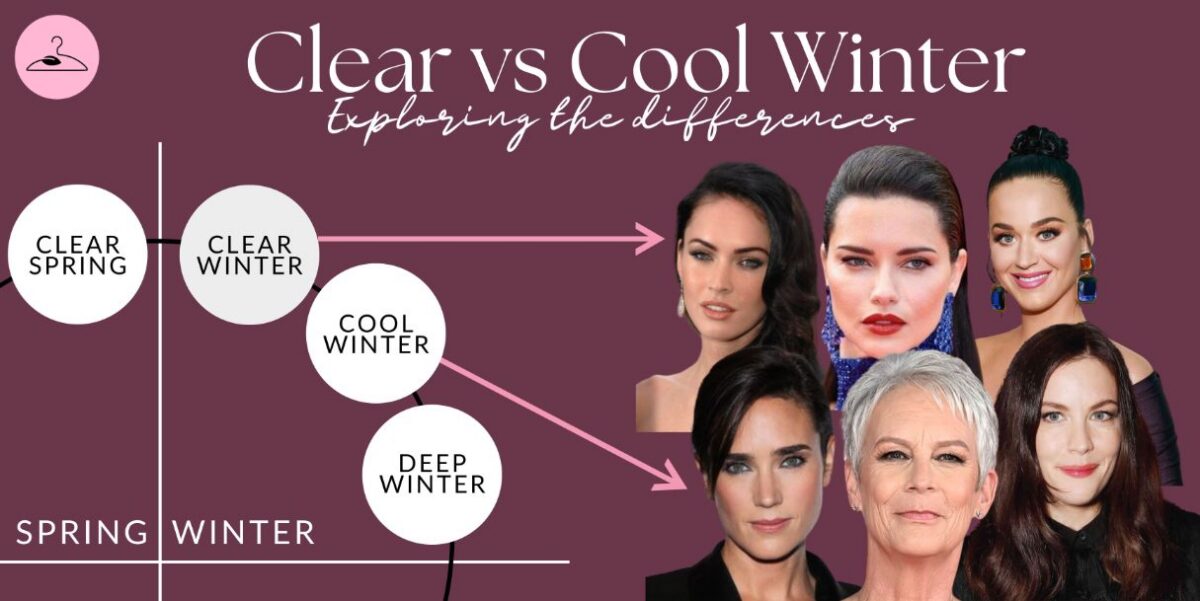
Clear vs Cool Winter at a Glance
| Dimension | Clear Winter | Cool / True Winter |
|---|---|---|
| Temperature | Fully cool; clarity makes tones feel even more icy and crisp. | Fully cool; the classic blue-undertone Winter palette. |
| Chroma (Saturation) | Highest saturation in Winter: clean, vivid, electric hues | High saturation but slightly less “neon-bright”; jewel tones and icy brights. |
| Value & Contrast | Sharp clarity contrast; bright lights + vivid brights look harmonious. | Strong light-dark contrast (pale cool skin vs dark hair/eyes). |
| Best Colors | Royal blue, emerald, fuchsia, bright white -ultra-clear hues. | Bright white, black, navy, icy pinks, cool reds – core Winter tones. |
Clear VS Cool Winter: The Primary Difference
Let us put it this way: both cool winters and clear winters shine in clear and vibrant shades and look bad in pastel, as well as warm tones. However, there’s more to it. The difference between the two seasons is subtle, yet still present — clear winters exhibit a higher contrast between their skin, hair, and eye colors, as compared to cool winters.
What does this mean, exactly? Well, clear winters have the highest contrast among the winters. While still 100% cool-toned, they are the most vibrant and bright of the bunch. Cool winters, on the other hand, may have medium to high contrasting features.
Clear Winter Can Borrow Colors From Spring
Cool winters are like the icy queen – everything about them screams crisp, blue-based coolness, from head to toe. Their eyes, hair, skin — they all have that pronounced blue undertone that’s impossible to ignore.
Clear winters, on the other hand, are the cool girls that command attention. Sure, they’ve also got that icy cool undertone going on. However, they can get away with borrowing certain eye-catching, high-voltage colors from the spring palette – think bold fuchsias, electric blues, etc.
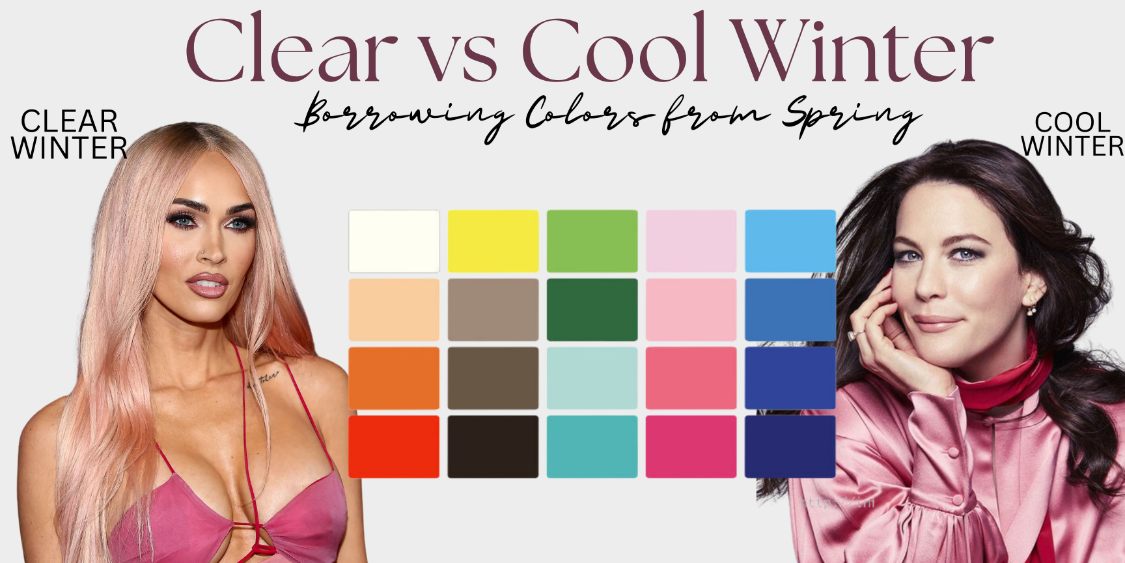
Comparing Cool vs Clear Winter Celebrities: Megan Fox And Liv Tyler
Let’s take a look at Liv Tyler and Megan Fox as examples. In one instance, we observe Liv Tyler wearing a warm, dusty pink hue that would typically be associated with the spring color season. Unfortunately, with its muted, rose-tinted undertones, the color is not hitting the mark for her specific coloring.
Why Megan Fox Performs Differently in Warm-Leaning Shades
On the other hand, we can look at Megan Fox wearing a strawberry blonde hairstyle with almost coral-like vibrancy — a shade that would again, fall under the spring palette. In stark contrast to Liv Tyler, this warm, high-voltage tone appears exceptionally flattering on Megan.
The key differentiating factor here is that while both women could be considered cool-toned winters, Megan Fox exhibits the telltale higher contrast and intensely cool characteristics of a clear winter. Her coloring allows her to amplify and radiate in vibrant, clear shades that may wash out or appear overwhelming on a more toned-down cool winter counterpart.
Ultimately, Megan Fox’s ability to carry off such a warm, spring-inspired shade serves as evidence of her clear winter status.
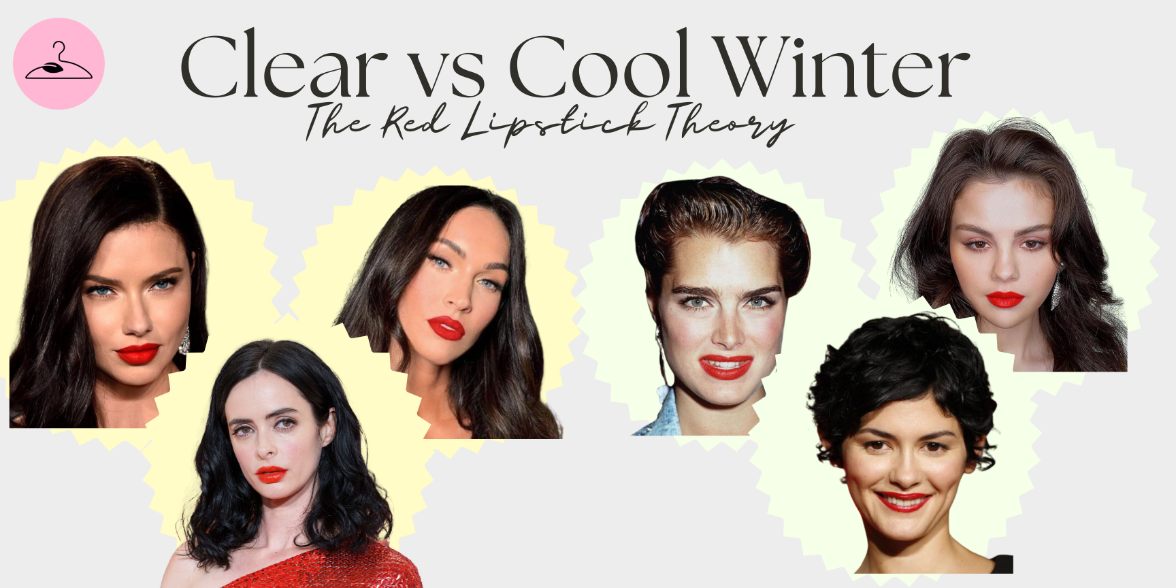
Clear Winter vs Cool Winter: The Red Lipstick Theory
Let’s take a look at how clear winters and cool winters rock that bold, fire engine red lip. On the left, we observe Krysten Ritter, Megan Fox, and Adriana Lima carrying off a striking, warm-toned red lipstick. Despite belonging to the cool winter category, these individuals possess the high contrast and the intense coolness that amplifies their beauty in such a fiery, spring-inspired shade.
Conversely, Selena Gomez, Brooke Shields, and Audrey Tautou, who represent the more toned-down cool winter palette, appear somewhat ill-suited for this particular warm-toned red. The vibrancy and warmth of the hue seem to overwhelm their softer, harmonious, cool undertones.
Why Fire Engine Red Divides the Two Winter Types
The red lipstick theory demonstrates the key difference between clear and cool winters. Yes, both seasons may be leaning towards icy, crisp shades that steer clear of any warmth. However, the clear winters have that extra kick of contrast that lets them elevate certain high-voltage bright and richer tones on occasion.
Such tone is the classic fire engine red lip, which may look like a clear winter no-go at first glance, as it would normally resonate with the true spring color season. However, it is, paradoxically, suitable for clear winters as well. The tone harmonizes with the clear winter’s overall coloring — perhaps, just like a sprinkling of salt can make the rich, sugary notes of caramel stand out.
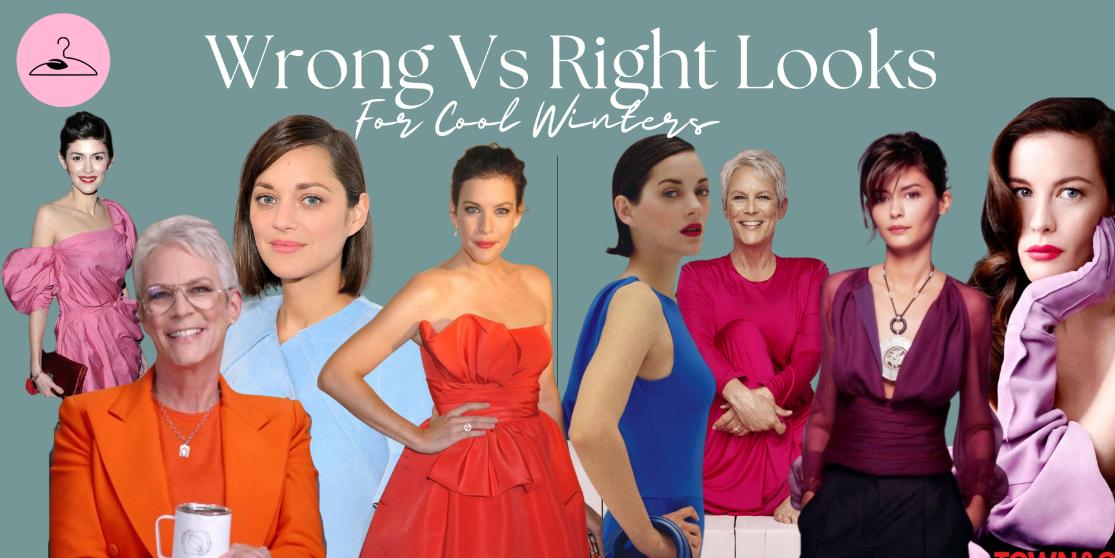
Cool Winter Colors: Wrong VS Right Looks
Identifying one’s true color season proves pivotal in achieving a harmonious and flattering aesthetic. However, this is hard even for celebrities to achieve. As the examples illustrate, famous cool winters occasionally choose sartorial options that clash with their distinct coloring.
In one case, Audrey Tautou wears a dusty pink dress that lacks the necessary contrast to flatter her complexion. Marion Cotillard’s tiffany blue top, although a cool tone, washes out her striking features, rather than accentuating them.
These clothes clearly lack saturation, so they end up watering down the celebrities’ features. Ultimately, muted, low-contrast shades fail to provide the depth and intensity cool winters require to radiate their full potential.
When Cool Winters Get It Right
Similarly, Jamie Lee Curtis and Liv Tyler are wearing warm-toned shades, which make them appear dull and lackluster. The subdued oranges and peaches, devoid of any overtly cool undertones, tend to clash with the icy cool nature of the cool winters.
In contrast, when cool winter celebrities embrace shades that resonate with their cool winter coloring, the transformation stuns. Deeply cool tones like taupe, icy pink, navy, magenta, raspberry, icy yellow, turquoise, and teal amplify their striking features. These hues possess the necessary depth, saturation, and contrast to highlight the cool winter’s unique essence.
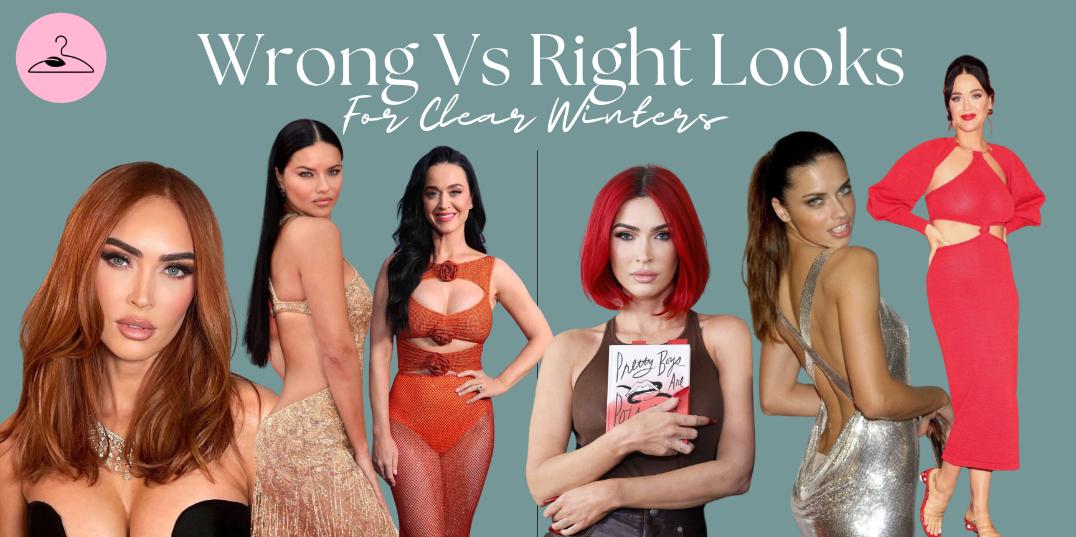
Clear Winters: Wrong VS Right Looks
Understanding the impact of color choices is crucial for those with a clear winter (also known as bright winter) coloring. The cool, high-contrast complexion of this color season can be beautifully complemented or drastically diminished — depending on the shades selected for hair, makeup, and clothing.
On the left, you’ll notice how warm, muted tones like Megan Fox’s brown hair, Katy Perry’s burnt orange outfit, and Adriana Lima’s gold dress wash them out. These shades water down their clear winter coloring, making them appear dull and unflattering.
In contrast, the right side shows the power of the optimal colors. Megan’s cool red hair, Adriana’s silver dress, and Katy’s neutral but high-contrast ensemble let their clear winter features to shine. They look radiant and vibrant when wearing shades that complement their natural coloring.
Ultimately, for clear winters, embracing cool, high-contrast hues is key. They should steer clear of warm, muted tones that look too ‘heavy’ for their bright complexion.
Cool Winter vs Clear Winter: Final Thoughts
In the realm of color theory, the distinction between clear winter vs cool winter lies in the delicate balance of contrast. While both embrace crisp, cool tones, clear winters command with unapologetic vibrancy. Their high-contrast features look best in shades that mirror their intensity – ranging from bold reds to daring fuchsias, which seamlessly blend with their palette’s icy coolness.
Cool winters, on the other hand, exude softer elegance. Their medium-to-high contrast features call for a nuanced approach, particularly, demanding deeply saturated yet slightly muted tones.

Frequently Asked Questions
You can distinguish the two by evaluating undertones and contrast. Clear winters display sharp contrast between hair, eyes, and skin with a crystalline clarity, while cool winters retain blue undertones but appear softer, with medium to high contrast rather than vivid, high-definition coloring.
Both seasons favor cool, saturated hues and should avoid warm or dusty colors. Clear winters excel in bold, high-intensity shades like icy fuchsia or vibrant turquoise, while cool winters look best in more refined, blue-based tones such as berry, charcoal, and true navy that preserve harmony.
Hair color contributes, but only in context with overall coloring. Clear winters typically have strikingly cool, dramatic hair like jet black or icy blonde, while cool winters may present ash brown or cool medium blondes that are softer. Artificial warm dyes often confuse results rather than determine them.
Clear winters can enhance their vibrant features with jewelry in cool metals like silvClear winters suit reflective, high-contrast pieces such as white gold, platinum, and crystal-like gemstones that enhance their vivid clarity. Cool winters benefit from understated yet refined cool-toned jewelry, including silver, sapphires, diamonds, and deep blue stones that align with their balanced, blue-based undertones without overwhelming them.