
Is Polyester Good for Underwear? Why You Should Avoid It
December 8, 2023
Is Windsor Fast Fashion in 2026? An Honest Look
January 3, 2024
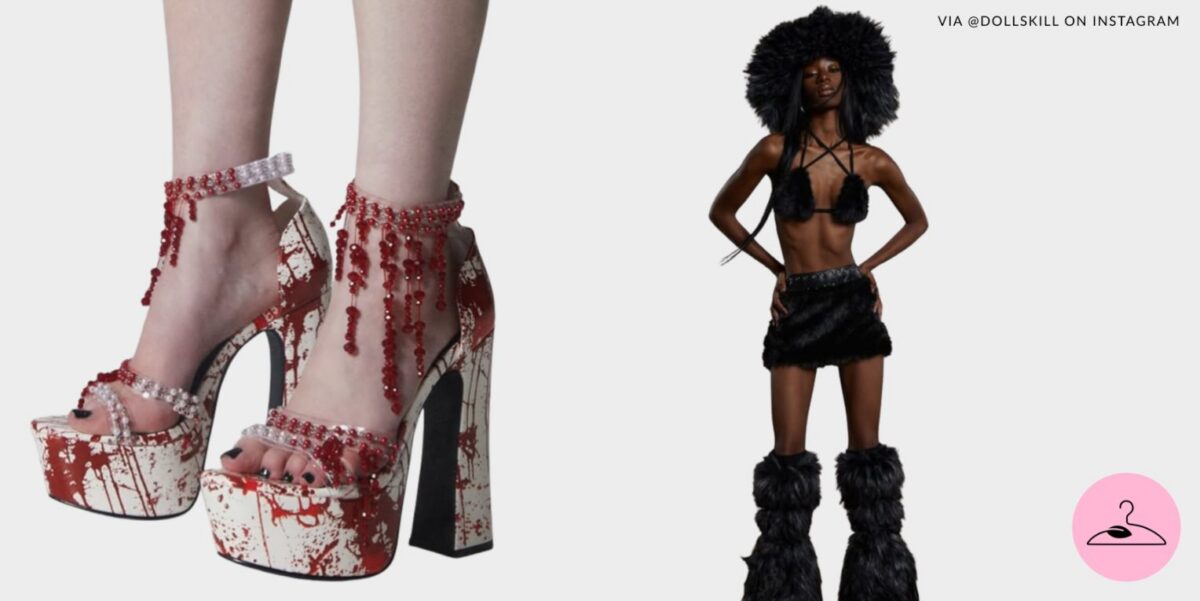
Worried about what’s really behind Dolls Kill’s edgy aesthetic? Consumers are increasingly alarmed by its opaque practices and questionable sustainability claims. Though wildly popular among TikTok “e-girls,” the brand’s ethics tell a different story, and it’s one we advise avoiding. Below, we’ll answer the question, “is Dolls Kill fast fashion?”, exploring the brand’s fabrics, labor practices, and more. Let’s dive in!
Is Dolls Kill Fast Fashion?
Dolls Kill is considered fast fashion. The brand provides no transparency about its labor practices and regularly engages in design theft, overproduction, and greenwashing. Its rapid trend turnover, heavy reliance on synthetic materials, and constant sales further align it with the fast-fashion model rather than ethical or sustainable production.
Greenwashing: “Sustainable” Tees from Dolls Kill
Dolls Kill frequently labels items as “sustainable,” yet many of these products offer little meaningful environmental benefit. For example, an asymmetric bodysuit marketed as being made with “recycled materials” contains only 86% recycled fabric, with the remaining portion made from virgin spandex, which comes with well-known environmental drawbacks.
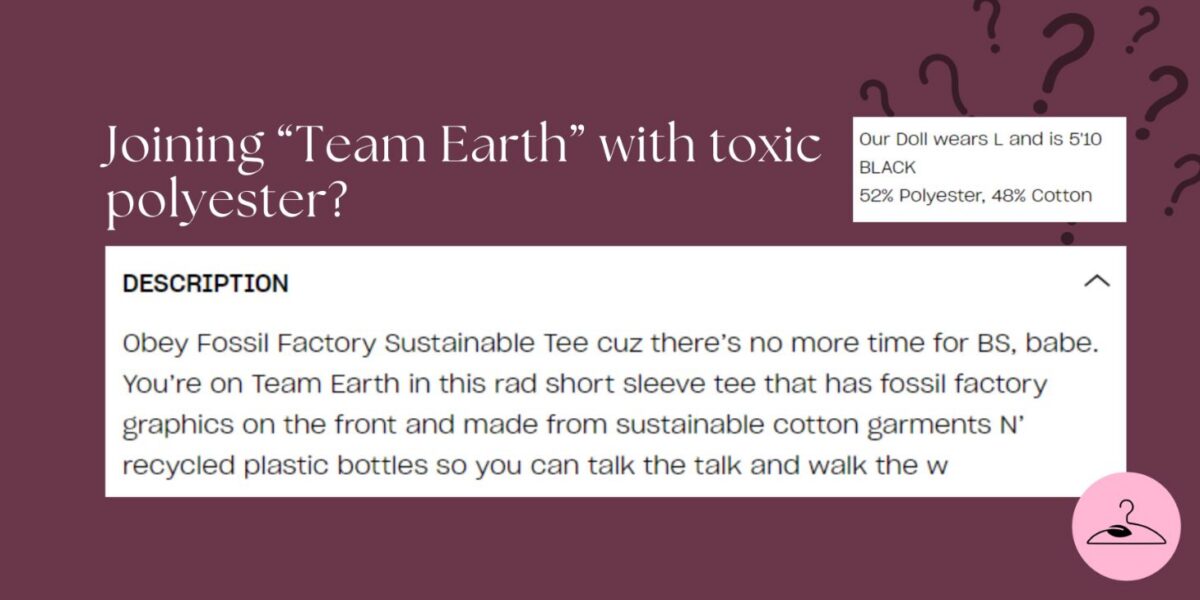
This highlights a broader pattern: the brand applies sustainability language to products that barely meet minimal criteria. When examining other items, such as the Fossil Factory “sustainable” tee, the marketing suggests the item as an eco-conscious choice, yet it consists of 52% virgin polyester and 48% conventional cotton. These materials do not align with widely accepted definitions of sustainable textiles.
Overall, Dolls Kill’s sustainability claims often overstate the environmental benefits of its products. Rather than offering transparent details about sourcing, material composition, or manufacturing processes, the brand uses green terminology in a way that can easily mislead consumers seeking genuinely sustainable options.
Dolls Kill Relies Heavily on Synthetic Fabrics
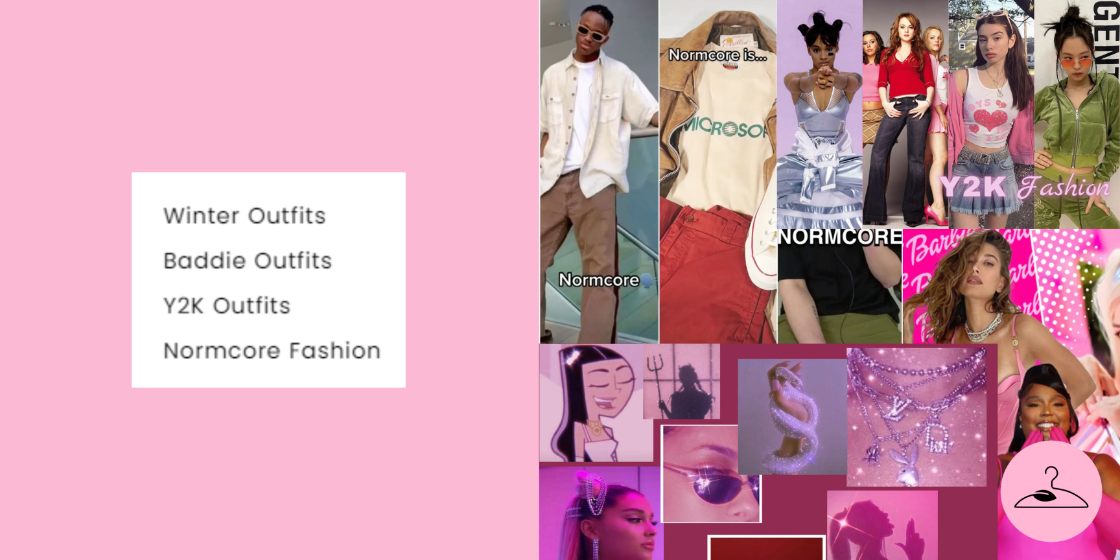
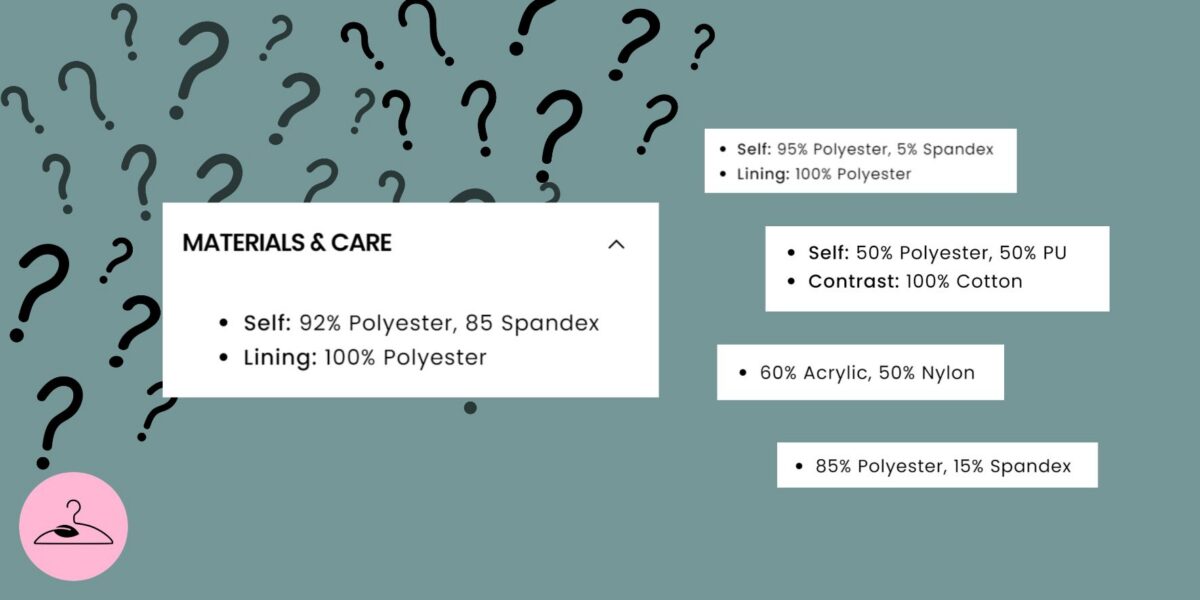
Take a quick scroll through Dolls Kill’s product pages, and you’ll notice a pattern: polyester, spandex, PU leather – the usual lineup of low-cost synthetics that dominate fast fashion. These materials help the brand churn out trendy looks quickly, but they also come with a downside. Polyester and spandex are petroleum-based, non-biodegradable, and can linger in landfills for centuries.
Proposition 65 Warnings and What They Actually Mean
Every now and then, you’ll spot a California Proposition 65 warning on a Dolls Kill item. It’s a small label with a big implication: the product may contain chemicals like lead, phthalates, or cadmium that California has flagged for potential long-term risks.
These labels aren’t meant to cause panic, as they won’t tell you the clothing will harm you, but they do hint at something bigger: a lack of clarity around how these garments are processed and what exactly goes into them. And when you zoom out, the pattern becomes even clearer. Fast-fashion materials often involve:
- Chemical-heavy production, especially for stretchy or shiny fabrics
- Minimal oversight during dyeing and finishing, which can leave residues behind
- Synthetic fibers that never truly disappear, even after being thrown away
Independent investigations into other fast-fashion giants have uncovered heavy metals and questionable chemical residues in garments, showing that this issue goes far beyond one brand. Dolls Kill’s reliance on synthetic blends (paired with those occasional Proposition 65 labels) places it squarely within this wider industry problem.
What Dolls Kill Claims About Sustainability vs. What It Actually Uses
At first glance, Dolls Kill’s occasional cotton pieces and eco-friendly wording might suggest the brand is moving toward sustainability. But the brand refuses to clarify whether its cotton is organic, responsibly sourced, or simply conventional, which makes a big difference in environmental impact. In its public statements, Dolls Kill highlights a few sustainability-related initiatives, such as:
- Annual third-party vendor audits for basic labor and safety standards
- Packaging improvements, including recycled hang tags and OEKO-TEX certified labels and inks
- Waste-reduction efforts, like producing smaller batches based on demand and selling “seconds” rather than discarding them
These steps look promising, however, Dolls Kill provides no measurable data to support its claims. The brand does not publish a sustainability report, outline its carbon footprint, disclose water or energy usage, or specify how often sustainable or recycled materials are used in its collections.
Dolls Kill Encourages Overconsumption
Hailed as the “unofficial brand of the TikTok e-girl”, Dolls Kill curates the archetype of the counter-culturalist e-girl. Its edgy, countercultural aesthetics pull inspiration from skater, anime, rave, goth, and Harajuku subcultures, inviting shoppers to express their most “authentic” selves. But this curated individuality comes with a hidden cost: overconsumption.
Personalized Aesthetics Designed to Sell More
To deepen this appeal, Dolls Kill created six character-like influencers, the “dolls”, each representing a different aesthetic.
- Coco channels pastel Harajuku energy with fuzzy jackets and kawaii touches.
- Kandi speaks to rave culture with neon, glitter, and candy-inspired motifs.
These personas aren’t just fun branding; they’re marketing tools. By offering hyper-specific identities, Dolls Kill encourages shoppers to constantly reinvent themselves, and, in turn, their wardrobes. It’s a strategy built to make consumers think, “That’s so me!” even when their closet is already full.

Dolls Kills Leverages Discounts to Fuel Consumption
Another hallmark of fast fashion is relentless discounting, and Dolls Kill leans into it heavily. Clearance events, warehouse sales, and “last chance” drops (often up to 70% off) create urgency and fuel impulse buying. Discounts aren’t an occasional perk: they fuel the brand’s rapid cycle of trends. Dolls Kill keeps shoppers hooked by constantly reshuffling sales, creating the sense that if you don’t buy now, you’ll miss out.
Those nudges show up everywhere:
- Weekly clearance drops with up to 70% off
- Flash sales offering 30–40% off for limited hours
- Newsletter perks giving 10–20% off the first purchase
Dolls Kill Leverages Influencers via Haul Videos
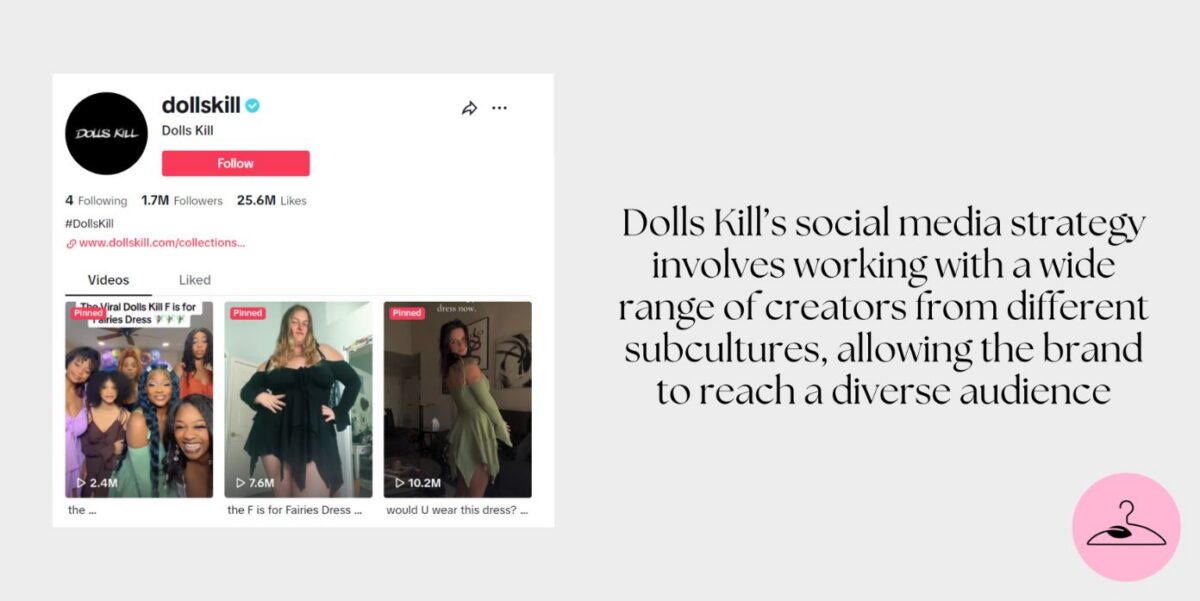
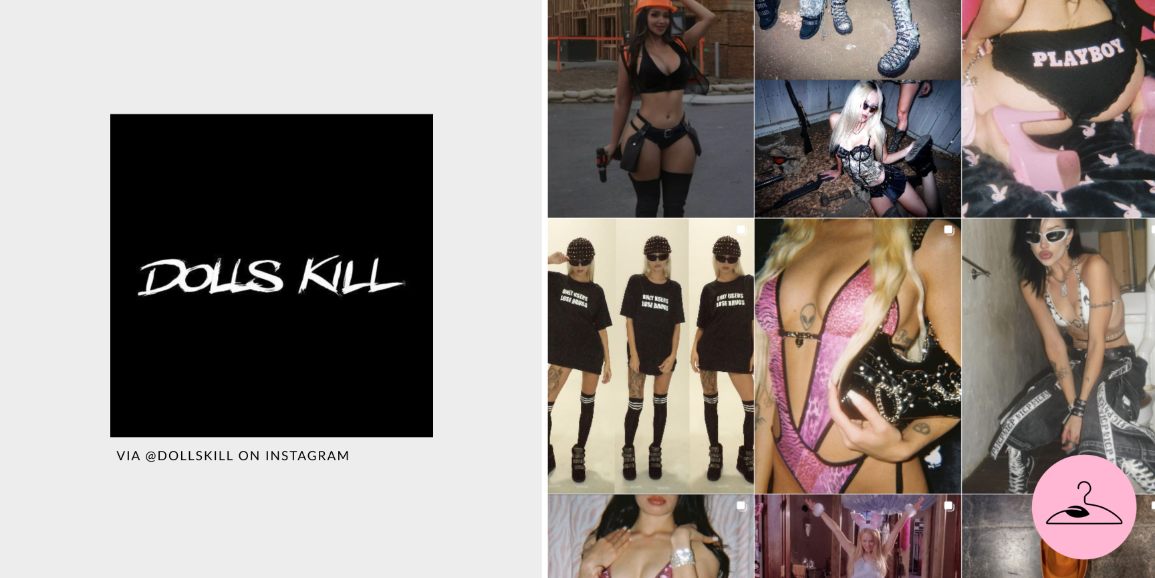
If discounts are Dolls Kill’s spark, influencers are the fuel. The brand has mastered the art of getting its clothes in front of TikTok and YouTube creators, who parade massive “hauls” packed with dozens of trend-driven pieces. These videos rack up millions of views, turning cheaply made outfits into must-have looks overnight.
Haul culture works exactly as intended: young shoppers watch their favorite creators unbox outfit after outfit and start believing they need constant newness to keep up. Instead of building a thoughtful wardrobe, they get swept into a cycle of trend-chasing and consumerism — and Dolls Kill knows it. As a result, they become victims of the fast fashion system, which turns impulse buys into a lifestyle.
Questionable Quality of Dolls Kill’s Products
Dolls Kill Leverages Planned Obsolescence
Dolls Kill Controversies
Cultural Appropriation and Offensive Products
In 2014, Dolls Kill released products featuring Native American–inspired headdresses and imagery, including the “Fringed Feather Headpiece” and “Fringed Benefits Costume.” When customers called out the brand for cultural appropriation, Dolls Kill responded dismissively, saying the brand wasn’t meant “for the easily offended norm culture.”
This instance, however, is not foreign in the fast fashion space. Another brand, Urban Outfitters, exploited traditional Navajo motives in their underwear, flask, and headband collections, which led to the Navajo tribe suing the brand. UO also faced backlash for products like the “Navajo Hipster Panty,” a name widely condemned as disrespectful and culturally insensitive. These incidents underscore a recurring issue across trend-driven retailers: fast fashion prioritizes profits over cultural respect.
BLM Backlash and Social Media Missteps
Another major controversy erupted in 2020 when co-founder Shoddy Lynn posted an image of police officers guarding a Dolls Kill store during Black Lives Matter protests.
Captioned “Direct Action in its glory” alongside the #BlackLivesMatter hashtag, the post was widely viewed as tone-deaf and supportive of police aggression toward peaceful demonstrators. The backlash led many former customers and creators to publicly distance themselves from the brand.
Repeated Allegations of Design Theft
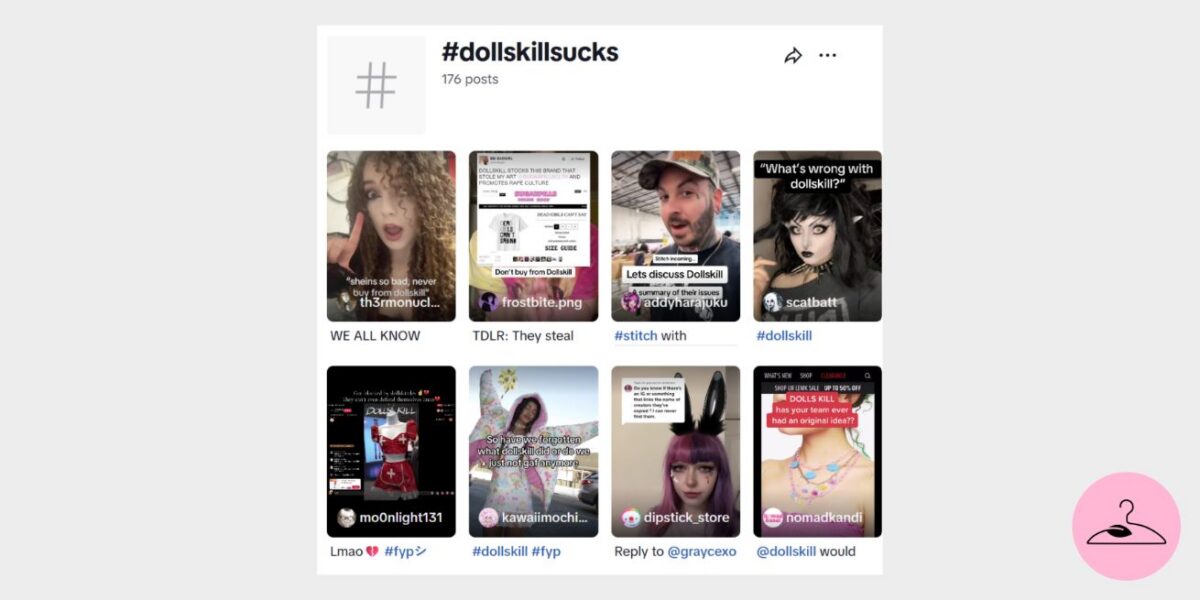
Dolls Kill has also been repeatedly accused of copying designs from independent artists and small businesses. One high-profile case involved a Current Mood shirt strikingly similar to a design by LA-based artist Nicole Orchard, who wasn’t credited or compensated. Although Dolls Kill removed the item following criticism, the brand never publicly addressed the issue.
Watchdog accounts like @DollsKillSucks have since emerged, documenting dozens of alleged instances of plagiarism, encompassing apparel graphics, jewelry designs, and more. Independent creators, including the brand Nomad Kandi, have publicly accused Dolls Kill of stealing their work, further eroding trust within the artist community.
A Quick History of Dolls Kill
Dolls Kill’s Lawsuit Against Another Fast Fashion Brand, Shein
Dolls Kill’s Strategy to Differentiate From Shein
The real story lies in what happened next. In response to rising competition from Shein, Dolls Kill announced plans to “elevate its design, quality control, and storytelling.” The brand suggested it would incorporate more complex details, such as trims, embroidery, embellishments, in an effort to create pieces that are harder for competitors to replicate.
But this shift doesn’t necessarily signal meaningful improvement. Adding decorative complexity doesn’t address the core problems of fast fashion – namely, overproduction, poor-quality materials, and massive environmental impact. At their core, both Shein and Dolls Kill rely on the same business model, one built on disposability, not durability.
Final Verdict: Dolls Kill Is Fast Fashion

Frequently Asked Questions
Dolls Kill is generally not considered ethical. The brand offers limited transparency around its labor practices, relies heavily on synthetic materials, and has faced controversies involving cultural appropriation and design theft. Without published supply chain data or sustainability metrics, it falls short of common ethical fashion standards.
While the brand faced significant backlash in 2020 over cultural appropriation and comments made during Black Lives Matter protests, Dolls Kill continues to operate and maintain a large customer base. Some consumers still avoid the brand, but it has not experienced a lasting, industry-wide cancellation.
Dolls Kill is a problematic brand due to repeated controversies, including cultural appropriation, insensitive social media posts, and accusations of design theft. Combined with limited sustainability transparency and fast-fashion practices, these issues contribute to the brand’s reputation as ethically and socially concerning.
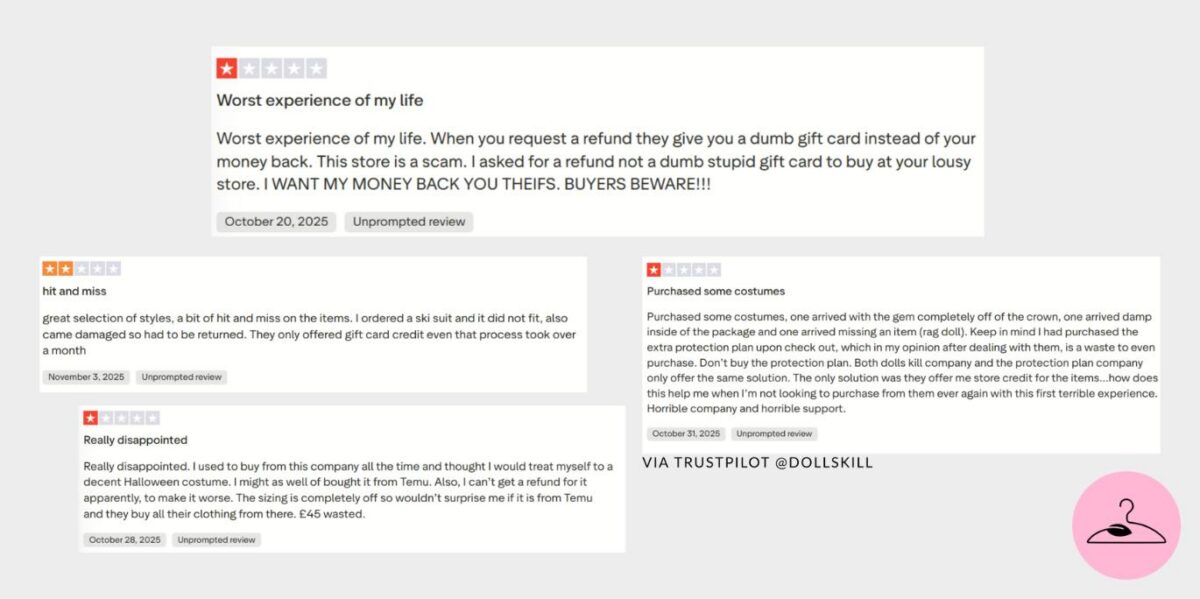
Customer reviews of Dolls Kill products frequently report inconsistent sizing, thin fabrics, and garments that wear out quickly. While some pieces perform adequately for occasional use, overall quality is often described as lower-tier fast fashion. Most shoppers do not view Dolls Kill as a reliable source of durable, long-lasting clothing.