
Cool Winter vs Cool Summer: How to Tell The Difference
April 11, 2024
Best Soft Summer Hair Colors: Your Ultimate Guide
October 15, 2024
Both Cool Winter and Soft Summer sit on the cool side of the spectrum, but they differ in contrast and chroma — and that’s what changes how clothes, makeup, and metals look on you. In this guide, we’ll give you a clear comparison between Cool Winter vs Soft Summer you can use when building outfits and shopping.

Soft Summer VS Cool Winter: Key Distinctions
While both Cool Winters and Soft Summers share a cool undertone, the level of contrast between their hair, skin, and eyes creates a noticeable distinction.
What Do Cool Winters Look Like?
Cool Winters tend to have a higher contrast, with darker hair, stronger eye color, and a cooler undertone in their skin. Their key characteristics include:
- Ideal Colors: Deeply cool, moderately saturated hues like navy blue, emerald green, bright white, shades of gray, silver, ice blue, and cold pink.
- Skin Color: Ivory, clear olive, or silver-beige skin tones, always with cool undertones.
- Eye Color: Crisp and striking eyes in icy blue, gray, cool green, or deep brown/gray-brown — all with a distinctly cool clarity.
- Hair: black, ash blonde, black, or cool brown.
Example: Hilary Rhoda and Audrey Tatou, both Cool Winters, shine in high-contrast shades like magenta lipstick or emerald evening gowns that mirror their striking coloring.
What Do Soft Summers Look Like?
Soft Summers exhibit a softer, more blended look with lighter hair, eyes, and a more evenly distributed skin tones. Their key characteristics include:
- Ideal Colors: Medium-value colors with cool undertones, including grays, blue-based shades, pinks, and purples
- Skin Color: Ranges from fair to medium, and may have freckles
- Eye Color: Blue, green, or hazel/light brown with greyish undertones
- Hair: Ashy tones, such as cool ash blonde, medium ash blonde, medium ash brown, or medium brown
Example: Jennifer Aniston and Kristen Stewart, both Soft Summers, glow in subtle, dusty tones — their softer contrast doesn’t compete well with bold, saturated hues.
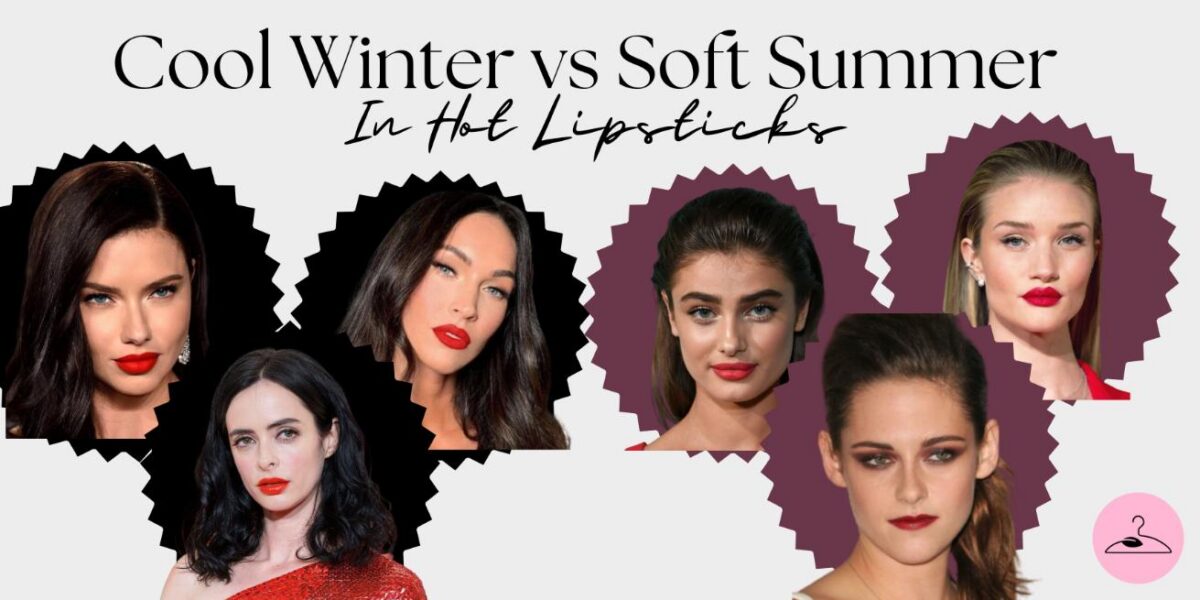
Hot Lipsticks Don’t Look So Great on Soft Summers
When it comes to lip colors, both seasons gravitate towards cool-toned hues. However, Soft Summers need to be careful, as intense pinks and bold reds can overshadow their features. For instance, Soft Summer celebrities, Jennifer Aniston and Kristen Stewart, look far more balanced in muted rose than in fire-engine red. The latter can feel too sharp against their gentle coloring.
Ultimately, because their natural palette is soft and misty, Soft Summers look their best in shades that echo that same softness. Lipsticks that are too strong can pull focus away from their natural harmony instead of enhancing it.
In comparison, Cool Winters shine in bolder, brighter hues. Their high-contrast coloring comes alive in vivid fuchsias or deep berry reds. Let’s take a Cool Winter celebrity, Hilary Rhoda, as an example: in a striking magenta lipstick, her features don’t compete with the color. Rather, they’re amplified by the highly saturated color.
PRO Tip: If you’re unsure whether a lipstick works for your season, look in the mirror and notice what stands out first — your face or your lips. For Cool Winters, the goal is contrast; for Soft Summers, it’s harmony.
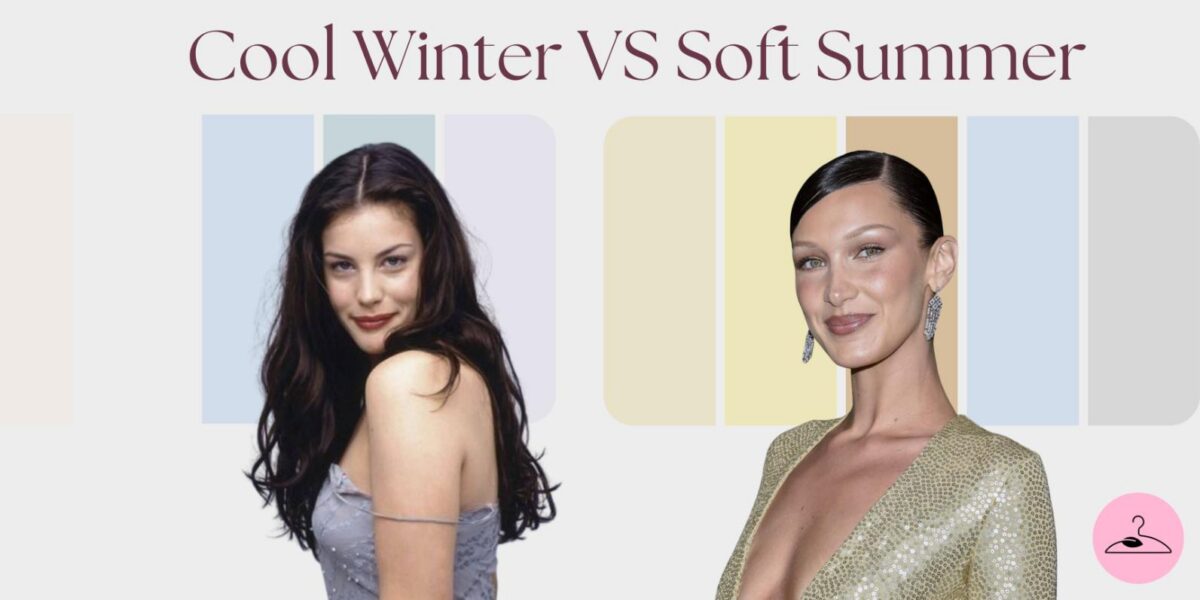
Soft Summer vs. Cool Winter: Who Actually Looks Good in Gold?
Soft Summers are neutral-cool and look best in soft, muted metals such as pewter, brushed silver, and occasionally gently muted gold with minimal warmth. Their palette’s low chroma and gentle coolness allow them to wear metals that are neither highly bright nor strongly yellow.
Cool Winters, by contrast, are fully cool and high-contrast. They shine in silver, platinum, and icy metals. Warm or muted gold tends to dull their clarity, making it less flattering.
PRO Tip: Cool Winters look best in silver, platinum, or white gold. If yellow gold is worn, keep it minimal and pale to avoid clashing with their cool undertones.
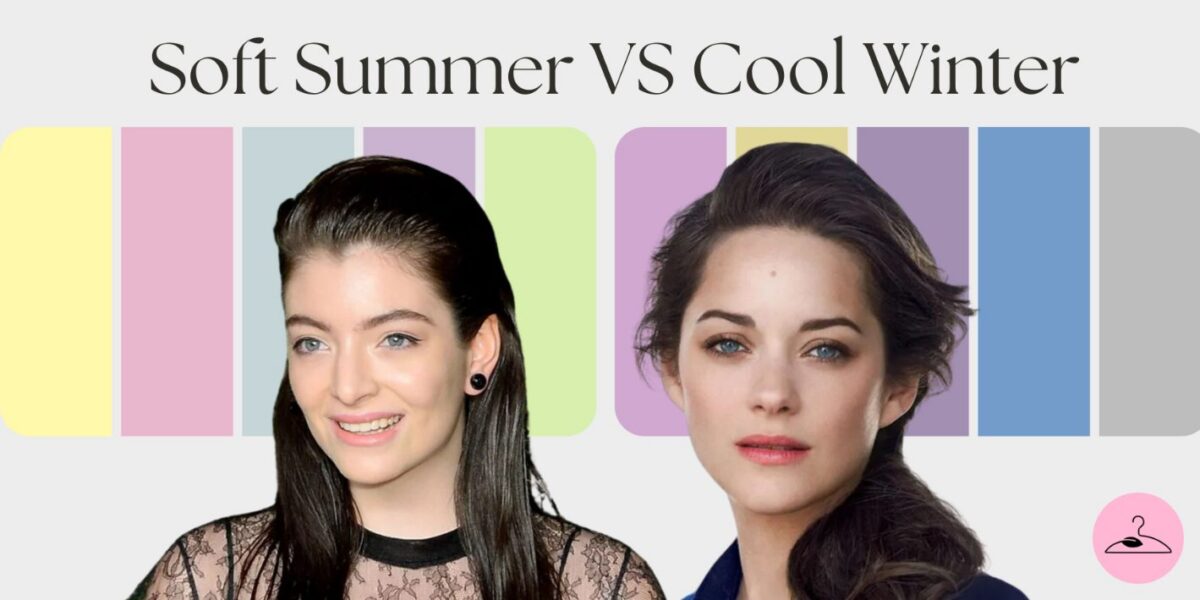
Cool Winter VS Soft Summer: The Ideal Color Palette
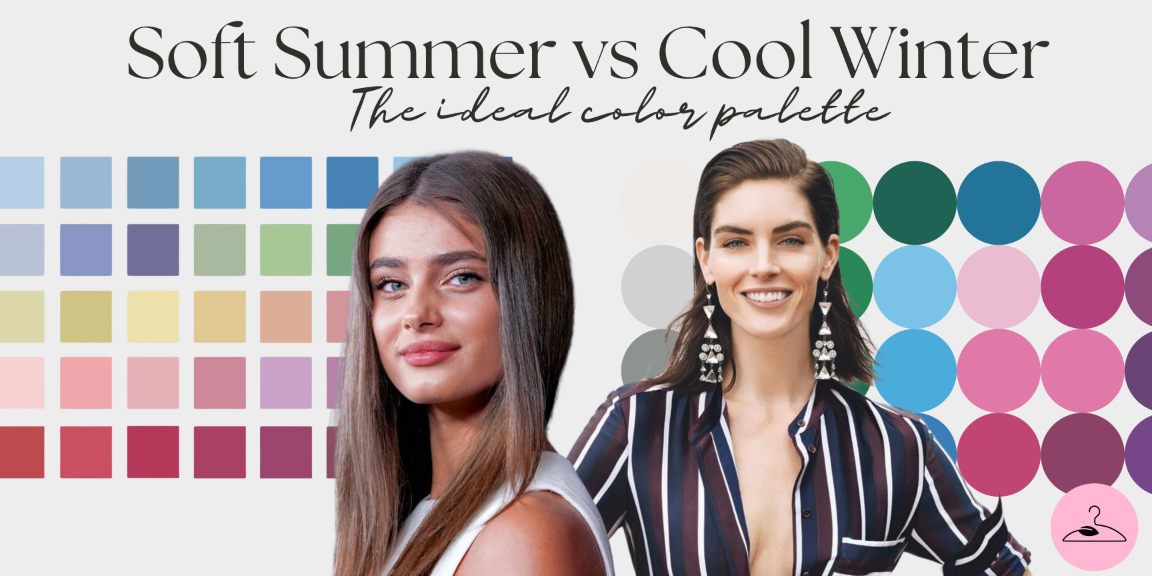
To build the ideal color palette for your color season, you must pay attention to three factors: hue, value, and chroma levels. Soft Summer emanates a neutral-cool hue with subtle warmth, medium value, and muted chroma, whereas Cool Winter exudes a cool hue, medium-dark value, and bright or neutral chroma.
This means that the ideal Soft Summer palette will include gentle, muted, and low-to-medium contrast hues, with an overall gentle and mysterious appearance. Think muted pinks, blues, and purples, rather than warm bright yellows, oranges, or fuchsia pinks.
In contrast, Cool Winter thrives on crisp, high-contrast combinations. Black and white form its anchor, while saturated jewel tones — turquoise, deep purple, emerald, and magenta — add brilliance. Unlike Soft Summers, muted tones like dusty pink or peach, however, can dull a Winter’s natural clarity.
Cool Winter VS Soft Summer: Final Thoughts
In essence, the primary distinction between cool winter and cool summer lies in their varying degrees of contrast, chroma, and value. Cool winters possess a striking, high contrast coloring, which comes alive in crisp, blacks, whites, and jewel tones. Soft Summers, by contrast, are gentle and blended: they thrive in muted and soft shades.

Frequently Asked Questions
Yes, both belong to the cool side of the spectrum, meaning their best colors are blue-based rather than yellow-based. However, Cool Winters thrive on sharp contrast and vivid jewel tones, while Soft Summers need muted, misty shades that echo their gentle, blended appearance without overwhelming their natural softness.
Cool Winters usually have striking contrast between dark hair, light skin, and defined eyes, giving them a bold presence. Soft Summers, by comparison, show blended harmony — softer hair tones, muted eye colors, and a balanced complexion. Testing vivid jewel tones against dusty pastels helps reveal which palette enhances you best.
Cool Winters shine in crisp, saturated hues like cobalt blue, emerald green, magenta, icy pink, and black-and-white contrasts. These shades bring out their natural clarity and high-contrast look. Muted or warm colors such as peach, beige, or dusty rose often wash them out and diminish their striking cool-toned features.
Soft Summers thrive in medium-value, muted colors with cool or neutral undertones. Shades such as dusty rose, slate blue, misty lavender, and muted gray highlight their blended features. In contrast, bright, high-chroma colors or warm tones like orange and coral can overwhelm their soft harmony, making them appear less radiant.
Yes, silver works beautifully for both because of their shared cool undertones. However, Soft Summers can also wear certain muted golds gracefully due to their slightly neutral quality. Cool Winters, in contrast, shine brightest in platinum, white gold, and silver, while yellow gold often feels too warm against their icy complexion.
Use contrast as your guide. Drape black-and-white fabric alongside jewel tones, then compare with muted shades like dusty rose or slate blue. If high-contrast colors energize and sharpen your features, you lean Cool Winter. If blended, misty tones harmonize better, you’re likely a Soft Summer instead.
Rarely. Cool Winters need dramatic, cool shades like espresso, jet black, or icy tones to match their high contrast. Soft Summers glow in ash blondes, muted browns, or medium cool shades that blend gently. If swapped, Cool Winters may look flat, while Soft Summers may look harsh or artificial.
Not equally. Soft Summers often find black too severe, making their features appear washed out. They soften it with muted accents like dusty blue or gray. Cool Winters, however, thrive in pure black. The stark contrast emphasizes their crisp coloring and looks elegant without additional balancing pieces.