Soft Autumn Worst Colors: What Really Steals Your Glow
September 19, 2025
What Color Season is Teal? How to Wear It Best
September 29, 2025
The subtle differences between color sub-seasons can completely transform your appearance: what flatters one Spring might wash out another. That’s why understanding the nuances between Warm Spring vs True Spring is so important. In this guide, we’ll break down their unique qualities, such as contrast, saturation, brightness, and palette, so you can confidently discover your ideal seasonal match.
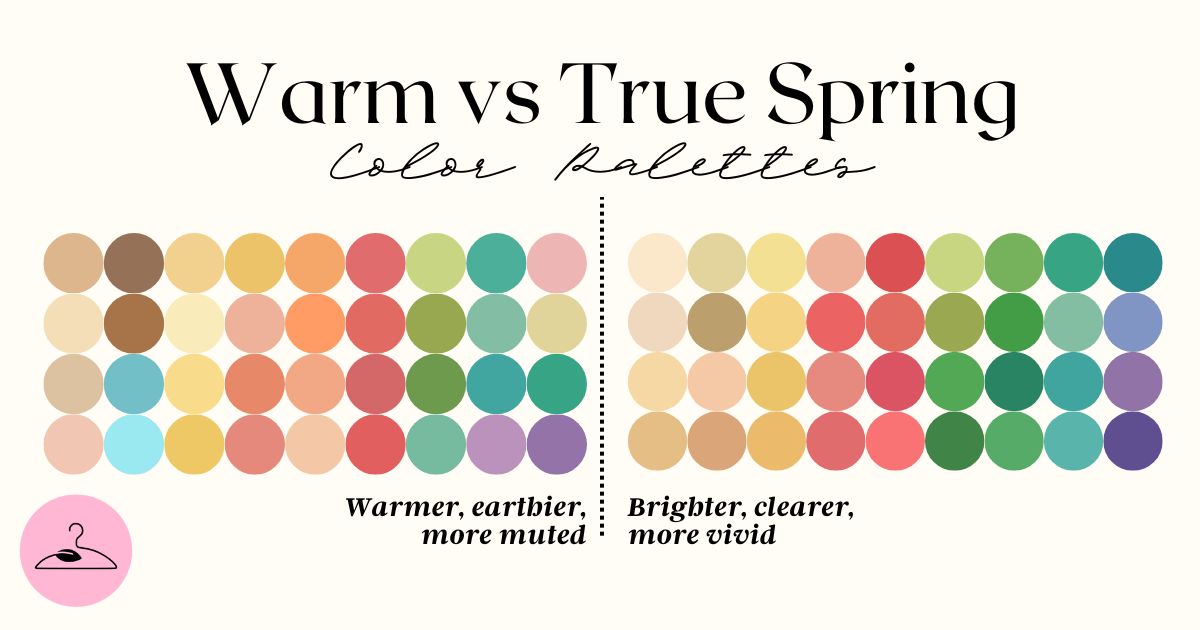
Warm Spring vs True Spring Color Palette
| Attribute | Warm Spring | True Spring |
|---|---|---|
| Hue | Golden-warm tones, leaning toward earthy | Warm, vibrant, and clear with pure golden undertones |
| Value | Medium-light to medium depth | Light to medium-light, overall brighter |
| Chroma | Clear but slightly softened | Clear and radiant, no muted tones |
| Examples | Coral, peach, goldenrod, warm olive, earthy orange | Daffodil yellow, fresh aqua, apple green, bright coral, warm turquoise |


Warm Spring Has More Earthiness than True Spring
Warm Spring leans toward Autumn influence. Their best colors have a grounded, sun-drenched feel, like terracotta or golden olive. This creates harmony with their slightly lower contrast and golden undertones.
By contrast, the True Spring palette is lighter, fresher, and more radiant. Its overall essence is pure sunshine, with luminous yellows, aquas, and corals without the heavier earth tones.
PRO Tip: Lay two fabrics side by side — one earthy (like golden olive) and one clear (like bright aqua). Notice which makes your features glow versus which looks “off.” That quick contrast check often reveals whether you lean Warm or True Spring.
True Spring Is Brighter than Warm Spring
Warm Spring and True Spring are close relatives, but their qualities differ. True Spring is the quintessential spring type: bright, warm, and clear, like fresh sunlight. With golden undertones, vivid eyes (blue, green, or topaz), and golden-highlighted hair, it shines in peach, coral, sunny yellow, grass green, and turquoise.
Compared to Warm Spring’s deeper, mellower tones, True Spring feels fresher, clearer, and more radiant, like blossoms at their brightest.
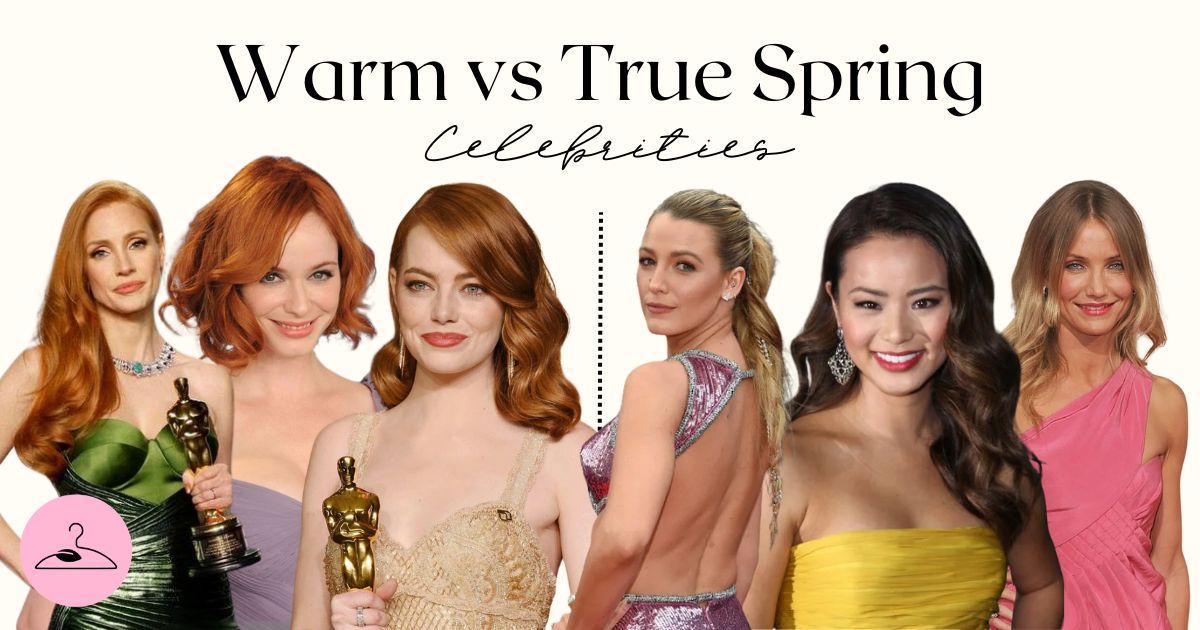
True Spring vs Warm Spring Celebrities
True Spring celebrities like Cameron Diaz, Blake Lively, and Kristen Bell glow in clear, bright shades (e.g., turquoise, coral, sunny yellow) that reflect their vivid eyes and fresh golden undertones.
Warm Spring celebrities, such as Jessica Chastain, Nicole Kidman, Amy Adams, usually resemble True Springs. Yet, they shine more in softer, autumn-leaning hues like camel, apricot, and golden beige. Their coloring blends gently, making earthy neutrals more flattering than vivid brights.
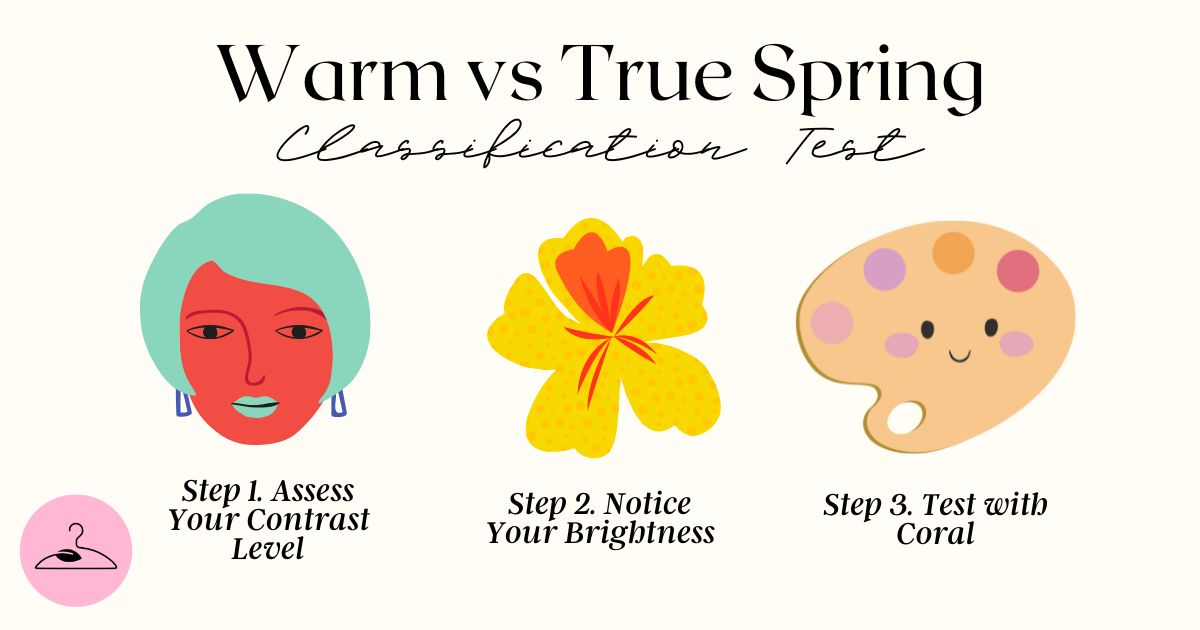
How to Tell True Spring vs Warm Spring Apart
Step 1. Assess Your Contrast Level
Look at how your features relate to one another. True Spring often shows noticeable contrast — bright, clear eyes stand out against golden skin and warm hair, creating a fresh, lively look. Warm Spring, in contrast, appears more blended. So, if your coloring feels soft and low-contrast, you may lean Warm Spring.
Step 2. Notice Your Brightness
Test how you respond to color intensity. True Spring thrives in sparkling hues like daffodil yellow, bright peach, or clear turquoise. These colors lift the face, making skin look radiant.
If these colors feel “too much” or overpower you, that’s a clue. Warm Spring generally looks better in softened warm tones (e.g. apricot, muted teal, or warm camel), where brightness is dialed down without losing warmth.
Step 3. Test with Coral
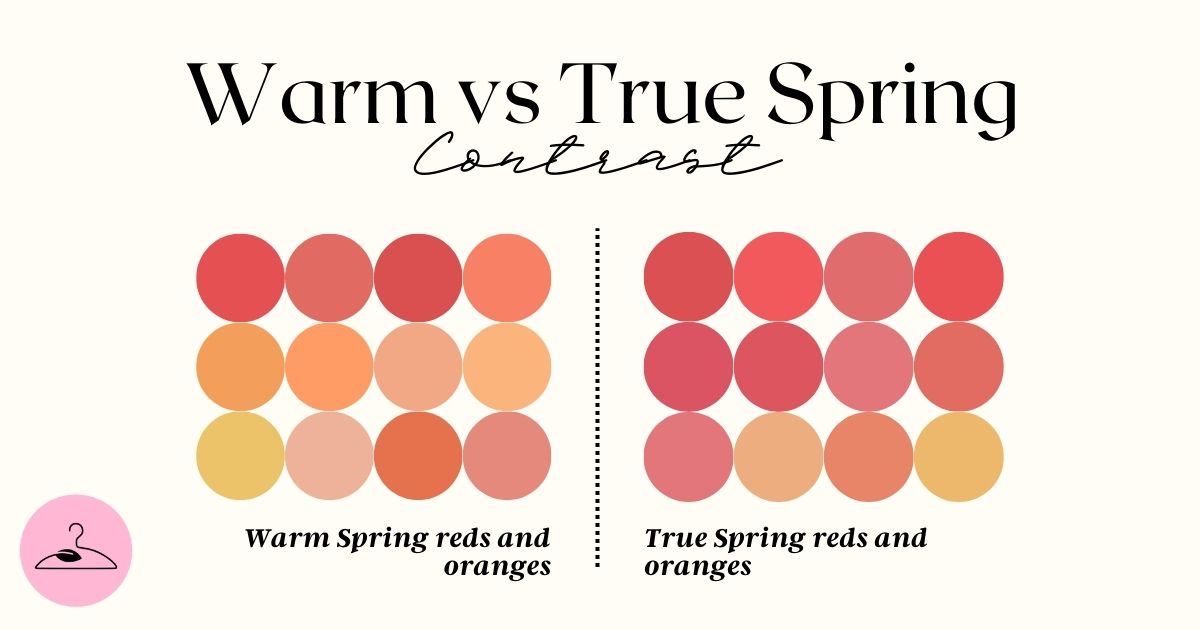
Coral is the classic dividing line. True Spring shines in a lively, vivid coral: it makes their complexion look fresh and youthful. Warm Spring finds that shade too sharp and instead flatters in softer, golden-based corals, such as apricot, terracotta, or pumpkin. Ultimately, if vivid coral feels harsh but apricot lights you up, you’re likely Warm Spring.
Final Thoughts
To summarize, when comparing Warm Spring vs True Spring, differences emerge in clarity and depth. Warm Spring thrives in earthier, sun-drenched tones like goldenrod, apricot, camel, and terracotta. The overall look is softer, lower-contrast, and more blended, echoing early Spring touched with Autumn warmth.
✨ Want styling inspiration tailored to the Warm Spring palette? Explore our curated Pinterest board to see outfits, fabrics, and accessories come to life.
In contrast, True Spring looks best in clear, luminous shades. These include daffodil yellow, aqua, grass green, and bright coral. The overall effect is fresher, brighter, and higher-contrast, like sunlight breaking through.
✨ Want styling inspiration tailored to the True Spring palette? Explore our curated Pinterest board to see outfits, fabrics, and accessories come to life.
Frequently Asked Questions
True Spring thrives in clear, bright, and fresh tones, while Warm Spring leans into softer, earthier shades with an Autumn influence. True Spring sparkles in daffodil yellow and turquoise, whereas Warm Spring glows in apricot, camel, and terracotta, avoiding overly crisp or icy brights.
Hold up two versions: a vivid, bright coral and a softer apricot-toned coral. If the vivid coral makes your complexion glow, you likely belong to True Spring. If it feels too sharp but apricot lights you up, you’re more aligned with Warm Spring.
Yes, both palettes share warm golden undertones, but their expression differs. True Spring shows radiant, fresh clarity, often with brighter eyes. Warm Spring’s undertones blend more gently, creating a softer, earthier appearance. This subtle variation explains why each palette requires different levels of brightness and saturation in clothing.
True Spring shines in clear neutrals like ivory, warm navy, and golden beige. Warm Spring, however, looks more balanced in camel, warm taupe, and soft golden browns. Choosing the right neutrals ensures your wardrobe remains versatile while still complementing your natural undertones harmoniously.
Often, yes. True Spring hair tends to have golden highlights that appear fresh and sunlit. Warm Spring hair is usually warmer, leaning toward honey, caramel, or golden auburn shades. The overall impression is softer and blended compared to True Spring’s crisp, sparkling contrast.
Yes, both Warm and True Springs should avoid overly cool shades, such as icy pastels, gray-based tones, or jewel-like cool blues. These colors clash with golden undertones. For Warm Springs, ultra-bright shades are also risky, as they can feel overpowering rather than harmonizing with their gentler coloring.
True Spring celebrities include Cameron Diaz, Blake Lively, and Kristen Bell, who glow in fresh, bright colors. Warm Spring celebrities such as Jessica Chastain, Nicole Kidman, Chloë Sevigny, Charlie Hunnam, Kylie Minogue, Gillian Anderson, Amy Adams, and Sadie Sink shine in softer, golden, autumn-leaning tones.