
Soft Autumn Pinks: How to Style Them Beautifully
October 17, 2025
True Summer Capsule Wardrobe: How to Style the Palette
October 22, 2025
Choosing between Soft Autumn vs Light Spring can feel tricky because both palettes share warmth and gentleness, yet they create very different moods. Understanding their distinctions will help you refine your closet and feel more polished in your colors. In this guide, we’ll break down their key traits, wardrobe palettes, and styling differences so you can confidently tell them apart.
Light Spring vs Soft Autumn: Key Differences
| Attribute | Light Spring | Soft Autumn |
|---|---|---|
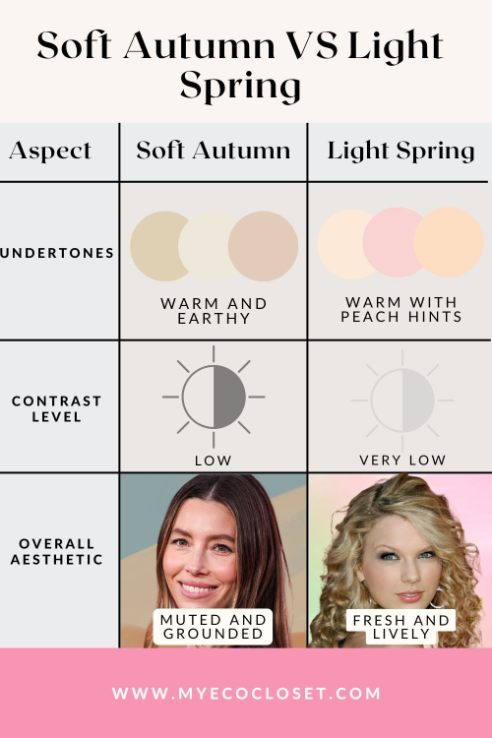
| Hue | Warm and delicate, with golden-pastel tones | Warm and muted, with golden-earthy undertones |
| Value | Light to medium-light; bright and airy overall | Medium-light to medium; softly deep and grounded |
| Chroma | Clear and fresh; softly bright but never harsh | Muted and blended; low saturation and gentle contrast |
| Temperature | Warm-neutral (leans warm) | Warm-neutral (leans slightly warm) |
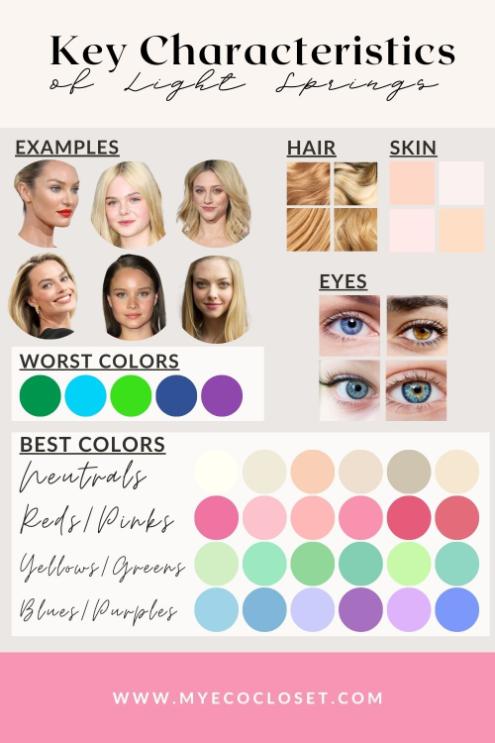
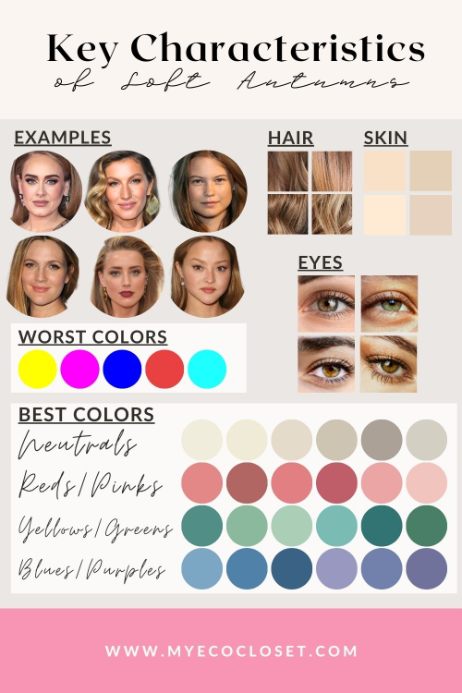
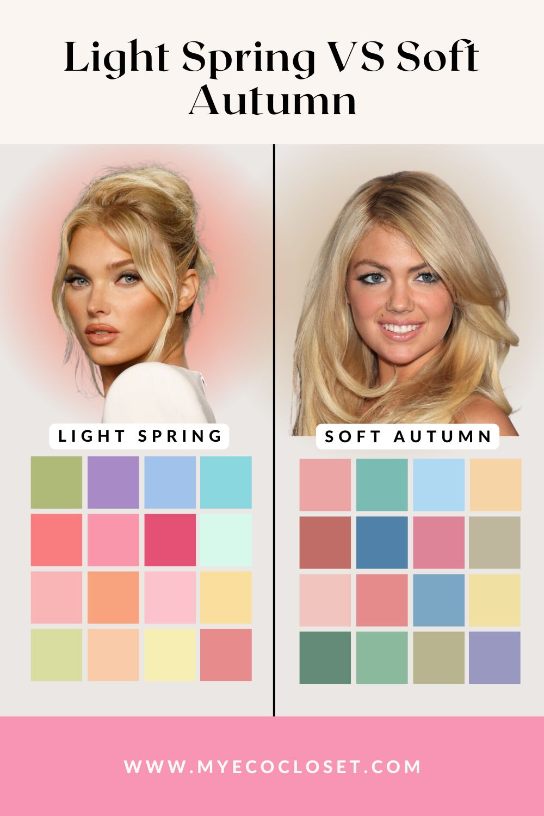
| Best Colors | Light peach, butter yellow, mint, light aqua, sky blue, soft coral | Sage, olive, terracotta, camel, dusty teal, warm taupe |
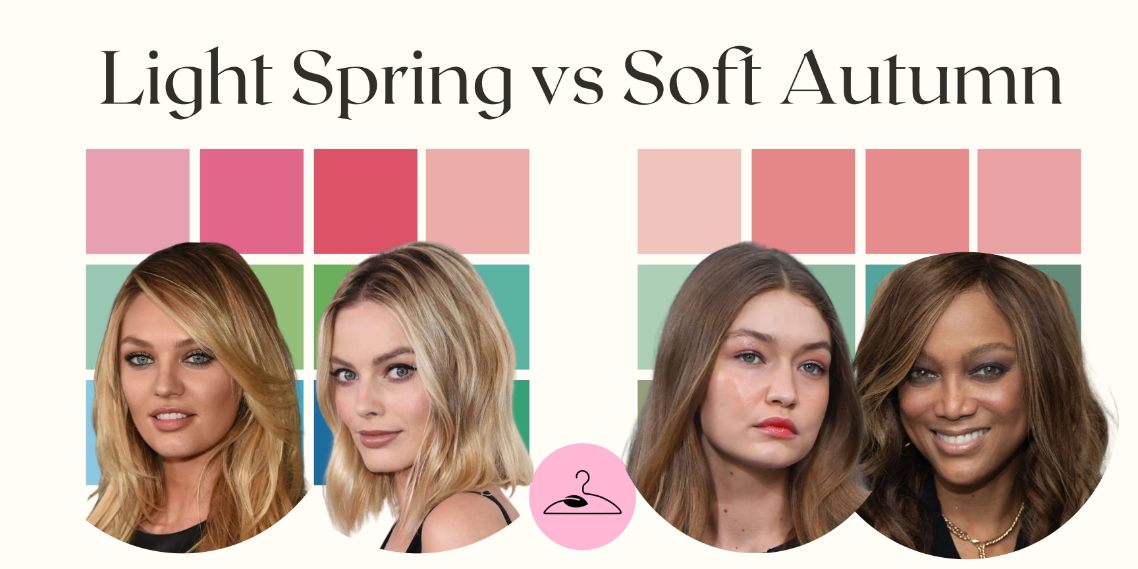
Soft Autumn is Softer Than Light Spring
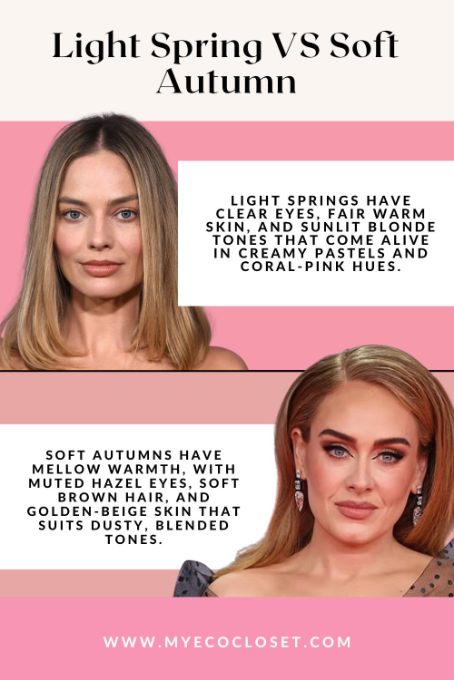
Light Spring and Soft Autumn both live in the warm side of the color wheel, but they tell very different stories. Light Spring is clear and radiant, like the first sunlight after winter. Its colors feel weightless and glowing: peach, butter yellow, mint, and light aqua. These shades have warmth, but they’re never heavy. Instead, they create a fresh, luminous look, almost like the soft light of a spring morning.
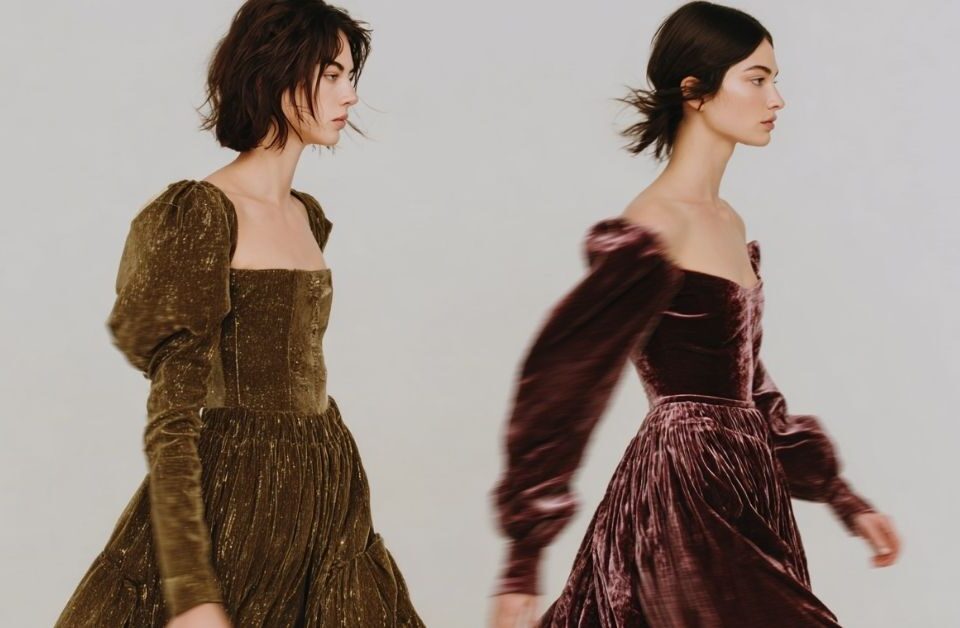
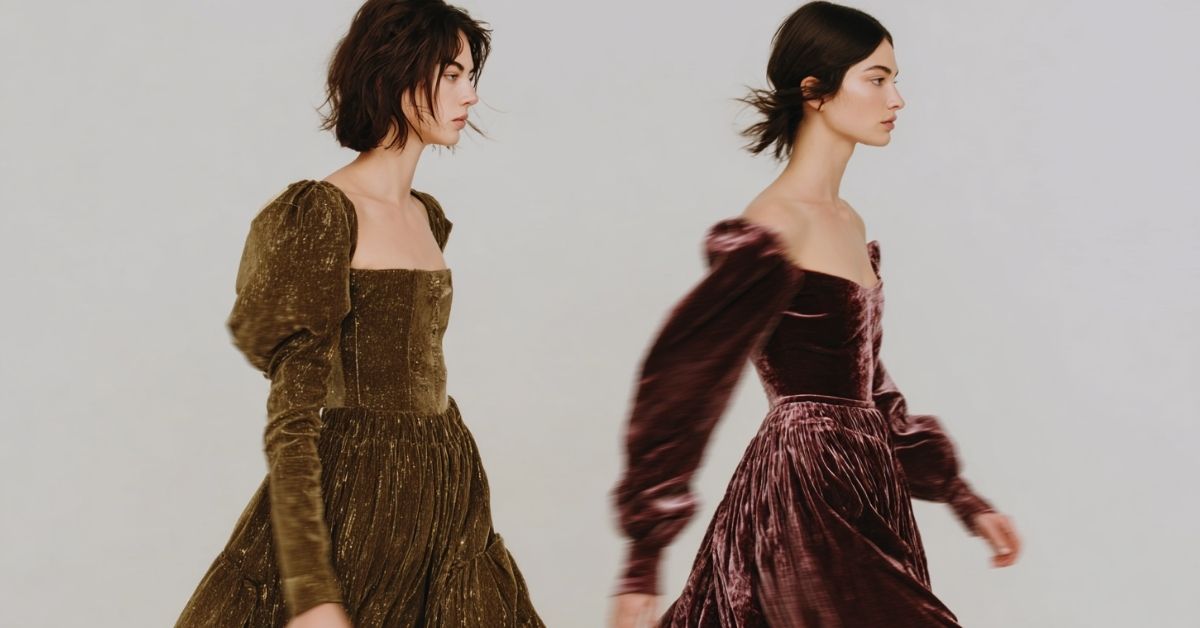
Soft Autumn, on the other hand, is all about warmth that’s muted and grounded. Its palette leans into earthy browns, mossy greens, and dusty rose. Soft Autumn pinks like muted coral, salmon, peachy rose, and warm blush, are especially flattering. These warm pinks blend in gently and never feel harsh.
These colors don’t sparkle or shine: they blend. Picture the gentle fading of late summer into fall, where tones feel mellow, weathered, and comforting.
The Biggest Difference Between Light Spring vs Soft Autumn? Clarity.
Though both sit on the warm side of the spectrum, Light Spring and Soft Autumn differ in how that warmth is expressed. Here’s the key distinction:
- Light Spring thrives in colors that are light, warm, and fresh.
- Soft Autumn comes alive in warm tones that are softened and blended, without sharpness or brightness.
One floats. The other settles. Both are stunning, just in entirely different ways.
PRO Tip: Hold a clear aqua beside your face, then a muted sage. If the the former lifts you, you’re likely Light Spring; if the latter blends beautifully, you’re probably Soft Autumn.
Soft Autumn vs Light Spring Celebrities
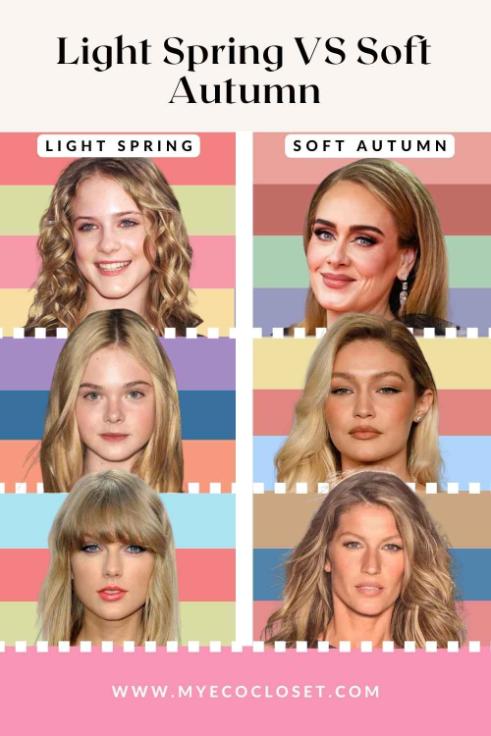
To paint a better picture, take a look at Light Spring celebrities, such as Amanda Seyfried, Elle Fanning, Margot Robbie, and Scarlett Johansson, who shine in soft yet luminous shades. When they wear peach, butter yellow, or aqua, their features look glowing and fresh. However, darker or overly muted tones can weigh them down.
In comparison, Soft Autumn beauties like Gigi Hadid and Gisele Bündchen glow in warm, muted tones. Think moss green, terracotta, and dusty rose — earthy shades that blend with their natural coloring. Where Light Spring radiates airy brightness, Soft Autumn is all about gentle depth and grounded softness.
PRO Tip: Notice how Taylor Swift glows in luminous pastels, while Adele radiates in muted earth tones. Looking at celebrities in your season can train your eye for spotting the right shades.
Final Thoughts
Light Spring and Soft Autumn may both lean warm, but they express it in opposite ways. Light Spring radiates best in airy, luminous shades that feel fresh and weightless, while Soft Autumn glows in muted, earthy tones that bring gentle depth. Once you know your palette, dressing yourself becomes easier — your season-based outfits will always look intentional, balanced, and effortlessly harmonious.
Frequently Asked Questions
The easiest way to tell is by testing how your features respond to color. Soft Autumns glow in earthy, muted shades like moss green, terracotta, and dusty rose, while Light Springs come alive in airy, luminous tones such as peach, butter yellow, and mint. If brighter pastels lift your skin, you’re more likely Light Spring.
Not usually. Light Spring colors are too bright and fresh for Soft Autumns, who need more grounded, muted tones. Wearing Light Spring shades may make a Soft Autumn appear washed out, while their earthy palette enhances natural warmth, depth, and balance, creating harmony instead of contrast.
Light Spring generally has slightly higher contrast. Its palette includes airy yet glowing shades that stand out against lighter skin and hair combinations. Soft Autumn, by contrast, thrives on muted, blended tones with lower contrast, offering a seamless, earthy aesthetic that feels calm and natural rather than striking.
Soft Autumn neutrals are warm, muted, and grounding, like camel, taupe, soft olive, and beige. They add richness without sharpness. Light Spring neutrals are lighter and clearer, such as cream, ivory, peach beige, and soft gray. Each reflects the season’s overall mood: earthy versus airy.
Yes, makeup should follow the palette’s tone and clarity. Soft Autumn makeup works best with muted terracotta lipsticks, soft brown eyeliners, and peachy beige blushes. Light Spring makeup favors coral lips, peach blush, and aqua or mint accents, which add lightness and freshness to their glowing aesthetic.
Soft Autumns shine in warm, muted metals like antique gold, bronze, and copper, which enhance their earthy undertones. Light Springs look best in lighter, fresher metals such as yellow gold, rose gold, and light warm silver, which highlight their luminous, glowing aesthetic without overpowering.