
Bright Winter vs Dark (Deep) Winter: How to Tell Them Apart
November 18, 2025
Is Cotton On Fast Fashion in 2026? An Honest Look
December 5, 2025
Depop has exploded in popularity, especially among Gen Z. The app looks and feels like Instagram, but instead of likes and selfies, it’s all about secondhand fashion. Vintage finds, upcycled pieces, and resold high-street brands flood its feed every day. But as the platform grows, one question keeps coming up: is Depop fast fashion, or does it stand apart? Let’s find out!
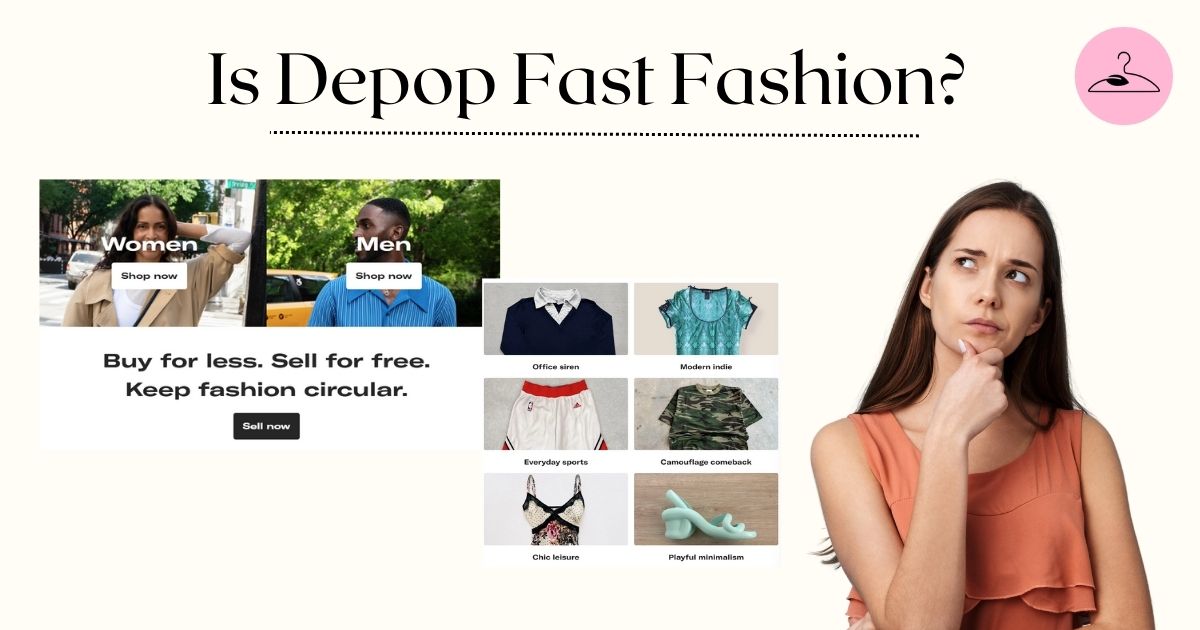
Is Depop Fast Fashion?
Depop isn’t fast fashion in the traditional sense. It doesn’t manufacture clothing. Instead, it’s a resale marketplace with the potential to support more sustainable shopping. That said, its impact depends on how people use it. Buy thoughtfully, and it extends a garment’s life. Treat it like a trend-chasing machine, and it starts to mirror the very cycle it claims to resist.
How Depop Differs From Fast Fashion
Unlike traditional retailers, Depop doesn’t manufacture clothing. Instead, it acts as a resale marketplace, connecting individuals who buy and sell:
- Secondhand fast fashion pieces (Zara, Urban Outfitters, Shein)
- Vintage and one-of-a-kind items
- Upcycled or handmade clothing from independent sellers
Because most items already exist, Depop helps extend the life of clothes that might otherwise end up in landfills. In fact, studies show that secondhand shopping on platforms like Depop often displaces purchases of brand-new clothing, lowering the demand for overproduction.
This places the app right in the middle of the wider fast fashion vs slow fashion debate, where consumer choices determine whether resale supports sustainability or fuels overconsumption. In short, Depop is only as sustainable as the habits of its users: and currently, most still lean toward trend-driven flips, showing that fast fashion tendencies are hard to break, even in resale.
Where Depop Falls Short
Depop itself doesn’t produce clothing, but the way people use the platform can create fast fashion–like problems:
- Cheap fast fashion is often marked up and sold as “rare” or “vintage.”
- Some sellers flip items from Shein, H&M, or Zara, which undermines the idea of secondhand shopping.
- Trend-driven buying and shipping single items worldwide can add up to waste and carbon impact.
Ultimately, Depop doesn’t produce waste directly, since it isn’t manufacturing new clothing. Yet the risk lies in how people use it. When buyers and sellers treat the app as a quick-flip marketplace (e.g., reselling Shein or Zara, chasing micro-trends, and shipping single items across the globe), it starts to mimic fast fashion’s consumerist traits. So, in the end, it’s the users who decide which side of fashion the platform serves.
Depop’s Mission and Sustainability Goals
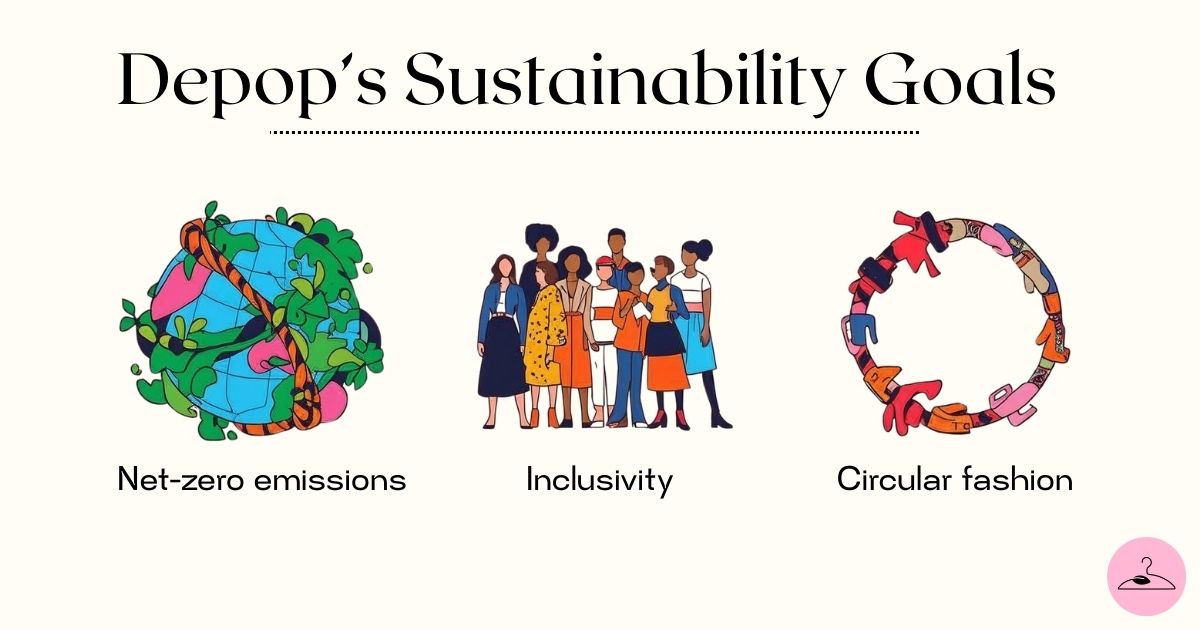
Founded in 2011 by Simon Beckerman, Depop set out to create more than just a resale app. Its stated mission is to build a “community-powered fashion economy that’s kinder to both people and the planet.” To deliver on that, the platform has set measurable goals, such as:
- Achieve net-zero emissions
- Promote diversity and inclusivity within its seller community
- Encourage circular fashion habits, extending the lifecycle of clothing through resale, reuse, and upcycling
How Well is Depop Delivering?
On Depop, shipping emissions remain a major obstacle, especially with the rise of single-item international deliveries, and the platform provides limited transparent reporting on its climate efforts.
And while Depop undeniably extends the life of clothes, the resale of fast fashion pieces muddies the waters. Selling Shein or Zara secondhand risks recycling the very culture of disposability that the app was meant to counter. It’s a slippery slope: one that could drag a circular solution back into the fast fashion trap.
Depop Customer Reviews
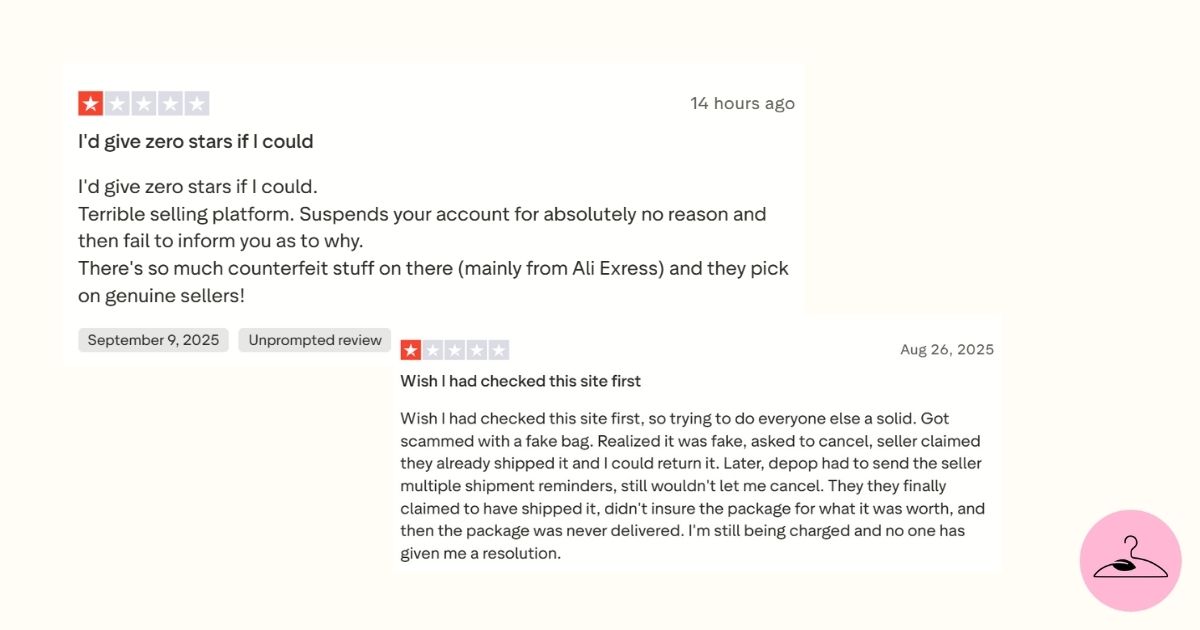
Depop’s reputation as a community-driven resale app is popular among Gen Z, but user reviews reveal some recurring issues. While many find success buying and selling, others raise concerns about scams, technical reliability, and limited support when problems arise.
Common Issues Reported by Users
- Some buyers receive counterfeit items, such as designer bags, with dispute resolution often described as slow or unclear. Missing packages and inadequate shipping insurance add further frustration.
- For sellers, technical problems are a common barrier. First-time users often face glitches when uploading photos, repeated logouts, or errors in listing categories. In some cases, accounts are suspended without explanation, even after appeals.
- Customer service is another sticking point. Many users describe responses as generic, delayed, or unhelpful.
Together, these issues highlight how Depop’s appeal lies in its fashion community. However, trust and platform reliability remain areas in need of improvement.
Depop’s Business Model in Context
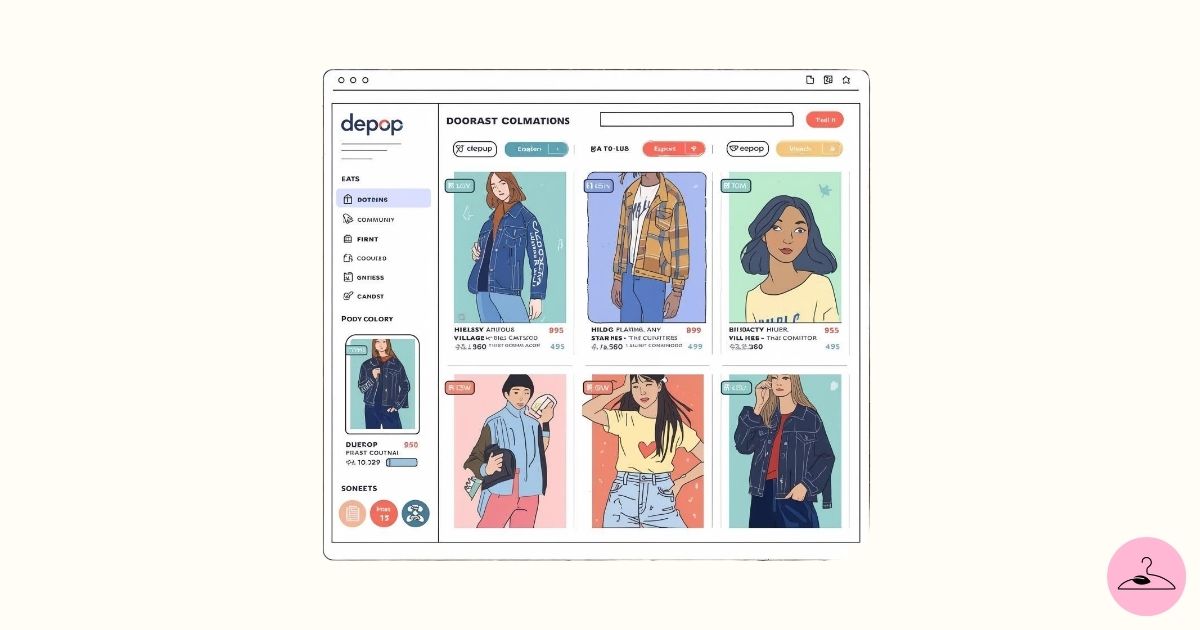
Unlike fast fashion retailers, Depop isn’t in the business of manufacturing clothes. Instead, it runs as a peer-to-peer marketplace where users upload, sell, and buy secondhand items. The platform makes money primarily through seller fees (a 10% commission on sales) and partnerships that support its global shipping system.
How Depop Stands Out
The platform’s appeal lies in how it blends commerce with community. The Depop app feels like scrolling Instagram: sellers curate their shops, post styled photos, and build followings. This social aspect has turned Depop into a space where Gen Z not only shops but also experiments with self-expression, reselling as a side hustle, and supporting small creators.
In 2021, Etsy acquired Depop for $1.6 billion, further cementing its role in the booming resale economy. Today, Depop positions itself not just as a resale app, but as part of the larger circular fashion movement, which aims to reduce reliance on constant new production.
Depop vs Fast Fashion: A Quick Comparison
| Feature | Depop | Fast Fashion Brands (e.g., Zara, H&M, Shein) |
|---|---|---|
| Production | No new manufacturing; resale of existing items | Mass production of new clothing |
| Business Model | Peer-to-peer marketplace; sellers earn from resale | Centralized production and global distribution |
| Environmental Impact | Reduces waste by extending garment lifespan, but shipping adds emissions | High carbon footprint from overproduction and waste |
| Consumer Behavior | Can be sustainable if shoppers buy thoughtfully | Encourages overconsumption through constant new drops |
| Accessibility | Mix of affordable vintage, handmade, and sometimes overpriced resale | Widely available at low upfront prices |
Final Verdict: Not Fast Fashion, But Not Perfectly Sustainable
Depop is not fast fashion in the traditional sense, because it doesn’t mass-manufacture new clothes. Instead, it operates within the circular fashion economy, giving clothes a second life and reducing reliance on constant new production.
Still, the platform’s effectiveness depends on how people use it. When shoppers treat Depop like a treasure hunt for quality vintage, upcycled, or long-lasting pieces, it helps fight fast fashion. But when it becomes a space for flipping cheap, trend-driven clothes, it risks replicating the same wasteful cycle.

Frequently Asked Questions
Because some sellers resell cheap, mass-produced items from brands like Shein or Zara at marked-up prices, critics argue it mimics fast fashion. However, unlike manufacturers, Depop itself doesn’t produce clothing — it’s a resale marketplace. The sustainability impact depends largely on how buyers and sellers use it.
Depop extends the lifecycle of garments by giving them a second chance at being worn. Instead of clothes going to landfills, they’re resold, reused, or upcycled. This reduces overall demand for new production, making secondhand shopping one of the easiest ways to cut fashion-related waste.
Yes. If shoppers treat Depop like fast fashion — buying trendy pieces impulsively, shipping single items worldwide, or flipping low-quality garments — it can still fuel waste and carbon emissions. Sustainability on Depop depends on intentional shopping: choosing durable, vintage, or upcycled pieces rather than endlessly chasing micro-trends.
Unlike fast fashion brands that mass-produce garments, Depop is a peer-to-peer marketplace. Sellers curate individual shops, style their items, and interact with buyers. This creates a community-driven model that blends commerce with creativity, shifting the focus from producing new clothes to extending the life of existing ones.
No. Depop’s revenue comes mainly from seller fees (a 10% commission) and partnerships, not garment production. In contrast, fast fashion brands profit by manufacturing and selling high volumes of new items. This business model positions Depop closer to the resale economy than traditional retail giants.
Depop encourages circular fashion by promoting resale, reuse, and upcycling. Circular fashion reduces reliance on constant new production by keeping existing clothes in circulation longer. Depop’s mission includes measurable goals (like net-zero emissions) that align with broader sustainability efforts and appeal to Gen Z’s values-driven consumer habits.
When shoppers chase trends and resellers push cheap, low-quality pieces, Depop risks becoming a fast-fashion clone. Shipping single items internationally can also add to carbon emissions. The risk lies less in the platform itself, and more in consumer choices that replicate harmful buying patterns.