
Is Depop Fast Fashion in 2026? An Honest Look
November 21, 2025
Soft Autumn Capsule Wardrobe: How to Style the Palette
December 16, 2025
Cotton On, an Australian-based retailer founded in 1991, has become a household name in casual and affordable fashion. With roughly 1,300 stores worldwide, the brand has built a reputation for trendy basics and everyday wear. But as sustainability concerns grow, many ask: Is Cotton On fast fashion? In this guide, we’ll uncover the brand’s history, customer reviews, product quality, fabrics, and more to uncover the truth.

Is Cotton On Fast Fashion?
Yes. Cotton On shows many hallmarks of a fast fashion brand. The company relies on rapid product cycles, affordable trend-led designs, and large-scale production to feed consumer demand. While it has introduced sustainability initiatives, its heavy reliance on polyester and mass manufacturing makes it difficult to categorize it as a sustainable brand.
Customer Reviews at Cotton On: Positive or Negative?
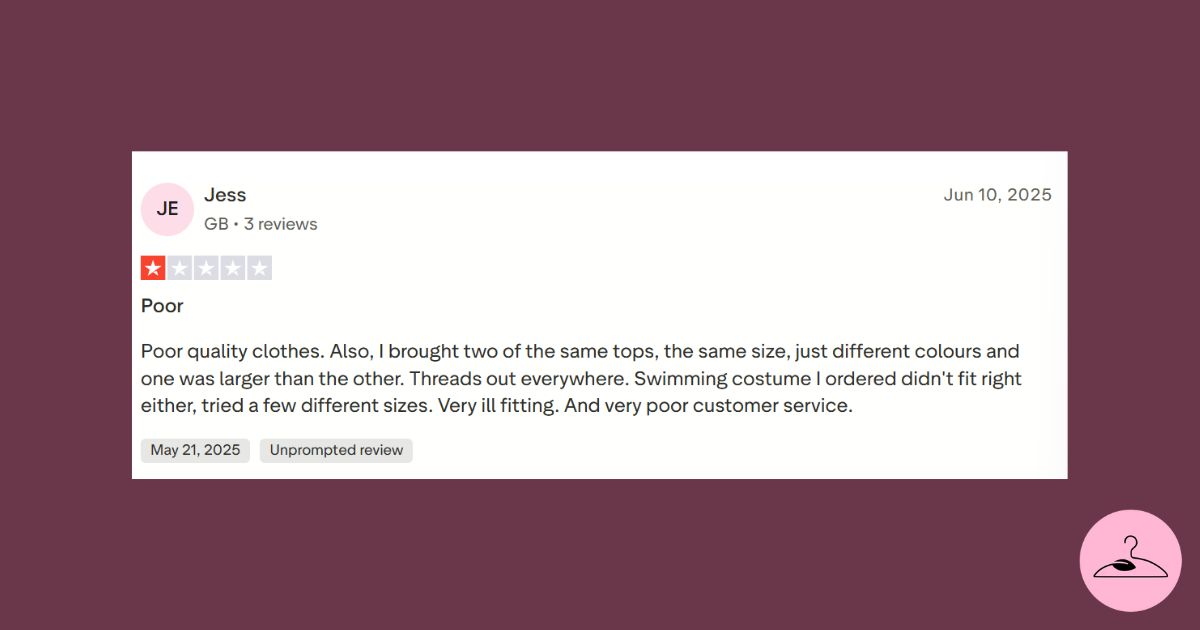
Cotton On receives mixed reviews from its global customer base. Many praise the brand for affordable, stylish clothing and a wide product range — from jeans and basics to activewear and kids’ apparel.
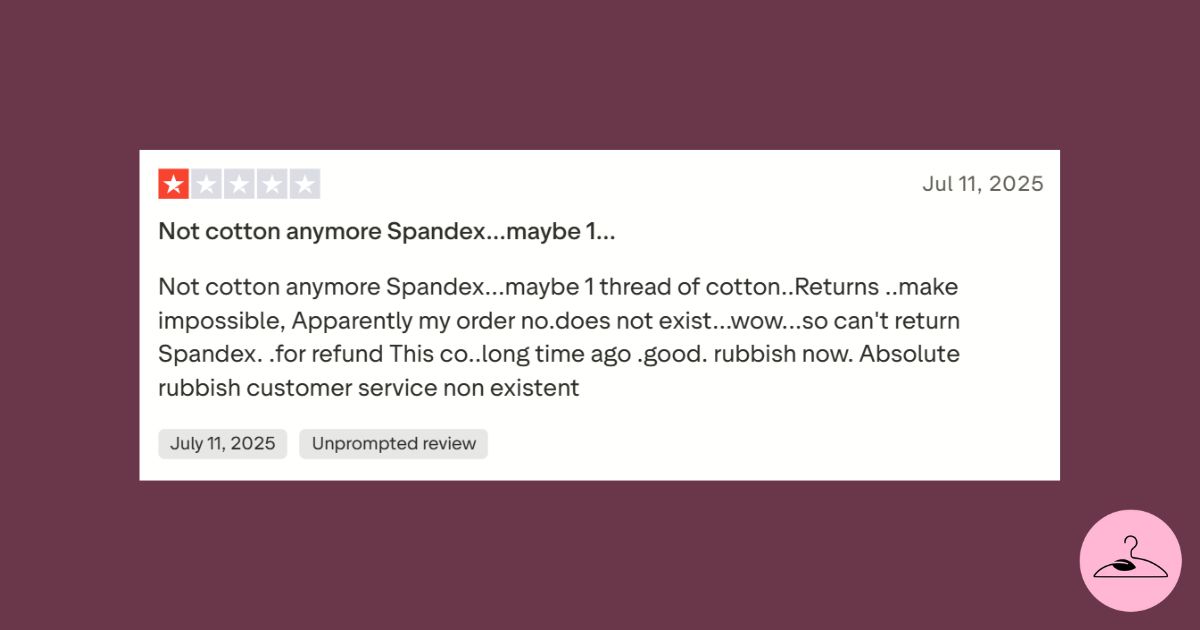
On the other hand, critical reviews highlight common fast fashion problems: inconsistent sizing, shrinking fabrics after a few washes, and garments that wear out quickly. Customers frequently note that while Cotton On is affordable, the quality often reflects the price point. As one reviewer put it, “it’s unlikely to last you more than a season or two.” Another mentions, “[Cotton On is] great for quick, trendy pieces. But not for long-term investment.”
Cotton On’s Fabrics and Quality: Worth the Price?
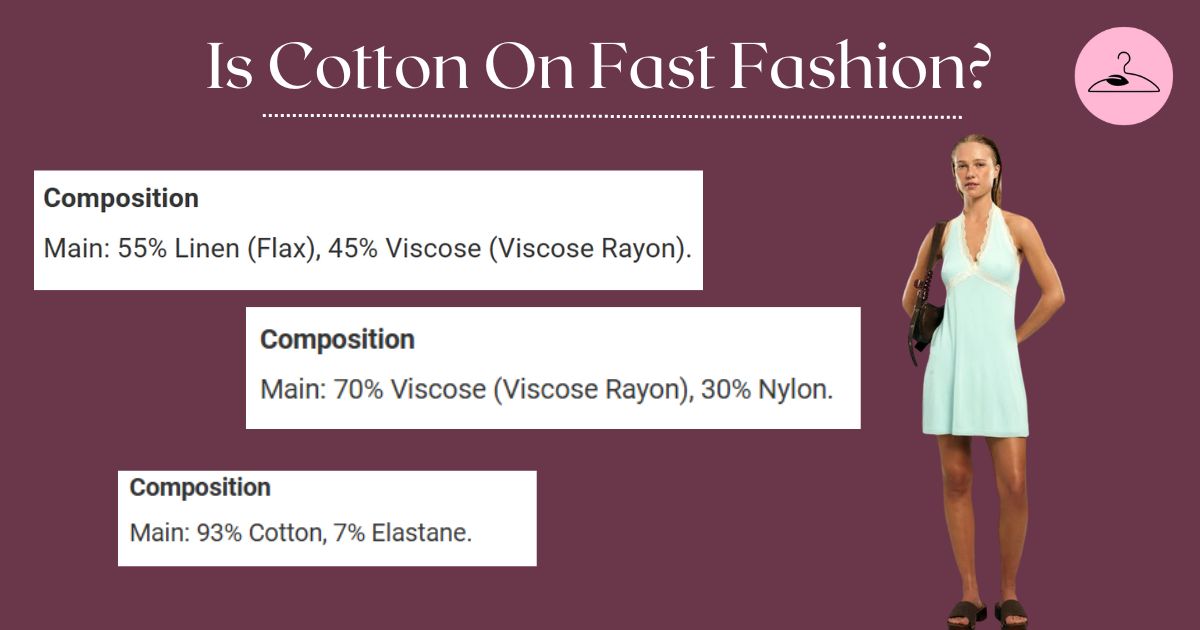
To see whether Cotton On lives up to its “cotton-first” image or leans more toward fast fashion, we reviewed products across several categories on its website, including denim, dresses, activewear, and outerwear.
Key Findings: Fabric Breakdown
- The majority of products are made from cotton or cotton blends
- However, a significant number contain elastane, spandex, or viscose, which undermines Cotton On’s “cotton-first” identity
- Synthetic-heavy categories include activewear and stretchy basics
Takeaway: While Cotton On emphasizes cotton in its branding, the reality is more complex. Cotton is common, but blends and synthetics play a major role, placing the brand closer to fast fashion than true sustainability.
Cotton vs Synthetic Reality
Cotton On often promotes its cotton credentials, even being part of the Better Cotton Initiative. And yes, cotton does make up the bulk of its fabrics, particularly in jeans, t-shirts, and casualwear. But many of these items aren’t pure cotton – they’re blended with elastane, spandex, or viscose to increase stretch, drape, or affordability.
This creates a double standard: the brand markets itself as rooted in cotton, yet relies heavily on synthetic and semi-synthetic fibers that are less sustainable and reduce durability. Activewear, in particular, is dominated by spandex and polyester blends, while dresses often include viscose, a fiber that’s chemically intensive to produce.
Cotton On’s Pricing Breakdown
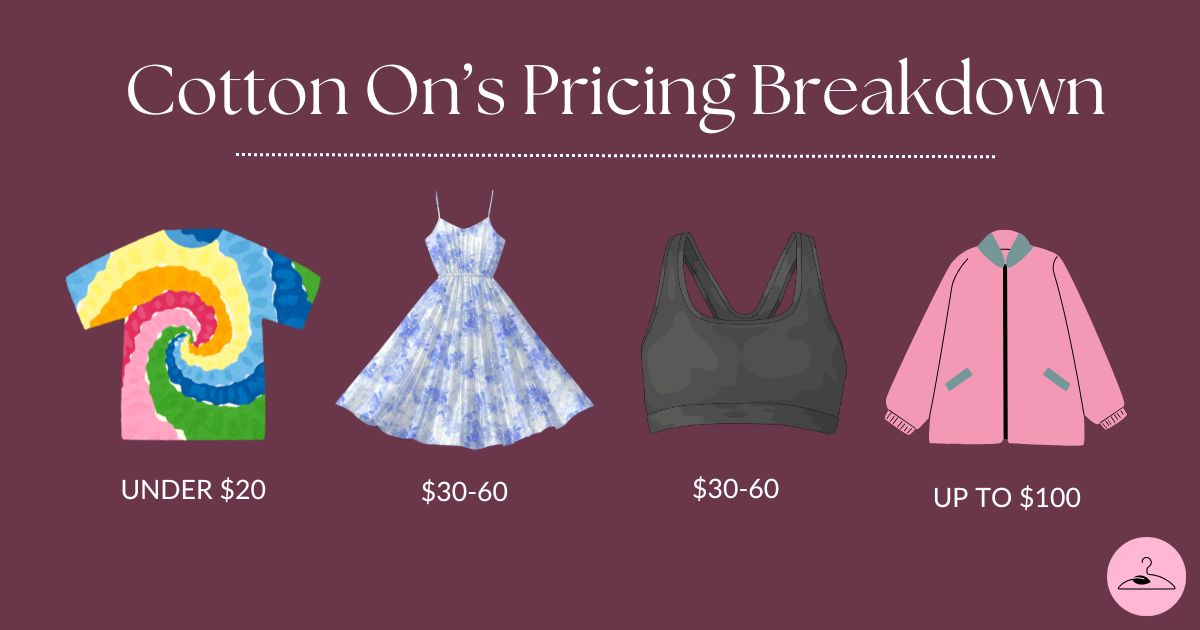
Cotton On’s pricing aligns with typical fast fashion brands, making it accessible but also raising questions about how workers and materials are valued.
- T-shirts and basics: under $20
- Jeans and dresses: $30–$60
- Outerwear: up to $100
- Activewear sets: $40–$70
For these price points, fabrics are often blends or fully synthetic, which is a common indicator of fast fashion practices.
Where Cotton On Falls Short
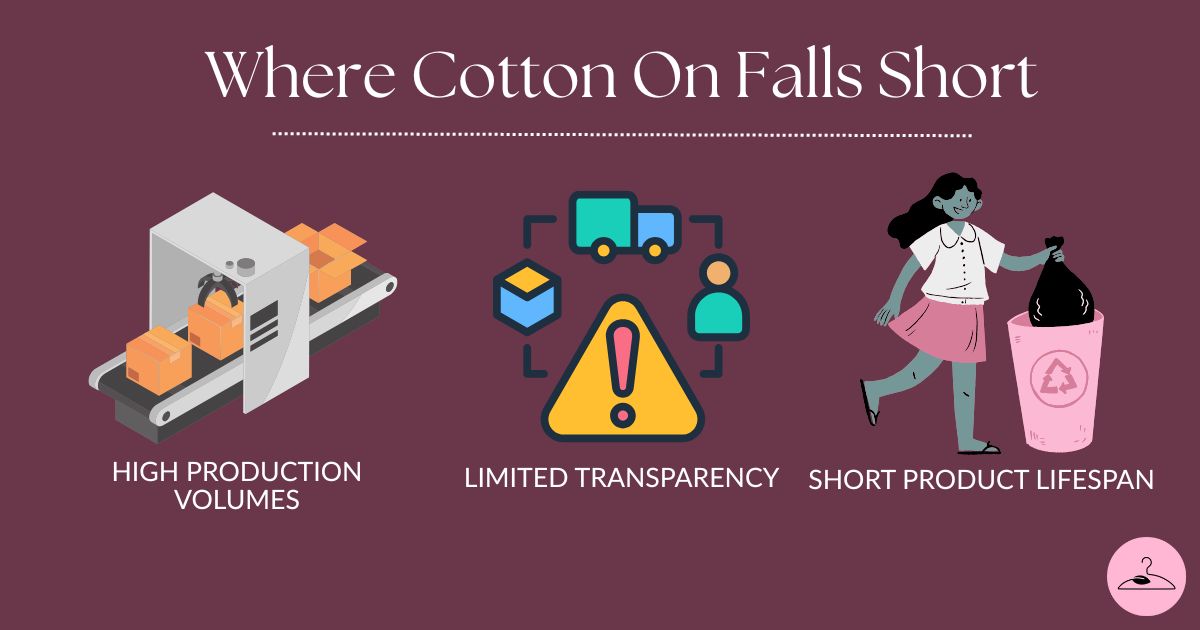
While Cotton On highlights its use of recycled materials, reduced packaging, and “ethical sourcing programs,” the brand still faces criticism, due to the following:
- High production volumes: The scale of output drives overconsumption and waste.
- Limited transparency: Public reporting on supply chain audits and factory conditions remains minimal.
- Short product lifespan: Many items are trend-led and not built for durability.
Cotton On has announced several sustainability goals: becoming carbon neutral in its own operations by 2030 and across its wider value chain by 2050, using 100% sustainable cotton (a target it set for 2021), and ensuring all products have “sustainable attributes” by 2030.
However, independent rating platforms still classify Cotton On as “Not Good Enough” overall, largely because it relies heavily on conventional cotton and synthetic fibers and continues to operate on a fast-fashion model.
Cotton On’s Fast Fashion Business Model
Founded in 1991 in Geelong, Australia, Cotton On has grown into a global retailer with more than 1,500 stores across 18+ countries. Its success comes from a fast fashion model built on speed, affordability, and constant newness. Key elements of the brand’s model include:
- Trend-driven collections with frequent new arrivals
- Low- to mid-range pricing, making fashion accessible
- Rapid production cycles similar to other fast fashion brands.
Moreover, Cotton On relies on fast production and global supply chains, mainly in Asia, to quickly turn designs into finished products. It also runs several sub-brands, including Cotton On Body, Typo, and Rubi, expanding into lifestyle, activewear, and accessories.
Final Verdict: Avoid If You Can
If you’re drawn to Cotton On for its comfort, affordability, or casual basics, that makes sense: many shoppers appreciate the soft feel and breathability of cotton, especially for everyday wear. However, Cotton On still follows a fast-fashion model, with frequent new collections and a heavy reliance on lower-cost materials. From an environmental and longevity perspective, it may be worth being selective with purchases and focusing on pieces you know you’ll wear often.
From a sustainability standpoint, it’s best to limit purchases on sites like Cotton On. If your budget allows, consider investing in longer-lasting, ethically made alternatives, or shop secondhand to reduce your environmental impact.

Frequently Asked Questions
Yes. Cotton On is widely recognized as a fast fashion brand. Its entire business model depends on speed, affordability, and trend-chasing. While the company highlights cotton in marketing, the constant new arrivals, global scale, and reliance on blended fibers firmly position it within fast fashion.
Cotton On promotes itself as “cotton-first,” often pointing to its membership in the Better Cotton Initiative. However, many products are actually cotton blends with polyester, elastane, or viscose. These mixed fabrics make recycling difficult, reduce overall durability, and weaken the brand’s sustainability claims despite some progress.
Cotton On is slower than ultra-fast competitors like Shein but still shares many similarities with Zara and H&M. Its cotton-heavy basics give it a slightly different image, yet its huge production volumes and fast turnaround cycles keep it firmly in the fast fashion space.
Cotton On’s affordability comes from large-scale production, low-cost supply chains, and the use of cheaper blended fabrics. While staple pieces like jeans or T-shirts can last, trend-focused products are rarely made for longevity, leading many shoppers to trade durability for affordability and quick trend access.
The brand has launched recycled packaging, reduced single-use plastics, and used recycled fibers in select items. It also participates in ethical sourcing initiatives. However, these efforts are overshadowed by high production volumes, blended fabrics, and constant newness, which collectively undermine long-term sustainability progress.
Cotton On states that it participates in ethical sourcing programs and conducts audits on its supply chain. However, public reporting is limited, and critics argue there isn’t enough transparency about working conditions in overseas factories. This lack of detailed disclosure raises questions about how ethical its labor practices truly are.