
Warm Spring vs True Spring: How to Tell Them Apart
September 22, 2025
Deep Winter Capsule Wardrobe: How to Style The Palette
October 2, 2025
Teal sparks confusion in seasonal color analysis because it sits between warm and cool. It never feels one-note, which makes many wonder, what color season is teal? The truth is, the color doesn’t belong to a single palette. Depending on depth and undertone, it can work for Autumn, Winter, or appear in softer versions for Summer. Below, we’ll explore how teal shifts across seasons and the best ways to wear it.
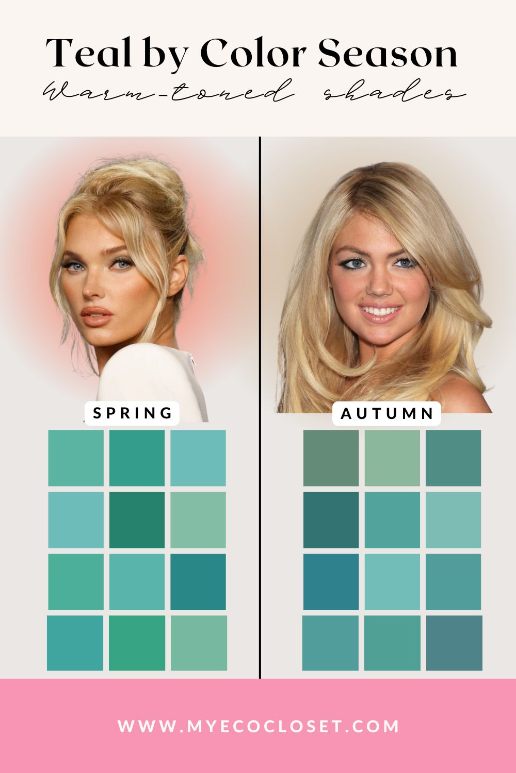
What Color Season is Teal?
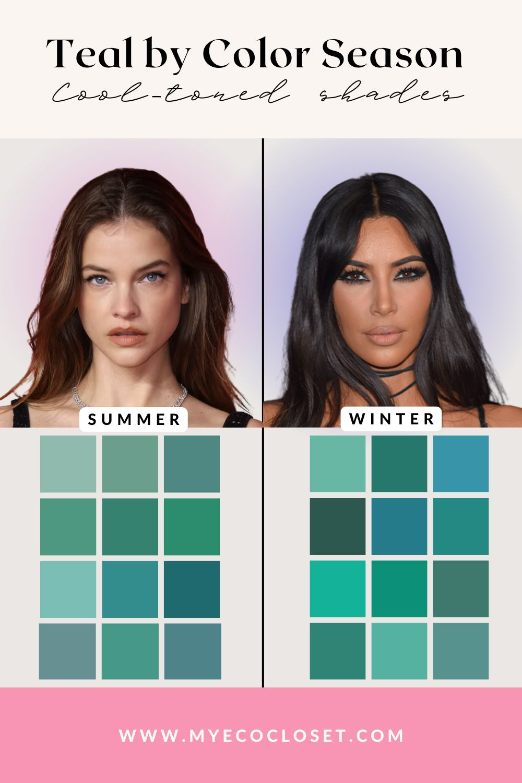
Teal belongs to more than one season. Warm, muted versions suit Autumn, while clear, jewel-toned teals belong to Winter. Softer, gray-tinged teals can work for some Summers, but Spring leans toward lighter aquas instead. The right teal depends on depth and undertone, not a single season.
How Teal Looks in Autumn
Autumn teal carries warmth and depth. It leans earthy, often softened by golden undertones. The shade looks rich in fabrics like suede, wool, or brushed cotton. Worn with camel, rust, or mustard, it blends seamlessly into the Autumn palette. Unlike icy or bright aquas, Autumn teal grounds an outfit, adding strength without overwhelming.
How Teal Looks in Winter
Winter teal is sharper and cooler. It shows up as a jewel tone, saturated and bold. Fabrics with sheen, such as silk, satin, or crisp cotton, amplify its clarity. This version pairs best with black, bright white, or magenta, creating Winter’s signature high contrast. Unlike Autumn teal, it doesn’t soften. Instead, it energizes, making Winter features stand out with striking precision.
How Teal Looks in Summer
Summer teal carries a muted softness. It leans cool, often touched with gray undertones. This version works best in lightweight fabrics like linen, chambray, or soft knits. Pair it with dusty rose, soft navy, or misty lavender to keep the palette harmonious. Unlike Winter teal, Summer’s version whispers instead of shouts.
How Teal Looks in Spring
Spring teal feels fresh and lively. It leans warm, often touched with golden undertones, and shows up best as clear, light versions of teal or aqua.
Fabrics like silk, chiffon, or cotton capture its brightness without heaviness. Pair it with coral, peach, or butter yellow to highlight Spring’s radiant warmth. Unlike the deeper teals of Autumn and Winter, Spring teal always stays light, playful, and glowing.
Final Thoughts
Teal isn’t tied to just one season: it flexes with undertone, depth, and clarity. Autumn wears it earthy, Winter makes it bold, Summer softens it, and Spring turns it bright.
The key is not whether you can wear teal, but which teal belongs in your palette. Once you identify the right version, teal becomes one of the most versatile colors in your closet, working as a grounding shade, a statement piece, or a playful accent depending on your season.
✨ Looking for style inspiration for your color season? Follow us on Pinterest where we share seasonal palettes, outfit ideas, and fabric pairings to make your closet work smarter.
Frequently Asked Questions
Teal isn’t universal, but it does adapt beautifully across seasons. Autumn’s version leans warm and earthy, Winter’s is sharp and jewel-like, Summer’s carries a soft grayness, and Spring’s feels light and fresh. Wearing a teal outside your season usually feels mismatched: too heavy, too bright, or too cool against your natural coloring.
Autumn teal has golden warmth, often appearing muted or softened, which harmonizes with other earthy tones like rust, mustard, or olive. Winter teal, however, is saturated and jewel-toned, crisp and intense. It works best in high-contrast pairings like black or white, which enhance Winter’s natural clarity and brightness.
Not usually. Summer teal is cool and softened by gray undertones, keeping it muted and misty. Spring teal, in contrast, is fresh, clear, and warmed by golden undertones. If mixed up, Summer looks washed out in Spring teal, while Spring appears dulled and heavy in Summer’s muted teal.
Fabric plays an important role in how teal reads. Autumn teal shines in textured fabrics like suede, wool, or brushed cotton, while Winter’s crispness loves silk, satin, and polished cotton. Summer’s softer teal suits chambray and linen, and Spring’s lively version sparkles in airy cotton, chiffon, or lightweight silk.
Both palettes are warm, but Autumn teal is deeper, earthy, and muted with golden undertones. Spring teal is lighter, clearer, and more radiant, echoing sunshine and freshness. Autumn’s teal feels grounding and strong, while Spring’s version adds playful brightness, making the same color family feel completely different.
Not typically. Winter’s coloring thrives on cool, vivid, high-contrast shades that maintain energy and brightness. Muted teals belong to Summer and can look dull or faded on Winters. Instead, jewel-toned teal paired with black or white sharpens Winter’s natural clarity, keeping the look crisp, striking, and confident.
Undertones transform teal’s personality. Warm undertones create golden or earthy versions, while cool undertones produce jewel-like or smoky versions. Wearing the wrong undertone disrupts harmony. For example, a warm teal can overwhelm someone with cool coloring, while a muted teal can drain energy from someone who needs brightness and clarity.
Accents make teal shine differently for each season. Autumn pairs it with rust, mustard, or camel for richness. Winter thrives on magenta, bright white, or black for contrast. Summer blends teal with dusty rose, lavender, or navy. Spring enlivens teal with peach, coral, or butter yellow for vibrancy.
Teal is both blue and green, which explains its versatility. The exact balance depends on the shade. A teal that leans green feels warmer, earthy, and better for Autumn or Spring. A blue-leaning teal appears cooler, sharper, and works for Winter or Summer.