
Is BloomChic Fast Fashion in 2026? A Critical Review
January 24, 2025
Beach Capsule Wardrobe: Pack Smart + Look Amazing
February 8, 2025
Fashion moves fast, and Weekday sits at an intriguing crossroads. Part of the H&M Group, the brand blends Scandinavian minimalism with rapid retail cycles. Is Weekday fast fashion? In this critical analysis, we will unpack the nuanced reality of the brand’s manufacturing, supply chain, and design approaches. Without further ado, let’s dive right in.
Is Weekday Fast Fashion?
Weekday, as a subsidiary of the H&M Group, operates within the fast fashion framework. While the brand positions itself as a more sustainable and design-focused alternative, offering higher-quality denim and minimalist Scandinavian aesthetics, its core business model still aligns with fast fashion principles.
| Sustainability Aspect | Performance | Notes |
|---|---|---|
| Materials & Fibers | Good | Growing use of organic and recycled inputs, plus Infinna innovation. However, synthetics still represent ~40–50% of production. |
| Production Scale & Speed | Poor | Fast fashion model with rapid cycles and high volumes. Overproduction offsets most sustainability initiatives. |
| Labor & Manufacturing Ethics | Moderate | Supplier transparency exists via H&M Group frameworks, but living wage gaps and uneven enforcement persist. |
| Circularity & Innovation | Good | Re-Made capsules and textile-to-textile recycling show progress, though still limited in scale. |
Overall sustainability positioning:
Weekday operates within a fast fashion system with selective sustainability improvements, but its volume-driven business model continues to outweigh most environmental and social gains.
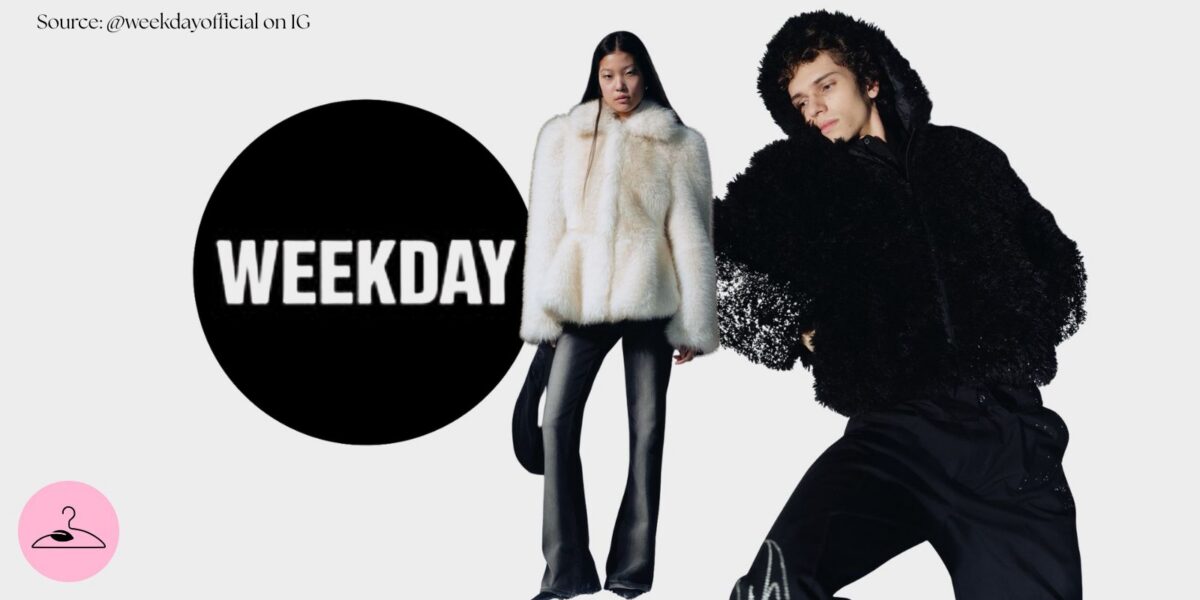
Weekday: The Fast Fashion Foundation
Picture walking into a Weekday store: minimalistic designs, trendy clothes, and eco-friendly messages everywhere. This isn’t by accident. The Swedish brand knows exactly who it’s after – young shoppers who browse TikTok and care about both looking good and doing good.
Weekday responds quickly to TikTok and Instagram trends, offering everyday pieces like oversized hoodies and crop tops, at prices that won’t drain a student’s budget. The brand’s speed, combined with low prices, encourages frequent turnover and overproduction.
Like its parent company H&M, Weekday maintains relatively low price points and regular collection updates, though perhaps not as frequently as ultra-fast fashion retailers like SHEIN or Zara. By this, the brand shares many characteristics with other fast fashion retailers, including:
- Rapid production cycles
- Affordable pricing strategy
- Regular collection updates
- Mass production methods
- Global supply chain optimization
Sustainability vs. Style: How does Weekday Compare?
As part of the H&M Group, Weekday sits between two realities. It operates within a fast fashion system, yet it also adopts elements of the group’s broader sustainability strategy, including upcycling projects, material innovation, and supply-chain improvements.
On a product level, Weekday has incorporated organic and recycled materials into its collections, improving its overall textile portfolio. It has also launched the “Re-Made” capsule collection, where it upcycled old clothes into new designs.
This is not all, however. Weekday has collaborated with innovative companies, such as Infinited Fiber Company, allowing it to craft jeans from textile waste. In this collaboration, the brand used Infinna, an innovative material, to recycle jeans over and over again, without them losing quality.

Overproduction Overweighs “Sustainability”
With its environmental impact being shaped by synthetic materials, Weekday’s overproduction negates its sustainability initiatives, rooted in the fast-paced production model of its parent company, H&M. Weekday produces approx. 3 billion garments each year, drawing heavy criticism for its reliance on large-scale production.
Hence, although Weekday communicates with its consumers using jargon, such as “responsible practices”, “climate neutrality”, and “sustainably sourced materials”, these claims fail to hold up against the brand’s overall impact.
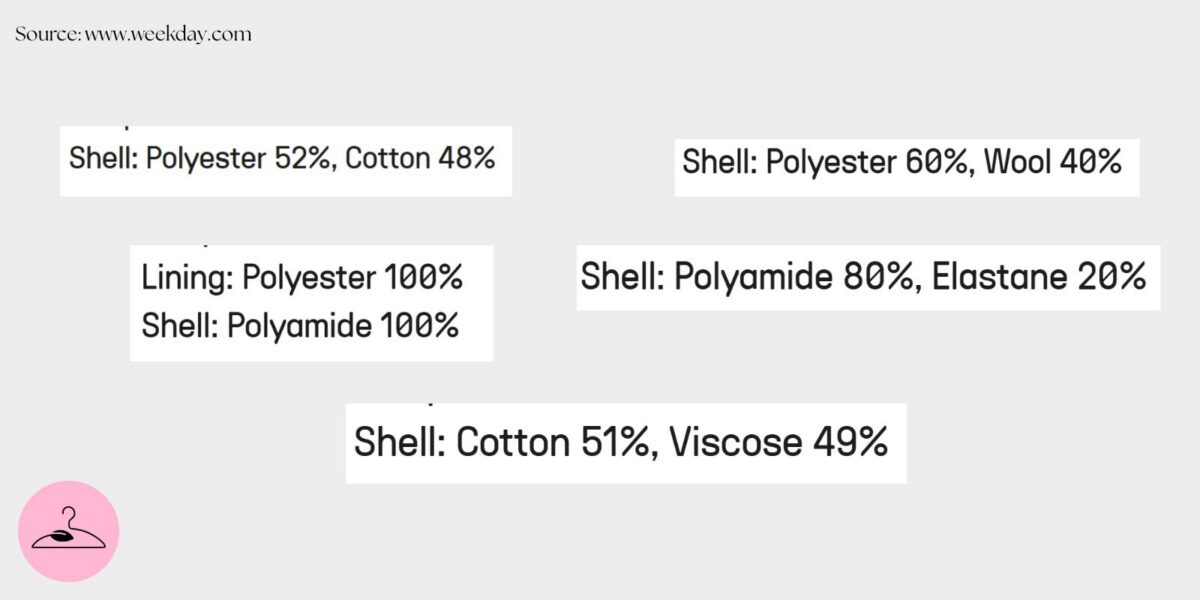
Weekday’s Product Line and Fabric Composition
In the competitive $2.5 trillion global fashion industry, Weekday expresses its commitment to sustainable materials and eco-conscious manufacturing. The H&M Group subsidiary has pledged to achieve 100% sustainably sourced materials by 2030, though currently, approximately 50% of their collections incorporate sustainable fibers.
To answer the question, “is Weekday fast fashion?”, well, let’s examine the brand’s textile portfolio, which contains both natural and synthetic materials:
Organic Cotton (30-40% of collections)
- Requires 91% less water than conventional cotton
- Zero synthetic pesticides and fertilizers
- GOTS-certified for ecological and social responsibility
Recycled Polyester (15-20% of collections)
- Manufactured from post-consumer plastic bottles and creates a false perception of sustainability
- Likely contains BPA, which can harm consumer health
- Releases microplastics during washing and harms marine life
- Is non-biodegradable
Natural Fibers
- Hemp: Uses 50% less water than conventional cotton
- Linen: Biodegradable and requires minimal pesticides
- Regenerated cellulose fibers (Lyocell, Modal): Closed-loop production process
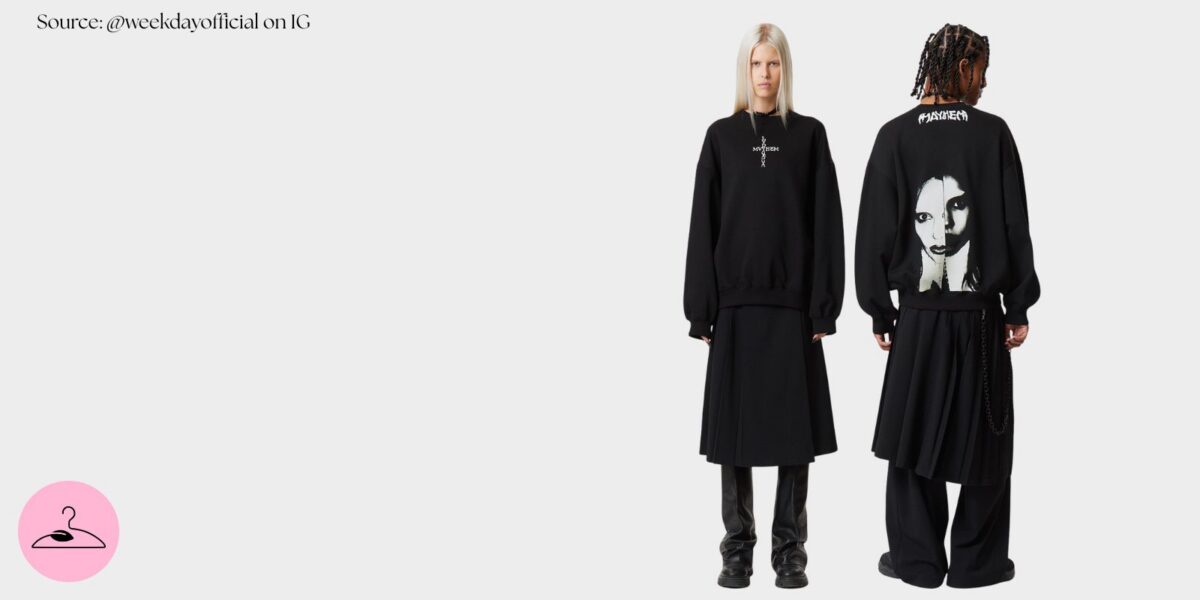
Synthetic Fibers Still Dominate at Weekday
Despite its sustainability initiatives, the brand relies on conventional synthetic materials for approximately 40-50% of its production, including virgin polyester, nylon, and acrylic blends. If we take a look at nylon, in particular, it remains a key issue.
Produced from petrochemicals, nylon is amongst the least sustainable fabrics, as it releases harmful gases, namely, nitrous oxide. During its production, the fabric gets treated with chemical additives and finishes, such as PFAS and formaldehyde, which pollute the environment and may cause skin irritation, especially with prolonged wear.
Future Commitments
With the aforementioned information, the answer to the question, “is Weekday fast fashion?” becomes evident. However, the brand might reinvent itself in the future, considering its ambitious goals to do the following:
- Increase sustainable material usage to 75% by 2025
- Achieve climate neutrality across operations by 2030
- Expand circular fashion initiatives through in-store recycling
- Implement water-saving technologies in production
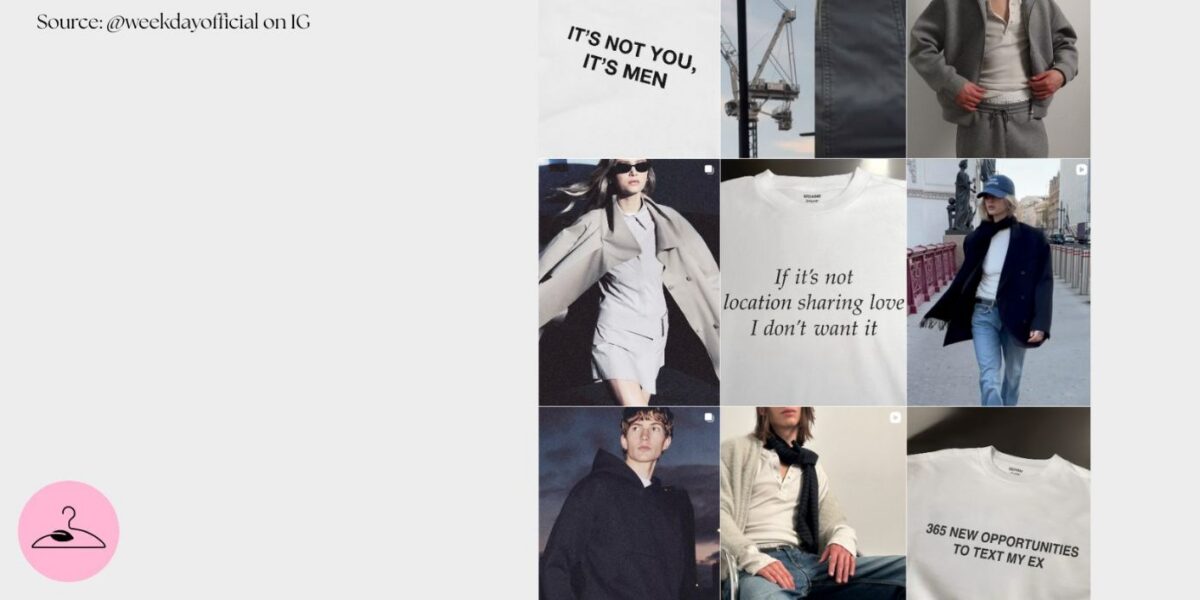
From Weekend to Weekday: The Brand’s Evolution
Weekday was founded in Stockholm in 2002 under the name “Weekend,” originally operating only on Saturdays and Sundays. As its popularity grew among young, style-conscious shoppers, the brand expanded beyond limited hours and rebranded as Weekday, signaling its shift from a local concept to a full-scale retailer.
A major turning point came in 2008, when Weekday was acquired by the H&M Group. The acquisition enabled rapid international expansion while allowing the brand to retain its minimalist, streetwear-focused identity.
Over the following decade, Weekday expanded across Europe and into global online markets, with a continued emphasis on denim and casualwear. Collaborations with sister brands like Cheap Monday and Monki further cemented its place within the fast fashion landscape.
Digital Shift and Brand Position Today
In the late 2010s, Weekday expanded its e-commerce presence in response to changing shopping habits, placing greater emphasis on digital engagement alongside its physical stores. During this period, the brand also began highlighting sustainability initiatives more prominently across its collections.
Today, Weekday operates as a global retailer within the H&M Group, combining accessible pricing with contemporary, minimalist design. While its branding emphasizes creativity and responsibility, its scale and business model remain aligned with fast fashion.
Weekday continues to resonate with young, urban consumers through its store concepts, collaborations, and cultural positioning – elements that help differentiate the brand aesthetically, even within a highly competitive fast fashion landscape.

Manufacturing Ethics: How Weekday Produces Its Clothes
Weekday operates a global supply chain, with most production based in Asia, particularly Bangladesh and China, alongside a smaller number of manufacturers in Southeast Asia and Europe. This structure mirrors the broader fast fashion model, prioritizing large-scale, cost-efficient production.
The brand publishes a supplier list, offering a level of transparency that is still uncommon in the industry. As part of the H&M Group, Weekday also follows standardized compliance and auditing frameworks. However, the complexity of global supply chains limits full visibility.
Transparency, Scale, and Labor Realities
Labor practices reflect challenges typical of fast fashion. While factories are expected to meet local labor laws and international standards, enforcement varies by region. Wages remain a persistent concern, particularly where legal minimums fall short of living wage benchmarks.
On the environmental side, Weekday has introduced water-saving measures, energy efficiency programs, and limited circular denim initiatives using post-consumer waste. Still, the overall scale of production continues to outweigh these improvements.
Weekday’s Pricing and Accessibility
Weekday’s pricing places it firmly within the fast fashion market, offering contemporary streetwear at accessible price points comparable to brands like Zara and H&M. Most items fall between $20 and $80, appealing to style-conscious young consumers while reinforcing high-volume sales.
Basics such as T-shirts typically range from $15 to $25, denim from $40 to $70, and outerwear from $60 to $120. This positions Weekday slightly above ultra-fast fashion brands like SHEIN and Primark, signaling a modest emphasis on design rather than durability.
The Trade-Off of Affordability
While accessible pricing lowers the barrier to entry, it also encourages frequent purchasing and short-term use. Trend-driven, low-cost pieces are more likely to be treated as disposable, contributing to faster wardrobe turnover and increased textile waste.
In recent years, Weekday has introduced small pricing increases on select “sustainable” collections to reflect higher material and production costs. Even so, these items remain within the fast fashion price range, preserving the brand’s mass-market appeal. Overall, Weekday’s pricing strategy balances affordability with perceived value, but it continues to support the consumption patterns that define fast fashion.
Is Weekday Really Fast Fashion? The Final Verdict
After examining Weekday’s business model, manufacturing practices, pricing strategy, and sustainability initiatives, the evidence clearly positions the brand within the fast fashion category. Despite its efforts to incorporate sustainable materials and ethical practices, Weekday’s core operational model aligns with fast fashion characteristics: rapid production cycles, trend-responsive collections, accessible price points, and mass-market manufacturing in countries with lower production costs.
Frequently Asked Questions
Weekday primarily uses conventional polyester, cotton, and viscera blends, with 30-40% organic/recycled materials like organic cotton and recycled polyester in jeans. Factories are mostly in Asia (e.g., Bangladesh, China, Vietnam) via H&M Group suppliers, focusing on low-impact processes but with limited wage transparency.
Weekday does not release a standalone sustainability or impact report. Instead, environmental and social disclosures are published at the H&M Group level. This approach limits brand-specific transparency, making it difficult for consumers to evaluate Weekday’s individual environmental footprint, labor practices, and overall sustainability performance independently from the wider group.
Third-party ethical ratings for Weekday are generally mixed. Platforms such as Good On You assess the brand indirectly through the H&M Group, noting improvements in materials sourcing and transparency. However, they continue to raise concerns about living wages, large-scale overproduction, and the brand’s ongoing reliance on synthetic fibers typical of fast fashion.
Weekday does not offer brand-specific repair services. Instead, customers can use garment take-back and recycling programs available through H&M stores. Returned items are collected for recycling rather than repair. While this supports textile collection efforts, the program does little to extend garment lifespan or encourage long-term clothing use globally today.